
















How to Replace the Front Wheel Bearing on a 2018-2023 Toyota Camry (Trim: XSE | Engine: Inline 4 2.5L)
Step-by-step hub and bearing replacement with tools, parts, torque specs, and safety tips
How to Replace the Front Wheel Bearing on a 2018-2023 Toyota Camry (Trim: XSE | Engine: Inline 4 2.5L)
Step-by-step hub and bearing replacement with tools, parts, torque specs, and safety tips for 2018, 2019, 2020, 2021, 2022, 2023


🔧 Wheel Bearings - Front Hub/Bearing Replacement
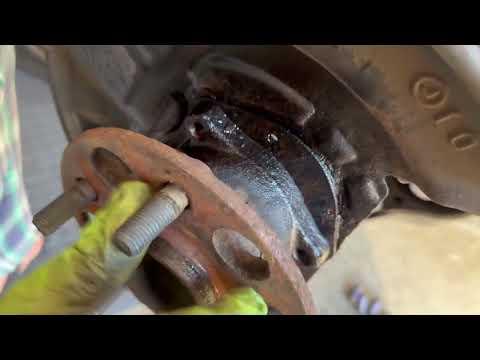
On your Camry, the front wheel bearing is typically serviced as a complete hub and bearing assembly. That means the old unit is removed and a new sealed unit is bolted in, then the axle nut and suspension hardware are torqued back to spec.
Difficulty Level: Advanced | Estimated Time: 2-4 hours per side
⚠️ Safety & Precautions
- Work on a flat surface and support the car with jack stands. Never rely on a floor jack alone.
- The axle nut is very tight and may require a breaker bar or impact tool.
- Use care around the brake hose and ABS wire. Do not let the caliper hang by the hose.
- If your Camry has a steering angle or ABS warning after repair, a scan tool may be needed to clear codes.
- Disconnecting the battery is not usually required for this job.
🔧 Required Tools
You'll need the following tools for this repair:
- Floor jack (rated 3-ton minimum)
- Jack stands (rated for vehicle weight)
- Wheel chocks
- 21mm lug socket
- Breaker bar
- Torque wrench
- Axle nut socket
- Ratchet
- Socket set
- Wrench set
- Trim clip tool
- Punch and hammer
- Penetrating oil
- Ball joint separator (specialty)
- Brake caliper hanger hook
- Safety glasses
- Mechanic gloves
🔩 Required Parts
HowToo sells all the parts you need for this repair:
- Front wheel hub and bearing assembly - Qty: 1
- Axle nut - Qty: 1
- Front hub bolts - Qty: 3
- Brake cleaner - Qty: 1
📋 Before You Begin
- Park on level ground, put the transmission in Park, and set the parking brake.
- Loosen the wheel lug nuts before lifting the car.
- If the wheel bearing is noisy, confirm the noise changes with steering load before starting.
- For this job, the axle nut must be replaced, not reused.
🔨 Step-by-Step Instructions
Follow these steps in order:
Step 1: Lift and secure the car
- Use the 21mm lug socket and breaker bar to loosen the wheel lug nuts one turn.
- Raise the front of the car with a floor jack (rated 3-ton minimum).
- Support it with jack stands (rated for vehicle weight).
- Remove the wheel.
Step 2: Remove the brake parts
- Use the correct socket set and ratchet to remove the caliper bolts.
- Hang the caliper with a brake caliper hanger hook.
- Remove the brake rotor.
- Do not let the hose stretch.
Step 3: Remove the axle nut
- Use the axle nut socket and breaker bar to remove the axle nut.
- If needed, have a helper press the brake pedal while you loosen the nut.
- Remove and discard the old axle nut.
Step 4: Free the steering knuckle
- Use a wrench set and socket set to disconnect the lower ball joint or tie rod end as needed for access.
- Use a ball joint separator (specialty) if the taper is stuck.
- Turn the knuckle outward and slide the axle out of the hub.
- Support the axle so it does not overextend.
Step 5: Remove the hub and bearing assembly
- Use the socket set and ratchet to remove the three hub bolts from the back of the knuckle.
- Spray penetrating oil if the hub is stuck.
- Tap the hub out evenly with a punch and hammer.
- Clean the knuckle mating surface with brake cleaner.
Step 6: Install the new hub and bearing assembly
- Set the new hub in place by hand.
- Install the new hub bolts and tighten them evenly with a socket set.
- Torque to factory spec.
- Make sure the hub sits flush against the knuckle.
Step 7: Reassemble the suspension and brakes
- Slide the axle back through the new hub.
- Reconnect the lower ball joint or tie rod end using the wrench set and socket set.
- Reinstall the rotor and caliper.
- Install a new axle nut hand tight.
Step 8: Torque everything down
- Use the torque wrench to tighten the axle nut to 216 Nm (159 ft-lbs).
- Torque the wheel lug nuts to 103 Nm (76 ft-lbs).
- Torque the caliper and suspension fasteners to factory spec.
- If the axle nut is staked, stake it after torqueing with a punch and hammer.
Step 9: Reinstall the wheel
- Install the wheel and snug the lug nuts with the 21mm lug socket.
- Lower the car and finish torquing the lug nuts in a star pattern with the torque wrench.
✅ After Repair
- Start the car and check for ABS, traction, or wheel speed warning lights.
- Spin the wheel by hand and listen for rubbing or roughness.
- Test drive at low speed first, then recheck torque on the lug nuts.
- If any warning lights stay on, scan for ABS codes.
💰 DIY vs Shop Cost
Shop Cost: $450-$900 (parts + labor)
DIY Cost: $120-$260 (parts only)
You Save: $330-$640 by doing it yourself!
Shop labor rates vary but typically run $100-$150/hour. This repair takes a shop approximately 2-4 hours.
🎯 Ready to get started?
HowToo makes it easy: same-day/2-day shipping on every part, plus all the tools and specialty tools you need! Check out the parts and tools sections below to add everything to your cart.
Guide for Wheel Bearing and Hub Assembly replace for these Toyota vehicles
| Year Make Model | Sub Model | Engine | Body Style |
|---|---|---|---|
| 2023 Toyota Camry | Hybrid LE | Inline 4 2.5L | - |
| 2023 Toyota Camry | Hybrid SE | Inline 4 2.5L | - |
| 2023 Toyota Camry | Hybrid XLE | Inline 4 2.5L | - |
| 2023 Toyota Camry | Hybrid XSE | Inline 4 2.5L | - |
| 2023 Toyota Camry | Hybrid SE Nightshade | Inline 4 2.5L | - |
| 2022 Toyota Camry | Hybrid LE | Inline 4 2.5L | - |
| 2022 Toyota Camry | Hybrid SE | Inline 4 2.5L | - |
| 2022 Toyota Camry | Hybrid XLE | Inline 4 2.5L | - |
| 2022 Toyota Camry | Hybrid XSE | Inline 4 2.5L | - |
| 2022 Toyota Camry | Hybrid SE Nightshade | Inline 4 2.5L | - |
| 2021 Toyota Camry | Hybrid LE | Inline 4 2.5L | - |
| 2021 Toyota Camry | Hybrid SE | Inline 4 2.5L | - |
| 2021 Toyota Camry | Hybrid XLE | Inline 4 2.5L | - |
| 2021 Toyota Camry | Hybrid XSE | Inline 4 2.5L | - |
| 2020 Toyota Camry | Hybrid LE | Inline 4 2.5L | - |
| 2020 Toyota Camry | Hybrid SE | Inline 4 2.5L | - |
| 2020 Toyota Camry | Hybrid XLE | Inline 4 2.5L | - |
| 2019 Toyota Camry | Hybrid LE | Inline 4 2.5L | - |
| 2019 Toyota Camry | Hybrid SE | Inline 4 2.5L | - |
| 2019 Toyota Camry | Hybrid XLE | Inline 4 2.5L | - |
| 2018 Toyota Camry | Hybrid LE | Inline 4 2.5L | - |
| 2018 Toyota Camry | Hybrid SE | Inline 4 2.5L | - |
| 2018 Toyota Camry | Hybrid XLE | Inline 4 2.5L | - |