















How to Replace the Front Wheel Bearing on a 2016 Volkswagen Tiguan
Step-by-step repair guide with tools, parts, torque specs, and safety tips for 2009, 2010, 2011, 2012, 2013, 2014, 2015, 2016, 2017
How to Replace the Front Wheel Bearing on a 2016 Volkswagen Tiguan
Step-by-step repair guide with tools, parts, torque specs, and safety tips for 2009, 2010, 2011, 2012, 2013, 2014, 2015, 2016, 2017


Assumption: This guide covers the front wheel bearing on your Tiguan. The rear setup is different.
🔧 Wheel Bearing - Replacement
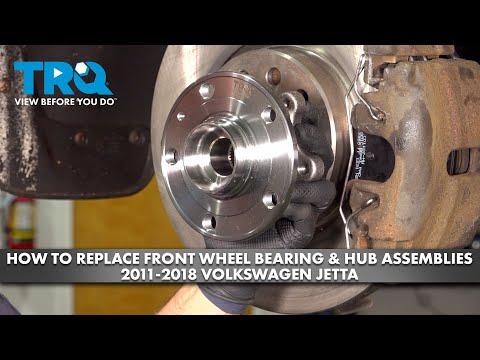
The front wheel bearing on your Tiguan is a press-fit bearing in the steering knuckle. That means the hub, bearing, and knuckle are separated and pressed apart, then reassembled with new parts. If the bearing is noisy, rough, or has play, replacing it now prevents hub damage and uneven tire wear.
Difficulty Level: Advanced | Estimated Time: 4-6 hours
⚠️ Safety & Precautions
- Lift the vehicle on level ground and support it with jack stands. Never work under a vehicle held only by a jack.
- Use wheel chocks on the opposite wheels.
- Brake components and axle hardware are high-torque fasteners; use the correct tools.
- If your Tiguan has any ABS wiring or wheel speed sensor clips on the knuckle, unplug them carefully before pressing parts apart.
- Battery disconnect is not required for this job.
🔧 Required Tools
You'll need the following tools for this repair:
- Floor jack (rated 3-ton minimum)
- Jack stands (rated 3-ton minimum)
- Wheel chocks
- Safety glasses
- Mechanic gloves
- 17mm socket
- 19mm socket
- 21mm socket
- 24mm socket
- Hex bit set
- Torx bit set
- Torque wrench
- Breaker bar
- Ball joint separator (specialty)
- 3-jaw hub puller (specialty)
- Wheel bearing press kit (specialty)
- Pick tool
- Dead blow hammer
- Wire brush
🔩 Required Parts
HowToo sells all the parts you need for this repair:
- Front wheel bearing - Qty: 1
- Front hub - Qty: 1
- Axle bolt - Qty: 1
- Lower strut pinch bolt and nut - Qty: 1
- Ball joint bolts - Qty: 3
- Brake caliper bracket bolts - Qty: 2
- Wheel speed sensor seal or clip - Qty: 1
📋 Before You Begin
- Park on level ground and set the parking brake.
- Loosen the wheel bolts before lifting the vehicle.
- If the axle is still installed, break the axle bolt loose while the wheel is on the ground.
- Penetrating oil helps on rusty hardware.
🔨 Step-by-Step Instructions
Follow these steps in order:
Step 1: Raise and secure the vehicle
- Use a floor jack to lift the front of the Tiguan.
- Place jack stands under the proper support points.
- Remove the wheel using a 17mm socket.
Step 2: Remove brake components
- Use the correct hex bit or Torx bit for the caliper slide bolts.
- Remove the caliper and support it so the hose is not stretched.
- Use a 19mm socket to remove the caliper bracket bolts.
- Remove the rotor.
Step 3: Remove axle and hub fastener
- Use a 24mm socket to remove the axle bolt if not already removed.
- If the axle is stuck in the hub, use a 3-jaw hub puller (specialty).
- Remove the wheel speed sensor wiring clip and move the harness aside.
Step 4: Separate the steering knuckle
- Use a ball joint separator (specialty) to free the lower ball joint from the knuckle.
- Use the correct socket for the pinch bolt at the strut-to-knuckle joint, then separate the knuckle from the strut.
- Carefully remove the knuckle from the vehicle.
- Mark alignment positions before removal.
Step 5: Press the hub and bearing apart
- Use a wheel bearing press kit (specialty) to press the hub out of the bearing.
- Press the old bearing out of the knuckle.
- Remove the bearing snap ring if equipped using a pick tool.
- Press the new bearing into the knuckle squarely.
Step 6: Install the new hub
- Use the wheel bearing press kit (specialty) to press the new hub into the bearing.
- Make sure the hub seats fully and turns smoothly by hand.
Step 7: Reinstall the knuckle and brake parts
- Reinstall the knuckle onto the strut and lower ball joint.
- Use a torque wrench to tighten all fasteners to factory spec for your Tiguan.
- Reinstall the rotor, caliper bracket, and caliper using the correct socket or hex bit.
- Install a new axle bolt and torque it to spec with a torque wrench.
Step 8: Final assembly
- Reconnect any wheel speed sensor clips or wiring.
- Install the wheel and snug the lug bolts with a 17mm socket.
- Lower the vehicle and torque the lug bolts with a torque wrench.
✅ After Repair
- Spin the wheel by hand and listen for smooth, quiet rotation.
- Test drive slowly at first and listen for growling or rubbing noises.
- Check for ABS warning lights.
- Recheck torque on the wheel bolts after the test drive.
- Any noise means recheck hub seating.
💰 DIY vs Shop Cost
Shop Cost: $450-$900 (parts + labor)
DIY Cost: $120-$280 (parts only)
You Save: $330-$620 by doing it yourself!
Shop labor rates vary but typically run $100-$150/hour. This repair takes a shop approximately 4-6 hours.
🎯 Ready to get started?
HowToo makes it easy: same-day/2-day shipping on every part, plus all the tools and specialty tools you need! Check out the parts and tools sections below to add everything to your cart.