















How to Replace the Front Lower Ball Joints on a 2007-2017 Toyota Yaris
Step-by-step instructions with tools, parts, torque specs, safety tips, and alignment advice
How to Replace the Front Lower Ball Joints on a 2007-2017 Toyota Yaris
Step-by-step instructions with tools, parts, torque specs, safety tips, and alignment advice for 2007, 2008, 2009, 2010, 2011, 2012, 2013, 2014, 2015, 2016, 2017


🔧 Ball Joints - Front Lower Ball Joint Replacement
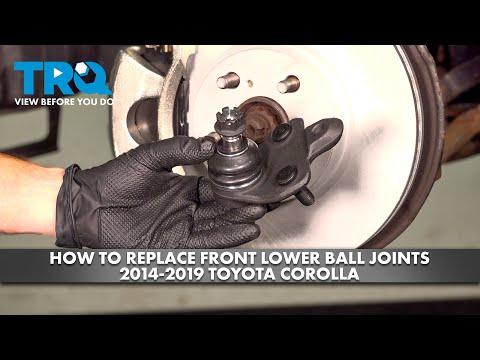
This covers the front lower ball joints on your Yaris. The ball joint lets the steering knuckle pivot while the suspension moves, and wear shows up as clunks, loose steering, or uneven tire wear.
Difficulty Level: Advanced | Estimated Time: 2-4 hours
⚠️ Safety & Precautions
- Support the vehicle with jack stands; never rely on a jack alone.
- Keep hands clear when separating the ball joint from the steering knuckle.
- If the car has a damaged or torn ball joint boot, avoid driving it until repaired.
- Have the alignment checked after repair; a front-end alignment is required.
🔧 Required Tools
You'll need the following tools for this repair:
- Floor jack (rated 3-ton minimum)
- Jack stands
- Wheel chocks
- Safety glasses
- Mechanic gloves
- 21mm lug wrench
- 10mm socket
- 12mm socket
- 14mm socket
- 17mm socket
- Ratchet
- Breaker bar
- Torque wrench
- Ball joint separator tool (specialty)
- Hammer
- Flat screwdriver
- Penetrating oil
- Paint marker
🔩 Required Parts
HowToo sells all the parts you need for this repair:
- Front lower ball joint - Qty: 2
- Ball joint mounting hardware - Qty: 1 set
- New cotter pins - Qty: 2
📋 Before You Begin
- Park on level ground and set the parking brake.
- Loosen the front lug nuts before lifting the vehicle.
- Use a paint marker to mark any parts that need to go back in the same position.
- Spray penetrating oil on the ball joint nut and fasteners before starting.
🔨 Step-by-Step Instructions
Follow these steps in order:
Step 1: Raise and secure the front end
- Use the floor jack to lift the front of your Yaris.
- Place jack stands under the proper frame support points.
- Remove the front wheel with the 21mm lug wrench.
Step 2: Access the ball joint
- Turn the steering wheel to create more working room on the side you are repairing.
- Use the ratchet and the correct socket to remove any splash shield or small access cover if equipped.
Step 3: Separate the ball joint from the steering knuckle
- Use the 17mm socket and breaker bar to remove the ball joint nut.
- If the stud starts spinning, use a flat screwdriver to help hold it if the design allows.
- Use the ball joint separator tool to break the taper loose from the steering knuckle.
- Do not hit the rubber boot directly.
Step 4: Remove the ball joint from the lower control arm
- Use the 12mm socket or 14mm socket to remove the mounting bolts, depending on the hardware on your Yaris.
- Remove the old ball joint from the control arm.
- If the joint is tight, tap it free with a hammer.
Step 5: Install the new ball joint
- Position the new front lower ball joint into place on the control arm.
- Install the new mounting hardware by hand first.
- Use the ratchet and the correct socket to snug the bolts.
- Torque to 59 Nm (44 ft-lbs) for the ball joint mounting bolts, unless your replacement hardware kit specifies otherwise.
Step 6: Reconnect the steering knuckle
- Align the ball joint stud with the steering knuckle.
- Use the floor jack to slightly raise the lower control arm if needed.
- Install the new cotter pin hardware if equipped.
- Torque to 67 Nm (49 ft-lbs) for the ball joint nut, then continue only enough to line up the cotter pin hole if required.
Step 7: Reinstall the wheel and lower the vehicle
- Reinstall the wheel by hand first.
- Use the 21mm lug wrench to snug the lug nuts.
- Lower the vehicle with the floor jack.
- Torque to 103 Nm (76 ft-lbs) for the lug nuts in a star pattern using the torque wrench.
✅ After Repair
- Test drive slowly at first and listen for clunks or rubbing.
- Check the repair area again for loose hardware.
- Get a front-end alignment as soon as possible.
- Recheck lug nut torque after 50-100 miles.
💰 DIY vs Shop Cost
Shop Cost: $350-$700 (parts + labor)
DIY Cost: $80-$180 (parts only)
You Save: $270-$520 by doing it yourself!
Shop labor rates vary but typically run $100-$150/hour. This repair takes a shop approximately 2-4 hours.
🎯 Ready to get started?
HowToo makes it easy: same-day/2-day shipping on every part, plus all the tools and specialty tools you need! Check out the parts and tools sections below to add everything to your cart.