














How to Replace the Front Lower Ball Joint/Control Arm on a 2009 Nissan Altima
Step-by-step removal and install guide with required tools/parts, safety tips, and alignment notes for 2008, 2009, 2010, 2011, 2012, 2013
How to Replace the Front Lower Ball Joint/Control Arm on a 2009 Nissan Altima
Step-by-step removal and install guide with required tools/parts, safety tips, and alignment notes for 2008, 2009, 2010, 2011, 2012, 2013


🔧 Altima - Front Lower Ball Joint Replacement
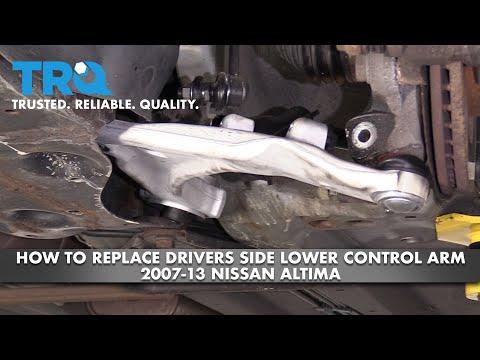
On your Altima, the front lower ball joint is typically serviced as part of the front lower control arm assembly (the ball joint comes attached). The job is mostly unbolting the old control arm, separating the ball joint from the steering knuckle, and installing the new arm—then getting an alignment.
Difficulty Level: Intermediate | Estimated Time: 2-4 hours
⚠️ Safety & Precautions
- 🛑 Support the car on jack stands; never rely on a floor jack.
- 🛑 Keep fingers clear when separating the ball joint; it can release suddenly.
- 🛑 Wear safety glasses; rust and dirt fall straight down.
- 🛑 Do not hammer directly on the CV axle threads; you can damage them.
- 🛑 Plan for a professional alignment after the repair.
🔧 Required Tools
You'll need the following tools for this repair:
- Floor jack (rated 3-ton minimum)
- Jack stands (rated 3-ton minimum)
- Wheel chocks
- Safety glasses
- Mechanic gloves
- Breaker bar (1/2-inch drive)
- Torque wrench (1/2-inch drive, 30-200 ft-lbs range)
- Socket set (8mm-22mm, 1/2-inch drive)
- Wrench set (10mm-22mm)
- Pry bar (18-24 inch)
- Ball joint separator (specialty)
- Hammer (2-3 lb)
- Needle-nose pliers
- Penetrating oil
- Paint marker
🔩 Required Parts
HowToo sells all the parts you need for this repair:
- Front lower control arm with ball joint - Replace in pairs - Qty: 2
- Front lower ball joint castle nut / lock nut (if not included) - Qty: 2
- Front lower control arm bolts/nuts (if required) - Qty: 1 set
📋 Before You Begin
- Park on level ground, set the parking brake, and chock the rear wheels.
- Loosen the front lug nuts slightly using a 19mm socket and breaker bar before lifting.
- Spray penetrating oil on the ball joint nut and control arm bolts. Let it soak 10-15 minutes.
- “Ball joint separator” is a tool that pops the joint loose.
🔨 Step-by-Step Instructions
Follow these steps in order:
Step 1: Lift and secure the front of the car
- Lift the front using a floor jack at the proper front jacking point.
- Set the car down onto jack stands and confirm it’s stable.
- Remove the wheel using a 19mm socket.
Step 2: Locate the lower ball joint and control arm
- The lower ball joint is where the control arm meets the steering knuckle (the part the wheel hub bolts to).
- Use a flashlight if needed and wipe heavy dirt off by hand (gloves on).
Step 3: Remove the ball joint nut
- Remove any cotter pin (if equipped) using needle-nose pliers.
- Remove the ball joint nut using the correct socket and a breaker bar.
- If the stud spins, apply upward pressure on the control arm with a pry bar while loosening.
Step 4: Separate the ball joint from the steering knuckle
- Install a ball joint separator (specialty) between the knuckle and the ball joint.
- Use a hammer (2-3 lb) to strike the separator as needed until the joint “pops” free.
- Keep your face away from the joint.
Step 5: Unbolt the control arm from the subframe
- Use a paint marker to mark bolt positions if there are slotted holes (helps with reassembly).
- Remove the control arm mounting bolts/nuts using the correct socket and wrench.
- Support the control arm by hand as the last bolt comes out.
Step 6: Remove the control arm and compare parts
- Work the control arm out of place and remove it from the car.
- Compare the new control arm to the old one (bushing locations, ball joint angle) before installing.
Step 7: Pause before reassembly (I need 2 quick details)
- Reply with: (1) Are you replacing the whole front lower control arm(s) or pressing in ball joints only?
- Reply with: (2) Are you doing left, right, or both?
- Once you answer, I’ll give the exact reassembly steps including Torque to XX Nm (YY ft-lbs) points and the “tighten-at-ride-height” bushing procedure.
✅ After Repair
- Get a 4-wheel alignment as soon as possible.
- On the test drive, listen for clunks over bumps and verify the steering wheel is centered.
- Recheck lug nuts after 25-50 miles using a torque wrench.
💰 DIY vs Shop Cost
Shop Cost: $450-$900 (parts + labor)
DIY Cost: $120-$320 (parts only)
You Save: $330-$580 by doing it yourself!
Shop labor rates vary but typically run $100-$150/hour. This repair takes a shop approximately 2-4 hours.
🎯 Ready to get started?
HowToo makes it easy: same-day/2-day shipping on every part, plus all the tools and specialty tools you need! Check out the parts and tools sections below to add everything to your cart.