









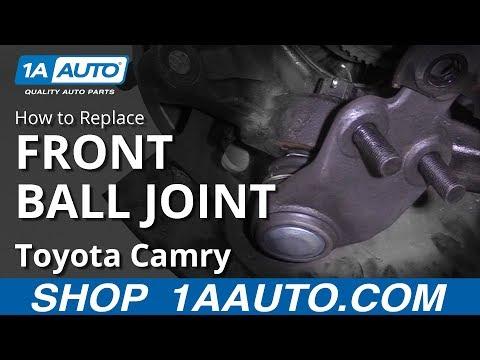






How to Replace the Front Lower Ball Joint on a 2012 Toyota Camry
Step-by-step DIY guide with tools, parts list, safety tips, and alignment recommendations
How to Replace the Front Lower Ball Joint on a 2012 Toyota Camry
Step-by-step DIY guide with tools, parts list, safety tips, and alignment recommendations


🔧 Camry - Ball Joint Replacement
On your Camry, “ball joint” usually means the front lower ball joint that connects the steering knuckle to the lower control arm. The exact procedure, parts list, and torque specs change depending on whether you’re replacing the ball joint only or the entire lower control arm (with ball joint).
Difficulty Level: Advanced | Estimated Time: 2-4 hours
Quick questions (reply with just 1-2 words each):
1) Front or rear ball joints?
2) Are you replacing ball joint only or the whole control arm?
⚠️ Safety & Precautions
- ⚠️ Support the car with jack stands on solid ground; never rely on a jack.
- ⚠️ Do not pull/strain the ABS wheel speed sensor wire or brake hose when the knuckle is loose.
- ⚠️ Hybrid safety: this job is at the suspension/wheel area; do not touch orange high-voltage cables.
- ⚠️ If separating the ball joint from the knuckle, keep fingers clear—the joint can “pop” loose suddenly.
🔧 Required Tools
You'll need the following tools for this repair:
- Floor jack (rated 3-ton minimum)
- Jack stands (rated 3-ton minimum)
- Wheel chocks
- 21mm socket
- 1/2" drive breaker bar
- 1/2" drive torque wrench (20-200 ft-lbs range)
- Needle-nose pliers
- Hammer (16-24 oz)
- Pry bar (18-24")
- Ball joint separator (specialty)
- Socket set (8mm-22mm)
- Wrench set (8mm-22mm)
- Penetrating oil
- Wire brush
- Bungee cord
- Safety glasses
- Mechanic gloves
🔩 Required Parts
HowToo sells all the parts you need for this repair:
- Front lower ball joint - Qty: 1 or 2
- Cotter pin for ball joint stud - Qty: 1 or 2
- Lower ball joint castle nut - Qty: 1 or 2
- Lower control arm (if replacing as an assembly) - Qty: 1 or 2
📋 Before You Begin
- Park on level ground, shift to P, and set the parking brake.
- Chock the rear wheels with wheel chocks.
- Loosen the front lug nuts 1/2 turn using a 21mm socket and breaker bar before lifting.
- Spray penetrating oil on the ball joint nut/bolts and let it soak for 10 minutes.
🔨 Step-by-Step Instructions
Follow these steps in order:
Step 1: Confirm which joint/parts you’re replacing
- Reply to the two questions in the Overview (front/rear, ball joint only vs control arm).
- I’ll then give you the exact, Toyota-correct steps and torque specs for that configuration.
Step 2: Do not disassemble yet
- Stop here so you don’t end up loosening the wrong fasteners or buying the wrong parts.
- A ball joint separator “pops” the taper loose.
✅ After Repair
- You will need a front-end alignment after any ball joint/control arm work.
- Recheck lug nut torque after a short test drive.
- Listen for clunks over bumps and confirm steering wheel is centered.
💰 DIY vs Shop Cost
Shop Cost: $350-$900 (parts + labor)
DIY Cost: $80-$350 (parts only)
You Save: $270-$550 by doing it yourself!
Shop labor rates vary but typically run $100-$150/hour. This repair takes a shop approximately 2-4 hours.
🎯 Ready to get started?
HowToo makes it easy: same-day/2-day shipping on every part, plus all the tools and specialty tools you need! Check out the parts and tools sections below to add everything to your cart.