









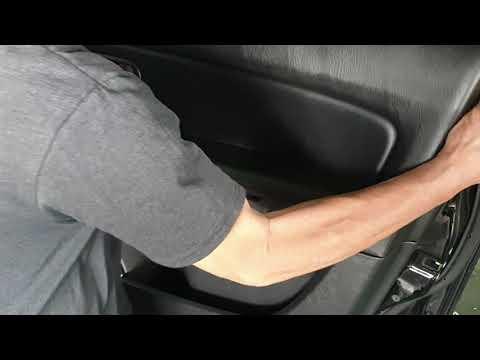







How to Replace the Front Door Lock Actuator on a 2018 Mazda CX-9
Step-by-step door panel removal, latch/actuator swap, required tools/parts, and torque specs for 2016, 2017, 2018, 2019
How to Replace the Front Door Lock Actuator on a 2018 Mazda CX-9
Step-by-step door panel removal, latch/actuator swap, required tools/parts, and torque specs for 2016, 2017, 2018, 2019


🔧 CX-9 - Front Door Lock Actuator Replacement
The front door lock actuator is the electric motor/gear unit that locks and unlocks the door. On your CX-9 it’s built into the door latch assembly, so replacement involves removing the interior door panel, peeling back the moisture barrier, and swapping the latch/actuator unit inside the door.
Difficulty Level: Intermediate | Estimated Time: 1.5-3.0 hours
⚠️ Safety & Precautions
- ⚠️ Disconnect the 12V battery negative terminal to reduce airbag/short risk (front doors can have side-impact airbags).
- ⚠️ Keep the key fob away from the vehicle so the locks don’t cycle while your hands are inside the door.
- ⚠️ Support the door panel as you unplug connectors—don’t let it hang by the wiring.
- ⚠️ Don’t tear the moisture barrier; it prevents water leaks and wind noise.
🔧 Required Tools
You'll need the following tools for this repair:
- Safety glasses
- Nitrile gloves
- 10mm socket
- 1/4" ratchet
- 6" extension (1/4" drive)
- Phillips #2 screwdriver
- Flat trim removal tool
- Trim clip remover (specialty)
- Pick tool (90-degree)
- Needle-nose pliers
- Magnetic pickup tool
- Painters tape
- Butyl seal tape
- Torque wrench (in-lb)
🔩 Required Parts
HowToo sells all the parts you need for this repair:
- Front door latch/lock actuator assembly - Left (driver) or Right (passenger) - Qty: 1
- Door panel trim clips - Qty: 1 set
- Moisture barrier butyl adhesive - Qty: 1
📋 Before You Begin
- Park on level ground, shift to Park, and keep a window cracked open on that door.
- Turn the ignition OFF and keep the key fob 15+ feet away.
- Disconnect the battery negative cable using a 10mm socket, then wait at least 1 minute.
- Quick check: Are we replacing the driver front actuator or passenger front actuator?
🔨 Step-by-Step Instructions
Follow these steps in order:
Step 1: Protect the door trim
- Use painters tape to protect the painted door edge and the area around the interior handle.
Step 2: Remove the interior door panel
- Remove the small trim covers near the pull handle and/or interior handle using a flat trim removal tool.
- Remove the door panel screws with a Phillips #2 screwdriver.
- Pop the door panel clips loose using a trim clip remover (specialty) (it’s a forked tool that releases push-clips without breaking them).
- Lift the door panel straight up to unhook it from the window ledge.
- Support the panel, then unplug electrical connectors (window switch, courtesy light) using a pick tool (90-degree) to release locking tabs if needed.
Step 3: Remove the moisture barrier (water shield)
- Carefully peel the moisture barrier back using a flat trim removal tool.
- If the butyl adhesive gets messy or won’t reseal, plan to replace it with butyl seal tape during reassembly.
- Peel slowly to avoid tearing.
Step 4: Disconnect the interior handle cable/rod from the latch
- Locate the interior handle cable/rod going to the latch inside the door.
- Release the retaining clip with a pick tool (90-degree), then unhook the cable/rod using needle-nose pliers.
- Take a quick photo of the routing before removal so it goes back the same way.
Step 5: Disconnect the actuator/latch electrical connector
- Unplug the latch/actuator connector by pressing the tab and pulling straight off.
- If it’s tight, gently assist with a pick tool (90-degree)—don’t yank the wires.
Step 6: Remove the latch/actuator from the door
- Open the door and locate the latch fasteners on the door edge (rear edge of the front door).
- Remove the latch fasteners using a 10mm socket with a 1/4" ratchet and 6" extension.
- Inside the door, guide the latch/actuator assembly out through the access opening.
- Use a magnetic pickup tool if a bolt tries to fall into the door.
Step 7: Transfer any clips/rods and install the new latch/actuator
- Compare the old and new latch/actuator assemblies to confirm connector position and rod/cable mounts match.
- Move over any necessary clips (if equipped) using needle-nose pliers.
- Position the new latch/actuator into the door and start the door-edge fasteners by hand.
- Tighten the latch fasteners with a 10mm socket and torque wrench (in-lb): Torque to 80 in-lbs (9 Nm).
Step 8: Reconnect cable/rod and electrical connector
- Reconnect the electrical connector until it clicks.
- Reconnect the interior handle cable/rod and fully seat the retaining clip using a pick tool (90-degree).
- If the clip isn’t fully seated, it won’t open.
Step 9: Reseal the moisture barrier
- Press the moisture barrier back into place.
- If needed, apply butyl seal tape so the barrier seals all the way around.
Step 10: Reinstall the door panel
- Reconnect all door panel electrical connectors.
- Hook the panel on the window ledge and press it down into place.
- Press the clips in firmly around the perimeter; replace any broken ones with new door panel trim clips.
- Reinstall screws with a Phillips #2 screwdriver and tighten: Torque to 18 in-lbs (2 Nm).
- Reinstall trim covers using a flat trim removal tool.
✅ After Repair
- Reconnect the battery negative cable using a 10mm socket.
- With the door open, test lock/unlock using the switch and key fob (verify the latch moves and doesn’t “half lock”).
- Test the interior handle and exterior handle operation before fully closing the door.
- Verify the window switch and mirror controls work (if equipped).
- Listen for abnormal clicking/grinding from the latch when locking.
💰 DIY vs Shop Cost
Shop Cost: $350-$750 (parts + labor)
DIY Cost: $120-$320 (parts only)
You Save: $230-$430 by doing it yourself!
Shop labor rates vary but typically run $100-$150/hour. This repair takes a shop approximately 1.5-3.0 hours.
🎯 Ready to get started?
HowToo makes it easy: same-day/2-day shipping on every part, plus all the tools and specialty tools you need! Check out the parts and tools sections below to add everything to your cart.