









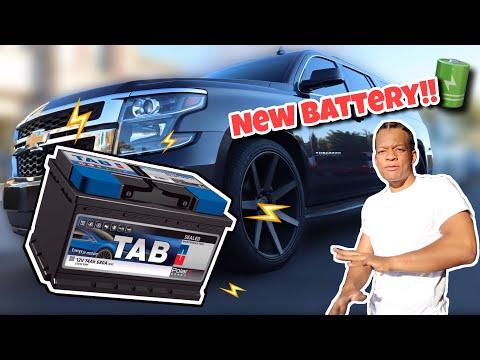






How to Replace the Battery on a 2016 Chevrolet Suburban (Under-Hood 12V)
Step-by-step battery swap with tools list, safety tips, cable order, and torque specs
How to Replace the Battery on a 2016 Chevrolet Suburban (Under-Hood 12V)
Step-by-step battery swap with tools list, safety tips, cable order, and torque specs


🔧 Suburban - Battery Replacement
On your Suburban, the 12V battery sits in the engine bay and powers starting plus all electronics. Replacing it is mostly basic hand tools, but you must disconnect/connect in the correct order to avoid electrical damage.
Difficulty Level: Beginner | Estimated Time: 0.5-1.0 hours
Assumption: single under-hood battery with side-post terminals.
⚠️ Safety & Precautions
- ⚠️ Wear eye protection and gloves; batteries can leak acid.
- ⚠️ Key OFF, remove key/fob from the vehicle, and keep it away from the cabin.
- ⚠️ Disconnect negative (-) first, reconnect negative (-) last to prevent short circuits.
- ⚠️ Do not let a tool touch metal while on the positive terminal.
- ⚠️ Battery is heavy—lift with your legs, not your back.
🔧 Required Tools
You'll need the following tools for this repair:
- 8mm socket
- 13mm socket
- 3/8" ratchet
- 6" socket extension
- Torque wrench (inch-pound, 50-250 in-lb range)
- Torque wrench (foot-pound, 10-50 ft-lb range)
- Battery terminal brush
- Plastic trim tool
- Safety glasses
- Nitrile gloves
🔩 Required Parts
HowToo sells all the parts you need for this repair:
- 12V starting battery (correct size for your Suburban; commonly Group 48/H6 or 94R/H7) - Qty: 1
- Battery terminal protector spray - Qty: 1
- Battery terminal anti-corrosion felt washers - Qty: 1 set
📋 Before You Begin
- Park on level ground, shift to P, and set the parking brake.
- Open the hood and let the engine bay cool if it’s hot.
- Know what you may lose: clock/time and some settings may reset after battery disconnect.
🔨 Step-by-Step Instructions
Follow these steps in order:
Step 1: Locate the battery and terminals
- Open the hood and find the battery on the passenger-side front area of the engine bay.
- Identify the side-post terminals: negative (-) is usually black, positive (+) is usually red.
Step 2: Disconnect the negative (-) cable first
- Use an 8mm socket with a 3/8" ratchet to loosen the negative terminal bolt.
- Wiggle and pull the negative cable straight off the battery.
- Tuck the cable to the side so it cannot spring back and touch the terminal.
Step 3: Disconnect the positive (+) cable
- Use an 8mm socket with a 3/8" ratchet to loosen the positive terminal bolt.
- Remove the positive cable and position it so it cannot touch metal parts.
Step 4: Remove the battery hold-down
- Use a 13mm socket, 6" extension, and 3/8" ratchet to remove the battery hold-down bolt/clamp at the base of the battery.
- Set the hold-down parts aside where you won’t lose them.
Step 5: Lift out the old battery
- Lift the battery straight up and out.
- Keep it level to prevent spills.
Step 6: Clean the cable ends and tray
- Use a battery terminal brush to clean the inside of both cable ends until shiny.
- Wipe debris from the battery tray area by hand (use nitrile gloves).
- (A terminal brush is a small stiff brush made to remove corrosion from battery connections.)
Step 7: Install the new battery and secure it
- Place the new battery into the tray in the same orientation as the old one.
- Reinstall the hold-down clamp/bolt using a 13mm socket, extension, and ratchet.
- Torque to 20 Nm (15 ft-lbs).
Step 8: Reconnect cables (positive first, negative last)
- Install anti-corrosion felt washers if you’re using them.
- Reconnect the positive (+) cable first using an 8mm socket.
- Torque to 13 Nm (115 in-lbs).
- Reconnect the negative (-) cable last using an 8mm socket.
- Torque to 13 Nm (115 in-lbs).
- Spray a light coat of battery terminal protector on the connections.
Step 9: Final visual checks
- Make sure both cables are fully seated and cannot rotate by hand.
- Confirm no tools are left in the engine bay and the hold-down is tight.
✅ After Repair
- Start the engine and confirm normal cranking and no warning messages staying on.
- If needed, reset the clock: Settings > Time and Date.
- Let it idle for 2-3 minutes, then recheck that terminals are still snug.
💰 DIY vs Shop Cost
Shop Cost: $250-$450 (parts + labor)
DIY Cost: $180-$300 (parts only)
You Save: $70-$150 by doing it yourself!
Shop labor rates vary but typically run $100-$150/hour. This repair takes a shop approximately 0.5-1.0 hours.
🎯 Ready to get started?
HowToo makes it easy: same-day/2-day shipping on every part, plus all the tools and specialty tools you need! Check out the parts and tools sections below to add everything to your cart.