









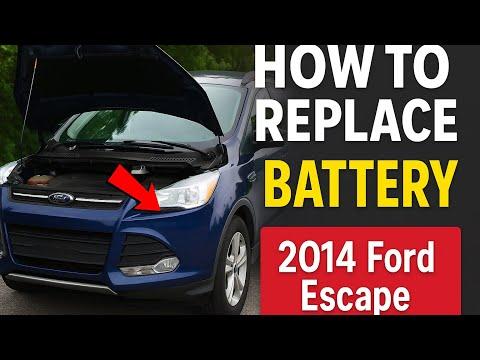





How to Replace the Battery on a 2001-2019 Ford Escape (Engine: Inline 4 2.5L)
Step-by-step DIY guide with tools, parts, torque specs, safety tips, and voltage checks
How to Replace the Battery on a 2001-2019 Ford Escape (Engine: Inline 4 2.5L)
Step-by-step DIY guide with tools, parts, torque specs, safety tips, and voltage checks for 2001, 2002, 2003, 2004, 2013, 2014, 2015, 2016, 2017, 2018, 2019


🔧 Escape - Battery Replacement
Replacing the battery on your Escape is a beginner-friendly job. The battery powers starting, lights, modules, and accessories, so a weak battery can cause slow cranking, warning lights, or no-start problems.
Difficulty Level: Beginner | Estimated Time: 30-60 minutes
⚠️ Safety & Precautions
- ⚠️ Wear safety glasses and gloves because car batteries contain acid and can spark if shorted.
- ⚠️ Always remove the negative cable first and install it last. This reduces the chance of accidental sparks.
- ⚠️ Do not touch a wrench between the positive battery post and any metal body part.
- ⚠️ Keep the key off and all lights/accessories off before starting.
- ⚠️ Battery disconnect is required for this repair.
- ⚠️ Batteries are heavy. Lift straight up with both hands and do not tip the battery.
🔧 Required Tools
You'll need the following tools for this repair:
- 10mm socket
- 8mm socket
- 3/8-inch ratchet
- 6-inch extension
- Battery terminal puller (specialty)
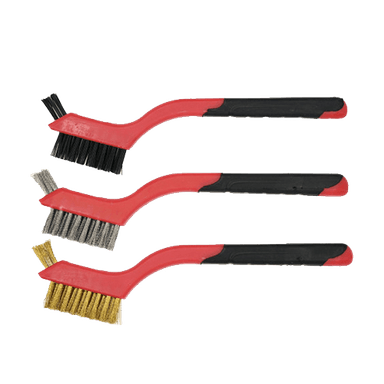
- Battery post and terminal cleaning brush
- Digital multimeter
- Fender cover
- Nitrile gloves
- Safety glasses
🔩 Required Parts
HowToo sells all the parts you need for this repair:
- 12-volt automotive battery - Qty: 1
- Battery terminal anti-corrosion protectant - Qty: 1
- Battery terminal felt washers - Qty: 2
📋 Before You Begin
- 🅿️ Park your Escape on level ground, shift to Park, and set the parking brake.
- 🔑 Turn the ignition off and remove the key from the vehicle.
- 💡 Turn off headlights, cabin lights, radio, blower fan, and all accessories.
- 🪟 Leave the driver window open before disconnecting the battery so you do not get locked out.
- 📌 The battery is located under the hood on the driver-side rear area of the engine compartment, near the firewall.
- 📌 A battery terminal is the metal clamp attached to each battery post. Positive is marked “+” and negative is marked “-”.
🔨 Step-by-Step Instructions
Follow these steps in order:
Step 1: Open the hood and locate the battery
- Use the interior hood release, then open the hood and secure it with the hood prop rod.
- Use a fender cover over the painted fender area to prevent scratches while leaning in.
- Find the battery at the rear driver-side of the engine bay.
- Identify the negative terminal marked “-” and the positive terminal marked “+”.
Step 2: Remove the negative battery cable
- Use a 10mm socket, 6-inch extension, and 3/8-inch ratchet to loosen the negative terminal clamp nut.
- Twist the clamp gently by hand and lift it off the negative battery post.
- If it is stuck, use a battery terminal puller. A terminal puller lifts the clamp straight up without damaging the battery post.
- Move the negative cable aside so it cannot spring back and touch the battery post.
- Negative off first, always.
Step 3: Remove the positive battery cable
- Open the red positive terminal cover by hand if equipped.
- Use a 10mm socket, 6-inch extension, and 3/8-inch ratchet to loosen the positive terminal clamp nut.
- Lift the positive cable off the battery post.
- Keep your tool away from body metal while working on the positive terminal.
Step 4: Remove the battery hold-down
- Use an 8mm socket, 6-inch extension, and 3/8-inch ratchet to remove the battery hold-down fastener.
- Remove the hold-down bracket and set it aside.
- The hold-down is the clamp or bracket that keeps the battery from sliding while driving.
Step 5: Remove the old battery
- Put on nitrile gloves and safety glasses.
- Lift the battery straight up and out of the tray using both hands.
- Keep the battery level. Do not tip it.
- Place the old battery on cardboard or a stable surface, not directly on painted body panels.
Step 6: Clean the battery tray and cable terminals
- Use a battery post and terminal cleaning brush to clean the inside of both cable clamps.
- Clean any corrosion from the battery tray area with the same brush.
- If you see white, blue, or green powder, that is battery corrosion. Avoid touching it with bare hands.
- Clean terminals help starting power.
Step 7: Install the new battery
- Lower the new battery into the tray in the same orientation as the old battery.
- Make sure the positive post is on the positive cable side and the negative post is on the negative cable side.
- Do not force the cables to reach. If they do not line up, the battery is rotated incorrectly.
Step 8: Reinstall the battery hold-down
- Install the hold-down bracket by hand first so the threads start cleanly.
- Use an 8mm socket, 6-inch extension, and 3/8-inch ratchet to tighten the hold-down fastener.
- Torque to 7 Nm (62 in-lbs).
- Gently try to move the battery by hand. It should not slide or rock.
Step 9: Install the positive battery cable
- Install one battery terminal felt washer on the positive battery post.
- Push the positive cable clamp fully down onto the positive battery post.
- Use a 10mm socket, 6-inch extension, and 3/8-inch ratchet to tighten the clamp nut.
- Torque to 5 Nm (44 in-lbs).
- Close the red positive terminal cover if equipped.
Step 10: Install the negative battery cable
- Install one battery terminal felt washer on the negative battery post.
- Push the negative cable clamp fully down onto the negative battery post.
- Use a 10mm socket, 6-inch extension, and 3/8-inch ratchet to tighten the clamp nut.
- Torque to 5 Nm (44 in-lbs).
- Apply battery terminal anti-corrosion protectant to both terminals after tightening.
- Positive on first, negative last.
Step 11: Check battery voltage
- Use a digital multimeter set to DC volts.
- Touch the red meter lead to the positive battery terminal and the black meter lead to the negative battery terminal.
- A fully charged battery should read about 12.6 volts with the engine off.
- Start the engine and check again. Charging voltage should usually read about 13.5-14.8 volts.
✅ After Repair
- ✅ Start your Escape and let it idle for a few minutes.
- ✅ Make sure the battery light turns off after the engine starts.
- ✅ Check that the terminals are tight by gently trying to wiggle each cable by hand.
- ✅ Reset the clock and radio presets if needed.
- ✅ If the idle feels slightly rough at first, drive normally for a short trip so the engine computer can relearn idle behavior.
- ✅ Recycle the old battery at a parts store or battery recycler. Do not throw it in household trash.
💰 DIY vs Shop Cost
Shop Cost: $220-$380 (parts + labor)
DIY Cost: $140-$260 (parts only)
You Save: $80-$120 by doing it yourself!
Shop labor rates vary but typically run $100-$150/hour. This repair takes a shop approximately 0.3-0.6 hours.
🎯 Ready to get started?
HowToo makes it easy: same-day/2-day shipping on every part, plus all the tools and specialty tools you need! Check out the parts and tools sections below to add everything to your cart.
Guide for Vehicle Battery replace for these Ford vehicles
| Year Make Model | Sub Model | Engine | Body Style |
|---|---|---|---|
| 2019 Ford Escape | - | Inline 4 2.0L | - |
| 2019 Ford Escape | - | Inline 4 2.5L | - |
| 2019 Ford Escape | - | Inline 4 1.5L | - |
| 2018 Ford Escape | - | Inline 4 2.0L | - |
| 2018 Ford Escape | - | Inline 4 2.5L | - |
| 2018 Ford Escape | - | Inline 4 1.5L | - |
| 2017 Ford Escape | - | Inline 4 2.0L | - |
| 2017 Ford Escape | - | Inline 4 2.5L | - |
| 2017 Ford Escape | - | Inline 4 1.5L | - |
| 2016 Ford Escape | - | Inline 4 2.0L | - |
| 2016 Ford Escape | - | Inline 4 2.5L | - |
| 2016 Ford Escape | - | Inline 4 1.6L | - |
| 2015 Ford Escape | - | Inline 4 2.0L | - |
| 2015 Ford Escape | - | Inline 4 2.5L | - |
| 2015 Ford Escape | - | Inline 4 1.6L | - |
| 2014 Ford Escape | - | Inline 4 2.0L | - |
| 2014 Ford Escape | - | Inline 4 2.5L | - |
| 2014 Ford Escape | - | Inline 4 1.6L | - |
| 2013 Ford Escape | - | Inline 4 2.0L | - |
| 2013 Ford Escape | - | Inline 4 2.5L | - |
| 2013 Ford Escape | - | Inline 4 1.6L | - |
| 2012 Ford Escape | - | V6 3.0L | - |
| 2012 Ford Escape | - | Inline 4 2.5L | - |
| 2011 Ford Escape | - | V6 3.0L | - |
| 2011 Ford Escape | - | Inline 4 2.5L | - |
| 2010 Ford Escape | - | V6 3.0L | - |
| 2010 Ford Escape | - | Inline 4 2.5L | - |
| 2009 Ford Escape | - | V6 3.0L | - |
| 2009 Ford Escape | - | Inline 4 2.5L | - |
| 2008 Ford Escape | - | V6 3.0L | - |
| 2008 Ford Escape | - | Inline 4 2.3L | - |
| 2007 Ford Escape | - | V6 3.0L | - |
| 2007 Ford Escape | - | Inline 4 2.3L | - |
| 2006 Ford Escape | - | V6 3.0L | - |
| 2006 Ford Escape | - | Inline 4 2.3L | - |
| 2005 Ford Escape | - | V6 3.0L | - |
| 2005 Ford Escape | - | Inline 4 2.3L | - |
| 2004 Ford Escape | - | Inline 4 2.0L | - |
| 2004 Ford Escape | - | V6 3.0L | - |
| 2003 Ford Escape | - | Inline 4 2.0L | - |
| 2003 Ford Escape | - | V6 3.0L | - |
| 2002 Ford Escape | - | Inline 4 2.0L | - |
| 2002 Ford Escape | - | V6 3.0L | - |
| 2001 Ford Escape | - | Inline 4 2.0L | - |
| 2001 Ford Escape | - | V6 3.0L | - |