









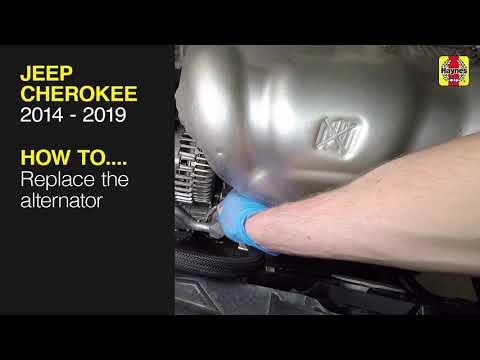







How to Replace the Alternator on a 2018 Jeep Cherokee (Step-by-Step DIY Guide)
Tools, parts list, safety tips, belt routing help, and post-repair charging system checks
How to Replace the Alternator on a 2018 Jeep Cherokee (Step-by-Step DIY Guide)
Tools, parts list, safety tips, belt routing help, and post-repair charging system checks


🔧 Cherokee - Alternator Replacement
Your alternator charges the battery and powers the electrical system while the engine runs. If it’s weak or failed, you may see a battery/charging warning, dim lights, or a no-start after driving.
Difficulty Level: Intermediate | Estimated Time: 2-4 hours
⚠️ Safety & Precautions
- ⚠️ Disconnect the negative battery cable first to prevent a short.
- ⚠️ Keep hands/tools away from the belt path; pinch hazard.
- ⚠️ Let the engine cool; the exhaust and radiator area can burn you.
- ⚠️ If lifting the front, support with jack stands on solid points; never rely on a jack.
🔧 Required Tools
You'll need the following tools for this repair:
- Safety glasses
- Mechanic gloves
- Wheel chocks
- Floor jack (rated 3-ton minimum)
- Jack stands (rated 3-ton minimum)
- Ratchet (3/8")
- Socket set: 8mm, 10mm, 13mm, 15mm
- Extension set (3" and 6")
- Serpentine belt tool with 15mm socket
- Torque wrench (3/8")
- Flat trim tool
- Phillips screwdriver
- Flashlight
🔩 Required Parts
HowToo sells all the parts you need for this repair:
- Alternator - Qty: 1
- Serpentine belt - Qty: 1
- Air intake clamp(s) or push-pin clips - Qty: As needed
- Dielectric grease - Qty: 1
📋 Before You Begin
- Park on level ground, shift to Park, and set the parking brake.
- Open the hood and remove any loose jewelry (rings/watches).
- If you’ll access from the right-front wheel well, chock the rear wheels first.
- Have a photo ready of your belt routing sticker (usually on the radiator support) or sketch the belt path before removal.
🔨 Step-by-Step Instructions
Follow these steps in order:
Step 1: Disconnect the battery
- Use a 10mm socket to loosen the negative battery terminal clamp and remove it from the battery post.
- Move the cable aside so it cannot spring back to the terminal.
Step 2: Create access to the alternator
- Remove the top engine cover by pulling upward (it’s retained by grommets). Use a flat trim tool if it’s stubborn.
- Loosen the intake duct clamps using an 8mm socket or Phillips screwdriver (depends on clamp style).
- Remove the air intake duct/box pieces as needed for working room. Use the flat trim tool for any push-pin clips.
- Tip: Take a quick photo before pulling hoses.
Step 3: (If needed) Access from the right-front wheel well
- If top access is too tight, raise the right-front corner with a floor jack and support with jack stands.
- Remove the lower splash shield fasteners using a 10mm socket and flat trim tool to open a path to the front of the engine.
Step 4: Release the serpentine belt tension
- Place the serpentine belt tool with 15mm socket on the belt tensioner bolt head.
- Rotate the tensioner to relieve tension, then slide the belt off the alternator pulley.
- Slowly let the tensioner return to rest (don’t let it snap back).
Step 5: Disconnect alternator electrical connections
- Unplug the alternator electrical connector by releasing the lock tab (use a flat trim tool gently if needed).
- Remove the alternator output cable nut using a 13mm socket, then lift the cable off the stud.
- Cover the cable end so it can’t touch metal (even with the battery disconnected, this prevents accidental contact later).
Step 6: Remove the alternator mounting bolts
- Support the alternator with one hand.
- Remove the alternator mounting bolts using a 13mm socket and ratchet with extensions as needed.
- Keep track of bolt locations/lengths if they differ.
- Torque on install: Torque to factory specification (use a torque wrench (3/8")).
Step 7: Remove the alternator from the engine bay
- Work the alternator out through the top if space allows.
- If it won’t clear, guide it out through the wheel-well opening (this is common on tight transverse V6 bays).
- Tip: Rotate the alternator pulley downward to clear.
Step 8: Install the new alternator
- Position the new alternator in place and start the mounting bolts by hand (use the 13mm socket but don’t tighten yet).
- Tighten the mounting bolts evenly using the ratchet, then Torque to factory specification with the torque wrench (3/8").
- Install the output cable and nut using a 13mm socket, then Torque to factory specification.
- Apply a small amount of dielectric grease to the connector seal, then plug in the alternator connector until it clicks.
Step 9: Reinstall the serpentine belt
- Route the belt exactly per your belt-routing sticker/photo.
- Use the serpentine belt tool with 15mm socket to rotate the tensioner and slip the belt over the alternator pulley.
- Double-check the belt is fully seated in every pulley groove using a flashlight.
Step 10: Reassemble intake and shields
- Reinstall any splash shield pieces using the 10mm socket and flat trim tool.
- Reinstall the air intake duct/box and tighten clamps using the 8mm socket or Phillips screwdriver.
- Reinstall the engine cover by pressing it down into the grommets.
Step 11: Reconnect the battery
- Reconnect the negative battery terminal and tighten with a 10mm socket.
✅ After Repair
- Start the engine and verify the battery/charging warning light is off.
- With the engine running, check for belt noise (squeal/chirp). If you hear it, shut off and re-check belt alignment.
- If you have a basic multimeter, charging voltage at the battery should typically be in the mid-13V to mid-14V range at idle.
- If the warning light stays on, the charging system may need a scan for codes (loose connector, belt issue, or wiring problem).
💰 DIY vs Shop Cost
Shop Cost: $650-$1,150 (parts + labor)
DIY Cost: $250-$550 (parts only)
You Save: $400-$600 by doing it yourself!
Shop labor rates vary but typically run $100-$150/hour. This repair takes a shop approximately 2-4 hours.
🎯 Ready to get started?
HowToo makes it easy: same-day/2-day shipping on every part, plus all the tools and specialty tools you need! Check out the parts and tools sections below to add everything to your cart.