









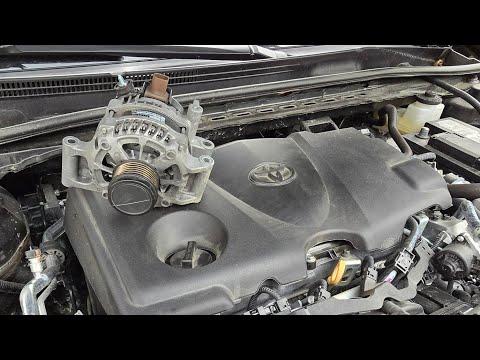






How to Replace the Alternator on a 2018-2024 Toyota Camry 2.5L (Engine: Inline 4 2.5L)
Step-by-step DIY alternator replacement with tools, parts list, safety tips, and testing instructions
How to Replace the Alternator on a 2018-2024 Toyota Camry 2.5L (Engine: Inline 4 2.5L)
Step-by-step DIY alternator replacement with tools, parts list, safety tips, and testing instructions for 2018, 2019, 2020, 2021, 2022, 2023, 2024


🔧 Camry - Alternator Replacement
You’ll be removing the drive belt, disconnecting the battery, and unbolting the alternator from the engine, then installing the new one and refitting the belt. The alternator charges the battery and powers the car’s electrical system while the engine runs, so a failing one can cause warning lights, dim lights, or stalling.
Difficulty Level: Intermediate | Estimated Time: 2–3 hours
⚠️ Safety & Precautions
- ⚠️ Always disconnect the negative battery terminal before working on the alternator to avoid short circuits and sparks.
- ⚠️ Let the engine cool completely; the alternator and nearby parts can be very hot.
- ⚠️ Support the car only with jack stands; never rely on a floor jack alone.
- ⚠️ Keep metal tools away from the battery positive terminal and alternator power stud to avoid arcing.
- ⚠️ If you see or smell fuel leaks, do not continue; repairs must be done by a professional.
- ⚠️ Wear safety glasses and gloves to protect your eyes and hands from debris and sharp edges.
🔧 Required Tools
You'll need the following tools for this repair:
- 🛠️ Floor jack (rated 3-ton minimum)
- 🛠️ Jack stands (2-ton or higher, Qty: 2)
- 🛠️ Wheel chocks
- 🛠️ 10mm socket
- 🛠️ 12mm socket
- 🛠️ 14mm socket
- 🛠️ 17mm socket
- 🛠️ 3/8" drive ratchet
- 🛠️ 3/8" drive extension (3"-6")
- 🛠️ 1/2" drive ratchet
- 🛠️ 1/2" drive breaker bar
- 🛠️ Serpentine belt tool (low-profile) (specialty)
- 🛠️ Torque wrench 3/8" drive (5–80 ft-lbs range)
- 🛠️ Flathead screwdriver (medium)
- 🛠️ Needle-nose pliers
- 🛠️ Trim clip removal tool or panel popper (specialty)
- 🛠️ Work light or flashlight
- 🛠️ Gloves
- 🛠️ Safety glasses
- 🛠️ Multimeter
🔩 Required Parts
HowToo sells all the parts you need for this repair:
- 🔩 Alternator (12V, correct for 2.5L engine) - Qty: 1
- 🔩 Serpentine drive belt - Qty: 1 (recommended while you’re here)
- 🔩 Alternator mounting bolts - Qty: 2–3 (optional, replace if corroded)
- 🔩 Alternator electrical connector lock tab or pigtail - Qty: 1 (only if yours is damaged)
- 🔩 Battery terminal cleaning brush - Qty: 1
- 🔩 Dielectric grease - Qty: small tube
- 🔩 Anti-seize compound - Qty: small tube
- 🔩 Shop towels or rags - Qty: several
📋 Before You Begin
- Park your Camry on a flat, level surface, put the transmission in Park, and set the parking brake.
- Place wheel chocks behind the rear wheels so the car cannot roll.
- Open the hood and use the prop rod to secure it.
- Make sure you have your radio/infotainment presets written down if you care about them; disconnecting the battery may reset some settings.
- Disconnect the negative battery terminal with a 10mm socket and move the cable aside so it cannot spring back.
🔨 Step-by-Step Instructions
Follow these steps in order:
Step 1: Safely raise and support the front of the car
- Use the floor jack (3-ton) under the front center jacking point (behind the front bumper on the subframe) to lift the front of the car.
- Place jack stands under the front pinch welds or designated support points and gently lower the car onto them.
- Leave the floor jack close by but not supporting the car; the jack stands should hold the weight.
- Give the car a shake to confirm it’s stable.
Step 2: Remove the lower engine splash shield (if needed for access)
- Use the 10mm socket and ratchet to remove the small bolts holding the plastic splash shield under the engine on the passenger side.
- Use the trim clip removal tool or flathead screwdriver to gently pry out any plastic clips.
- Lower the splash shield and set it aside.
Step 3: Note the serpentine belt routing
- Look for a belt routing diagram sticker under the hood. If there isn’t one, take a clear photo of the belt and pulleys with your phone from multiple angles.
- This photo is your “map” for reinstallation.
Step 4: Relieve tension on the serpentine belt
- The serpentine belt is kept tight by an automatic tensioner. This is a spring-loaded pulley.
- Fit a 14mm socket onto the tensioner bolt (or use the serpentine belt tool if space is tight).
- Use the breaker bar or ratchet on the socket and rotate the tensioner (usually clockwise on this engine) to relieve belt tension.
- With the tensioner held in the released position, use your free hand to slip the belt off the alternator pulley.
- Slowly release the tensioner back to its resting position.
- You can leave the belt draped over the other pulleys if reusing it, or remove it entirely if you’re installing a new belt.
Step 5: Disconnect wiring from the alternator
- From the top of the engine bay, locate the alternator on the passenger side of the engine.
- Find the small electrical plug on the rear of the alternator. Press the tab and pull it off by hand. If the tab is stubborn, use needle-nose pliers gently.
- Remove the rubber cap covering the main power stud on the alternator, if present.
- Use a 12mm socket and ratchet to remove the nut on the power stud, then lift off the thick cable.
- Move the cable aside so it cannot touch the alternator or ground.
Step 6: Remove alternator mounting bolts
- Locate the upper and lower mounting bolts that hold the alternator to the engine bracket.
- Use a 14mm socket, extension, and ratchet to loosen and remove the upper mounting bolt.
- Use the same 14mm socket and ratchet from below (or above, depending on access) to remove the lower mounting bolt(s).
- If bolts are tight, use the breaker bar with the 14mm socket to crack them loose.
Step 7: Remove the alternator from the engine bay
- The alternator may still be slightly “stuck” in the bracket due to corrosion or a snug fit.
- Gently rock the alternator by hand to free it. Do not pry hard against plastic or aluminum parts.
- Once loose, carefully guide the alternator out of the engine bay. You may need to angle it and wiggle it past hoses or wiring.
- Take note of how it comes out; you’ll reverse this later.
Step 8: Prepare the new alternator
- Compare the new alternator to the old one: check the mounting ears, pulley size, electrical connector shape, and power stud location. They should match.
- If the new unit does not include a pulley, transfer the old pulley only if you have the proper tools; otherwise, get the correct unit with a pulley installed.
- Lightly coat the mounting ears of the new alternator with a tiny amount of anti-seize compound to make future removal easier.
Step 9: Install the new alternator
- Carefully lower and position the new alternator into place the same way the old one came out.
- Align the mounting holes with the engine bracket.
- Install the upper mounting bolt by hand a few turns to hold the alternator.
- Install the lower mounting bolt(s) by hand a few turns.
- Use the 14mm socket and ratchet to snug all mounting bolts evenly.
- Use the torque wrench with the 14mm socket to tighten the alternator mounting bolts to manufacturer specification (refer to service manual for exact torque).
Step 10: Reconnect alternator wiring
- Place the main power cable eyelet over the alternator power stud.
- Install the nut by hand, then tighten with a 12mm socket and ratchet until snug.
- Use the torque wrench with the 12mm socket to tighten the power stud nut to manufacturer specification (do not overtighten).
- Snap the rubber cap back over the stud to protect it.
- Plug the small electrical connector back into the alternator until it clicks. You can add a tiny bit of dielectric grease inside the connector to help keep out moisture.
Step 11: Reinstall or replace the serpentine belt
- Route the belt around the pulleys following your photo or the under-hood diagram, leaving the alternator pulley for last.
- Double-check that the belt is seated properly in the grooves of each ribbed pulley and centered on smooth pulleys.
- Fit the 14mm socket and breaker bar or serpentine belt tool on the tensioner again and rotate it to release tension.
- Slip the belt over the alternator pulley while holding the tensioner.
- Slowly release the tensioner so it takes up the slack.
- Inspect all pulleys again to be sure the belt is fully seated and not off a groove.
Step 12: Reinstall splash shield and lower the car
- Lift the lower engine splash shield back into position.
- Install the bolts with the 10mm socket and ratchet and press the plastic clips back into place.
- Use the floor jack to raise the car slightly, remove the jack stands, and then lower the car fully to the ground.
Step 13: Reconnect the battery
- Clean the negative battery terminal with the battery terminal cleaning brush if it’s dirty or corroded.
- Place the negative cable back on the battery post.
- Use the 10mm socket and ratchet to tighten the clamp until it’s snug and does not move.
Step 14: Check alternator operation
- Start the engine and let it idle.
- Watch the dashboard: the battery/charging warning light should turn on briefly when you first switch the key to ON, then go off after the engine starts.
- Use the multimeter set to DC volts and measure across the battery terminals with the engine running. You should see around 13.5–14.8 volts for a properly charging system.
- Turn on headlights, blower fan, and rear defogger. Voltage should stay roughly in the same range.
- If the warning light stays on or voltage is below about 13V, shut the engine off and recheck all wiring and connectors.
✅ After Repair
- Verify there are no new warning lights on the dashboard after a short drive.
- Listen for any belt squealing; if you hear it, recheck belt routing and seating.
- After a day or two, recheck the alternator mounting bolts and the belt visually to ensure nothing has loosened.
- Reprogram radio presets, clock, and any other settings that reset when the battery was disconnected.
💰 DIY vs Shop Cost
Shop Cost: $550–$850 (parts + labor)
DIY Cost: $250–$450 (parts only, depending on alternator brand)
You Save: $300–$400 by doing it yourself!
Shop labor rates typically run $100–$150/hour. This repair takes a shop approximately 1.5–2.0 hours.
🎯 Ready to get started?
HowToo makes it easy: same-day/2-day shipping on every part, plus all the tools and specialty tools you need! Check out the parts and tools sections above to add everything to your cart.
Guide for Alternator replace for these Toyota vehicles
| Year Make Model | Sub Model | Engine | Body Style |
|---|---|---|---|
| 2024 Toyota Camry | - | Inline 4 2.5L | - |
| 2023 Toyota Camry | - | Inline 4 2.5L | - |
| 2022 Toyota Camry | - | Inline 4 2.5L | - |
| 2021 Toyota Camry | - | Inline 4 2.5L | - |
| 2020 Toyota Camry | - | Inline 4 2.5L | - |
| 2019 Toyota Camry | - | Inline 4 2.5L | - |
| 2018 Toyota Camry | - | Inline 4 2.5L | - |