









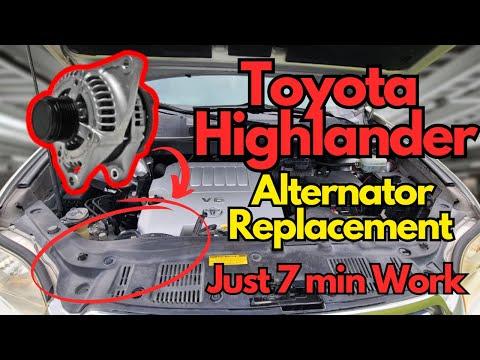





How to Replace the Alternator on a 2016 Toyota Highlander
Step-by-step instructions with tools, parts, torque specs, and safety tips for 2010, 2011, 2012, 2013, 2014, 2015, 2016
How to Replace the Alternator on a 2016 Toyota Highlander
Step-by-step instructions with tools, parts, torque specs, and safety tips for 2010, 2011, 2012, 2013, 2014, 2015, 2016


🔧 Alternator - Replacement
The alternator charges the battery and powers the electrical system while the engine is running. If it has failed, you may see a battery warning light, dim lights, slow cranking, or a dead battery after driving.
Difficulty Level: Intermediate | Estimated Time: 2-4 hours
⚠️ Safety & Precautions
- Disconnect the negative battery cable before starting. This prevents short circuits at the alternator.
- Keep hands, tools, and clothing away from the belt and pulleys.
- Let the engine cool first. The exhaust and radiator area can burn you.
- Do not let the alternator B+ wire touch ground. That wire is always hot when the battery is connected.
- If your Highlander has an aftermarket stereo or alarms, battery disconnect may erase settings.
🔧 Required Tools
You'll need the following tools for this repair:
- 10mm socket
- 12mm socket
- 14mm socket
- 3/8-inch ratchet
- 3/8-inch extension set
- Torque wrench
- Breaker bar
- Flat-blade trim tool
- Needle-nose pliers
- Safety glasses
- Mechanic gloves
🔩 Required Parts
HowToo sells all the parts you need for this repair:
- Alternator - Qty: 1
- Serpentine drive belt - Qty: 1
📋 Before You Begin
- Park on level ground and set the parking brake.
- Make sure the engine is off and cool.
- Open the hood and remove the ignition key or keep the smart key away from the vehicle.
- Tip: Take a photo of the belt routing before removal.
🔨 Step-by-Step Instructions
Follow these steps in order:
Step 1: Disconnect the battery
- Use a 10mm socket to remove the negative battery cable from the battery terminal.
- Move the cable aside so it cannot spring back and make contact.
- Do not skip this step.
Step 2: Remove the intake duct for access
- Use a flat-blade trim tool and 10mm socket to remove the air intake duct and any intake tube fasteners blocking access to the alternator.
- Set the parts aside in order so reassembly is easier.
Step 3: Release the serpentine belt
- Use a breaker bar with a 14mm socket to rotate the belt tensioner clockwise and relieve tension.
- Slip the belt off the alternator pulley first, then slowly release the tensioner.
- If the belt is cracked, shiny, or noisy, replace it now.
Step 4: Disconnect the alternator wiring
- Use a 10mm socket to remove the nut from the main battery cable at the alternator.
- Unplug the electrical connector by pressing the lock tab and pulling it straight off.
- Keep the cable clear of metal parts.
Step 5: Remove the alternator
- Use a 12mm socket to remove the alternator mounting bolts.
- Lift the alternator out through the top of the engine bay.
- Wiggle it gently.
Step 6: Install the new alternator
- Lower the new alternator into place by hand.
- Start both mounting bolts by hand first, then tighten them with a 12mm socket.
- Torque to 43 Nm (32 ft-lbs).
Step 7: Reconnect the alternator wiring
- Reconnect the electrical plug until it clicks.
- Install the main battery cable with a 10mm socket.
- Torque to 9 Nm (80 in-lbs).
Step 8: Reinstall the serpentine belt
- Route the belt exactly as it was before using your photo as a guide.
- Use the breaker bar and 14mm socket to move the tensioner again.
- Slip the belt onto the alternator pulley last, then slowly release the tensioner.
- Check that the belt is seated in every pulley groove.
Step 9: Reinstall intake parts and battery cable
- Reinstall the intake duct and any clips or fasteners using the 10mm socket and flat-blade trim tool.
- Reconnect the negative battery cable with a 10mm socket.
- Torque to 5 Nm (44 in-lbs).
Step 10: Test the repair
- Start the engine and watch the belt for smooth tracking.
- Check for warning lights on the dash.
- Use a multimeter at the battery to confirm charging voltage is typically around 13.5-14.8 volts with the engine running.
- Listen for squeaks or grinding.
✅ After Repair
- Verify all electrical loads work: headlights, blower, rear defogger, and radio.
- Make sure there are no belt noises after a short test drive.
- If the battery was deeply discharged, have it tested. A weak battery can damage a new alternator.
💰 DIY vs Shop Cost
Shop Cost: $700-$1,200 (parts + labor)
DIY Cost: $220-$550 (parts only)
You Save: $480-$650 by doing it yourself!
Shop labor rates vary but typically run $100-$150/hour. This repair takes a shop approximately 2-4 hours.
🎯 Ready to get started?
HowToo makes it easy: same-day/2-day shipping on every part, plus all the tools and specialty tools you need! Check out the parts and tools sections below to add everything to your cart.