









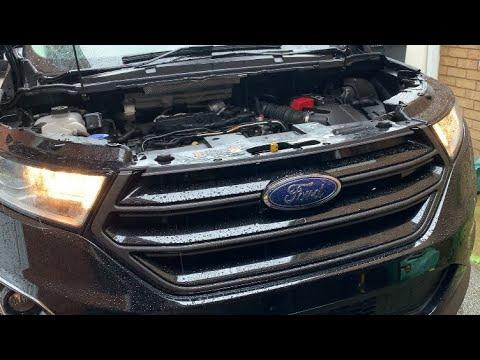







How to Replace the Alternator on a 2016 Ford Edge (Step-by-Step DIY Guide)
Tools, parts list, safety tips, and key torque specs for alternator removal and installation
How to Replace the Alternator on a 2016 Ford Edge (Step-by-Step DIY Guide)
Tools, parts list, safety tips, and key torque specs for alternator removal and installation


🔧 Edge - Alternator Replacement
The alternator charges your battery and powers the electrical system while the engine runs. On your Edge, access is tight, so you’ll usually remove the right-front wheel and inner splash shield to reach the belt and alternator.
Difficulty Level: Advanced | Estimated Time: 2.5-4.0 hours
Assumption: Access is through right-front wheel well; torque values can vary by build—verify with Ford service info if available.
⚠️ Safety & Precautions
- 🛑 Disconnect the battery negative cable first to prevent a short at the alternator B+ terminal.
- 🔥 Let the engine cool fully; the turbo/heat shields can burn you.
- 🧱 Support the vehicle on jack stands; never rely on a floor jack.
- ⚡ Do not allow tools to touch the alternator B+ post and metal at the same time.
- 🧤 Wear gloves and safety glasses around the belt and splash shield clips.
🔧 Required Tools
You'll need the following tools for this repair:
- Safety glasses
- Mechanic gloves
- Wheel chocks
- Floor jack (rated 3-ton minimum)
- Jack stands (rated 3-ton minimum)
- 21mm socket
- 3/8" drive ratchet
- 1/2" drive breaker bar
- 3/8" drive torque wrench (10–100 Nm range)
- 1/2" drive torque wrench (40–200 Nm range)
- 7mm socket
- 8mm socket
- 10mm socket
- 13mm socket
- 15mm socket
- Serpentine belt tool with 15mm socket (specialty)
- Short extension set (3" and 6")
- Flat trim clip removal tool
- Small flathead screwdriver
- Flashlight
🔩 Required Parts
HowToo sells all the parts you need for this repair:
- Alternator - Qty: 1
- Serpentine drive belt - Qty: 1
- Alternator mounting bolts - Qty: 1 set
- Dielectric grease - Qty: 1
📋 Before You Begin
- Park on level ground, shift to Park, and set the parking brake.
- Open the hood and take a photo of the belt routing sticker (or draw a quick sketch).
- Disconnect the battery: use a 10mm socket to remove the negative (-) cable and isolate it so it can’t spring back.
- Gather a small container for bolts/clips so nothing gets lost.
🔨 Step-by-Step Instructions
Follow these steps in order:
Step 1: Lift and secure the right-front corner
- Place wheel chocks behind the rear wheels.
- Use a floor jack to lift at the right-front jacking point.
- Set the vehicle onto jack stands and gently shake-test for stability.
- Use a 21mm socket to remove the right-front wheel.
- Reinstall lug nuts by hand for later; final tighten happens on the ground.
Step 2: Remove the right-front splash shield (fender liner)
- Use a 7mm socket and 8mm socket to remove the small screws along the liner edge.
- Use a flat trim clip removal tool to pop out plastic push-clips.
- Peel the liner back enough to access the belt tensioner and alternator area.
- A trim clip tool prevents broken clips.
Step 3: Relieve serpentine belt tension
- Fit the serpentine belt tool with 15mm socket (specialty) onto the belt tensioner bolt head.
- Rotate the tensioner to relieve belt tension (you’re “loading” the spring).
- Slip the belt off the alternator pulley first, then slowly release the tensioner.
- Move slowly—spring tension is strong.
Step 4: Disconnect alternator electrical connections
- Unplug the alternator connector by releasing the lock tab with a small flathead screwdriver.
- Remove the rubber boot over the alternator B+ terminal.
- Use a 13mm socket to remove the B+ cable nut, then move the cable aside.
- Keep the cable from touching metal.
Step 5: Remove the alternator mounting bolts
- Support the alternator by hand as you remove bolts so it doesn’t drop.
- Use a 13mm socket with a short extension set (3" and 6") to remove the alternator mounting bolts.
- Work the alternator out through the wheel well opening (rotate as needed).
Step 6: Install the new alternator
- Position the new alternator into place by hand.
- Start all mounting bolts by hand to avoid cross-threading.
- Tighten mounting bolts evenly using a 13mm socket, then Torque to 45 Nm (33 ft-lbs).
- Hand-starting bolts prevents expensive thread damage.
Step 7: Reconnect alternator wiring
- Install the B+ cable onto the stud, then install the nut with a 13mm socket.
- Torque to 15 Nm (11 ft-lbs), then reinstall the rubber boot.
- Apply a thin smear of dielectric grease to the connector seal (not the metal pins), then click the connector in until it locks.
Step 8: Reinstall the serpentine belt
- Route the belt per the under-hood diagram (or your photo).
- Use the serpentine belt tool with 15mm socket (specialty) to rotate the tensioner again.
- Slip the belt onto the alternator pulley last, then slowly release the tensioner.
- Visually confirm the belt is seated in every pulley groove.
Step 9: Reinstall splash shield and wheel
- Reposition the liner and reinstall screws with a 7mm socket and 8mm socket.
- Reinstall clips using the flat trim clip removal tool to align holes (press clips in by hand).
- Reinstall the wheel and snug lug nuts using a 21mm socket.
- Lower the vehicle and Torque to 150 Nm (111 ft-lbs) in a star pattern using a 1/2" drive torque wrench.
Step 10: Reconnect the battery
- Reconnect the negative battery cable using a 10mm socket.
- Snug the terminal so it won’t rotate by hand; do not overtighten.
✅ After Repair
- Start the engine and confirm the battery/charging warning light is off.
- With the engine running, listen for belt squeal or slapping; shut down and re-check belt seating if you hear noise.
- Turn on headlights and rear defrost; confirm voltage stays steady (a basic multimeter should show roughly 13.5–14.8V at the battery).
- Check that the splash shield isn’t rubbing the tire during a short test drive.
💰 DIY vs Shop Cost
Shop Cost: $650-$1,150 (parts + labor)
DIY Cost: $220-$520 (parts only)
You Save: $430-$630 by doing it yourself!
Shop labor rates vary but typically run $100-$150/hour. This repair takes a shop approximately 2.5-4.0 hours.
🎯 Ready to get started?
HowToo makes it easy: same-day/2-day shipping on every part, plus all the tools and specialty tools you need! Check out the parts and tools sections below to add everything to your cart.