









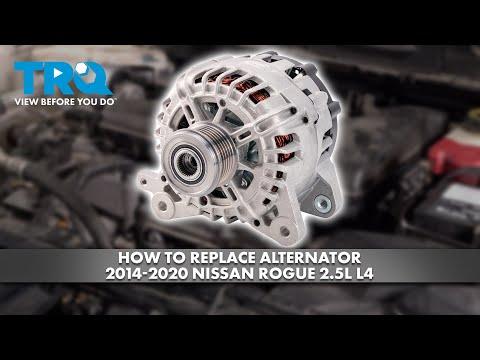





How to Replace the Alternator on a 2014 Nissan Rogue (Engine: Inline 4 2.5L)
Step-by-step instructions with tools, parts, torque specs, safety tips, and charging system checks
How to Replace the Alternator on a 2014 Nissan Rogue (Engine: Inline 4 2.5L)
Step-by-step instructions with tools, parts, torque specs, safety tips, and charging system checks for 2014


🔧 Alternator - Replacement
The alternator charges the battery and powers the electrical system while the engine is running. On your Rogue, replacement requires removing the drive belt and working from the front of the engine bay, with some clearance work around the accessory drive.
Difficulty Level: Intermediate | Estimated Time: 2-4 hours
⚠️ Safety & Precautions
- Disconnect the negative battery cable before starting. The alternator cable is always hot when connected.
- Do not short the alternator B+ terminal to ground. This can damage wiring and modules.
- Keep hands clear of the belt and pulleys when checking belt routing.
- Let the engine cool before starting. The radiator area and exhaust side can be hot.
- If equipped with an AGM battery, low voltage can create extra charging system faults after repair.
🔧 Required Tools
You'll need the following tools for this repair:
- 10mm socket
- 12mm socket
- 14mm socket
- Ratchet
- Breaker bar
- Torque wrench
- Belt tensioner tool (specialty)
- Flat blade screwdriver
- Trim clip removal tool
- Jack and jack stands
- Wheel chocks
- Safety glasses
- Mechanic gloves
🔩 Required Parts
HowToo sells all the parts you need for this repair:
- Alternator - Qty: 1
- Serpentine belt - Qty: 1
- Alternator mounting bolts - Qty: 1 set
- Alternator electrical terminal nut - Qty: 1
📋 Before You Begin
- Park on level ground, set the parking brake, and chock the wheels.
- Turn the ignition off and remove the key or fob from the vehicle.
- Disconnect the negative battery cable before touching alternator wiring.
- If the belt is cracked, glazed, or noisy, replace it now.
- Take a photo of the belt routing first.
🔨 Step-by-Step Instructions
Follow these steps in order:
Step 1: Disconnect the battery
- Use a 10mm socket to remove the negative battery terminal.
- Move the cable aside so it cannot spring back onto the post.
Step 2: Remove upper access pieces
- Use a trim clip removal tool and 10mm socket to remove the upper air duct or intake pieces blocking access to the alternator.
- Set clips and fasteners aside in order.
Step 3: Remove the engine under cover
- Raise the front of the vehicle safely with a jack and jack stands.
- Use a 10mm socket and flat blade screwdriver to remove the lower splash shield fasteners.
- Lower cover removal gives room to reach the belt and alternator from below.
Step 4: Remove the serpentine belt
- Use a belt tensioner tool (specialty) or breaker bar on the tensioner arm.
- Rotate the tensioner to release belt tension, then slip the belt off the alternator pulley.
- Note the routing before removing the belt completely.
Step 5: Disconnect alternator wiring
- Use a 10mm socket to remove the B+ cable nut on the alternator.
- Unplug the electrical connector by pressing the lock tab and pulling straight out.
- Move the harness aside so it cannot snag.
Step 6: Remove the alternator
- Use a 12mm socket and 14mm socket to remove the alternator mounting bolts.
- Support the alternator with one hand while removing the last bolt.
- Work the alternator out through the opening from above or below as space allows.
- Gentle rocking helps free a stuck unit.
Step 7: Install the new alternator
- Position the new alternator in place and start all mounting bolts by hand.
- Tighten the bolts with a torque wrench to 39 Nm (29 ft-lbs).
- Reconnect the electrical connector until it clicks.
- Install the B+ cable and tighten the nut to 10 Nm (89 in-lbs).
Step 8: Reinstall the belt
- Use the belt tensioner tool (specialty) to rotate the tensioner again.
- Route the belt exactly as photographed and make sure every rib sits in the pulley grooves.
- Release the tensioner slowly.
Step 9: Reassemble the vehicle
- Reinstall the lower splash shield with a 10mm socket and flat blade screwdriver.
- Reinstall the upper ducting and fasteners with a 10mm socket and trim clip removal tool.
- Reconnect the negative battery cable with a 10mm socket.
✅ After Repair
- Start the engine and watch the belt for smooth tracking.
- Check for charging voltage at the battery. You should normally see about 13.5-14.7 volts with the engine running.
- Turn on headlights, blower fan, and rear defogger to verify charging system response.
- Listen for belt squeal, grinding, or warning lights.
- If the battery was weak, charge it fully before judging the repair.
💰 DIY vs Shop Cost
Shop Cost: $650-$1,050 (parts + labor)
DIY Cost: $180-$420 (parts only)
You Save: $470-$630 by doing it yourself!
Shop labor rates vary but typically run $100-$150/hour. This repair takes a shop approximately 2-4 hours.
🎯 Ready to get started?
HowToo makes it easy: same-day/2-day shipping on every part, plus all the tools and specialty tools you need! Check out the parts and tools sections below to add everything to your cart.
Guide for Alternator replace for these Nissan vehicles
| Year Make Model | Sub Model | Engine | Body Style |
|---|---|---|---|
| 2014 Nissan Rogue | - | Inline 4 2.5L | - |