









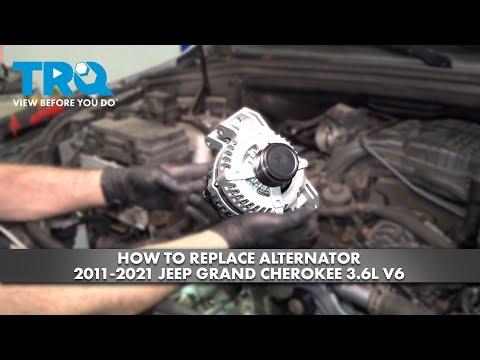





How to Replace the Alternator on a 2014 Jeep Grand Cherokee (Step-by-Step Guide)
Tools, parts, safety tips, and torque specs for a smooth DIY alternator install
How to Replace the Alternator on a 2014 Jeep Grand Cherokee (Step-by-Step Guide)
Tools, parts, safety tips, and torque specs for a smooth DIY alternator install


🔧 Grand Cherokee - Alternator Replacement
The alternator charges your battery and powers the electrical system while the engine runs. On your Grand Cherokee, replacement mainly involves removing the serpentine belt, unplugging the wiring, unbolting the alternator, and installing the new one.
Difficulty Level: Intermediate | Estimated Time: 1.5-3.0 hours
⚠️ Safety & Precautions
- ⚠️ Disconnect the negative battery cable before touching the alternator wiring.
- ⚠️ Keep fingers and tools clear of the belt path and cooling fan area.
- ⚠️ Work on a cool engine to avoid burns from the radiator and engine parts.
- ⚠️ Do not allow the alternator B+ cable to touch metal (it can short).
🔧 Required Tools
You'll need the following tools for this repair:
- Safety glasses
- Mechanic gloves
- 10mm socket
- 13mm socket
- 15mm socket
- 3/8" drive ratchet
- 3/8" drive extension set
- Serpentine belt tool, 3/8" drive (specialty)
- Torque wrench, 3/8" drive
- Flat trim tool
- Flashlight
- Fender cover
🔩 Required Parts
HowToo sells all the parts you need for this repair:
- Alternator - Qty: 1
- Serpentine belt - Qty: 1 Optional but smart if worn
📋 Before You Begin
- Park on level ground, shift to Park, and set the parking brake.
- Open the hood and let the engine cool fully.
- Have your radio presets handy if you want (battery will be disconnected).
- A “serpentine belt tool” is a long-handled bar that helps rotate the belt tensioner in tight spaces.
🔨 Step-by-Step Instructions
Follow these steps in order:
Step 1: Disconnect the battery
- Use a 10mm socket and 3/8" drive ratchet to loosen the negative battery terminal clamp.
- Lift the negative cable off the battery post and tuck it aside so it can’t spring back.
Step 2: Remove the engine cover (if equipped)
- Pull straight up on the cover to release it from the mounting grommets.
- Set it aside where it won’t get stepped on.
Step 3: Remove the air intake ducting for access
- Use a flat trim tool to release any air duct clips (if present).
- Use a 10mm socket to loosen any hose clamps (if equipped with worm clamps).
- Lift the intake tube/duct out and set it aside.
Step 4: Relieve serpentine belt tension
- Install the serpentine belt tool, 3/8" drive (or a 3/8" drive ratchet if it fits) into the tensioner and rotate it to relieve belt tension.
- Slip the belt off the alternator pulley using your free hand, then slowly release the tensioner back.
- Tip: Take a belt-routing photo first.
Step 5: Disconnect alternator electrical connections
- Unplug the alternator field connector by pressing the lock tab and pulling straight off (use a flat trim tool gently if stuck).
- Remove the protective cap on the B+ terminal if equipped.
- Use a 13mm socket to remove the B+ cable nut, then lift the cable off and move it aside.
- Torque on install (B+ nut): 13 N·m (115 in-lbs)
Step 6: Remove the alternator mounting bolts
- Support the alternator with one hand so it doesn’t drop when the last bolt comes out.
- Use a 15mm socket, 3/8" drive ratchet, and extensions as needed to remove the alternator mounting bolts.
- Lift the alternator out of the engine bay.
- Torque on install (alternator mounting bolts): 48 N·m (35 ft-lbs)
Step 7: Install the new alternator
- Set the new alternator into place by hand.
- Start the mounting bolts by hand (important to prevent cross-threading).
- Use a torque wrench, 3/8" drive with a 15mm socket to tighten: Torque to 48 N·m (35 ft-lbs)
Step 8: Reconnect wiring
- Install the B+ cable onto the alternator stud.
- Use a 13mm socket to tighten the nut: Torque to 13 N·m (115 in-lbs)
- Reinstall the terminal cap (if equipped).
- Plug the field connector back in until it clicks.
Step 9: Reinstall the serpentine belt
- Route the belt according to your under-hood diagram (or your photo).
- Use the serpentine belt tool, 3/8" drive (specialty) to rotate the tensioner, then slide the belt onto the alternator pulley.
- Release the tensioner slowly and visually confirm the belt is centered on every pulley.
Step 10: Reinstall the intake ducting and engine cover
- Reinstall the intake ducting and tighten any clamps using a 10mm socket.
- Push the engine cover back down onto the grommets until seated.
Step 11: Reconnect the battery
- Reinstall the negative battery cable and tighten with a 10mm socket.
✅ After Repair
- Start the engine and confirm the belt runs smoothly with no squeal or wobble.
- Verify the battery/charging light is off on the dash.
- If you have a multimeter, check charging voltage at the battery with the engine running (typically around 13.5–14.7V).
- Recheck that the B+ terminal cap is installed and the connector is fully clicked in.
💰 DIY vs Shop Cost
Shop Cost: $550-$1,050 (parts + labor)
DIY Cost: $180-$520 (parts only)
You Save: $370-$530 by doing it yourself!
Shop labor rates vary but typically run $100-$150/hour. This repair takes a shop approximately 1.5-3.0 hours.
🎯 Ready to get started?
HowToo makes it easy: same-day/2-day shipping on every part, plus all the tools and specialty tools you need! Check out the parts and tools sections below to add everything to your cart.