









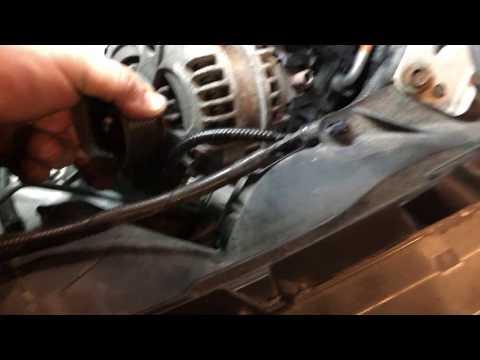





How to Replace the Alternator on a 2013 Honda CR‑V 2.4L
Step-by-step DIY alternator replacement with tools, parts list, torque specs, safety tips, and cost-saving advice
How to Replace the Alternator on a 2013 Honda CR‑V 2.4L
Step-by-step DIY alternator replacement with tools, parts list, torque specs, safety tips, and cost-saving advice


🔧 CR-V - Alternator Replacement
You’ll be removing the serpentine belt, disconnecting wiring from the alternator, and unbolting it from the engine, then installing a new one. On your CR-V the alternator is on the front of the engine, driven by the main serpentine belt.
Difficulty Level: Intermediate | Estimated Time: 2-3 hours
⚠️ Safety & Precautions
- ⚠️ Always disconnect the negative battery cable before working on the alternator to avoid short circuits and electric shock.
- ⚠️ Let the engine cool completely; the exhaust and engine parts can be very hot.
- ⚠️ Support the vehicle securely with jack stands if you raise it; never rely only on a floor jack.
- ⚠️ Keep metal tools away from the battery positive terminal once cables are disconnected.
- ⚠️ Do not pry directly on the serpentine belt; use the tensioner correctly to avoid damage.
🔧 Required Tools
You'll need the following tools for this repair:
- 🛠️ 10mm socket
- 🛠️ 12mm socket
- 🛠️ 14mm socket
- 🛠️ 3/8" drive ratchet
- 🛠️ 3/8" drive extension 6"
- 🛠️ Breaker bar 3/8" drive
- 🛠️ Serpentine belt tool or long 14mm wrench (specialty)
- 🛠️ Flathead screwdriver medium
- 🛠️ Needle-nose pliers
- 🛠️ Torque wrench 3/8" drive
- 🛠️ Floor jack (rated 3-ton minimum)
- 🛠️ Jack stands (rated 3-ton minimum)
- 🛠️ Fender cover or old towel
- 🛠️ Work light or flashlight
- 🛠️ Gloves
- 🛠️ Safety glasses
🔩 Required Parts
HowToo sells all the parts you need for this repair:
- 🔩 Alternator (120A, for 2.4L) - Qty: 1
- 🔩 Serpentine drive belt - Qty: 1
- 🔩 Alternator mounting bolts (optional, replacement) - Qty: 2
- 🔩 Battery terminal cleaning brush - Qty: 1
- 🔩 Dielectric grease - Qty: 1
- 🔩 Anti-seize compound - Qty: 1
- 🔩 Penetrating oil spray - Qty: 1
📋 Before You Begin
- Park the CR-V on level ground, shift to Park, and set the parking brake.
- Open the hood and secure it with the prop rod.
- Disconnect the negative battery cable: use a 10mm socket on the clamp and move the cable aside so it cannot spring back.
- If access from below is tight, raise the front of the vehicle with a floor jack and support it with jack stands under the front pinch welds or subframe.
- Take photos of belt routing before removal.
🔨 Step-by-Step Instructions
Follow these steps in order:
Step 1: Remove the plastic engine cover (if equipped)
- Use your hands or a flathead screwdriver to carefully pop off any plastic clips holding the top engine cover.
- Lift the cover straight up and set it aside.
- Don’t force clips; pry gently.
Step 2: Gain access to the serpentine belt
- From the top, locate the serpentine belt on the front of the engine (passenger side of the bay).
- If needed for more room, remove the right front wheel and plastic splash shield:
- Use the breaker bar and appropriate socket to loosen wheel lug nuts, then raise the vehicle with a floor jack and support with jack stands.
- Finish removing lug nuts and take off the wheel.
- Use a 10mm socket or flathead screwdriver to remove plastic clips/screws holding the inner fender/splash shield near the belt area, then pull it back for access.
Step 3: Relieve belt tension
- The belt tensioner is a spring-loaded pulley that keeps the belt tight.
- Place a 14mm socket with ratchet or serpentine belt tool on the tensioner bolt (center of tensioner pulley).
- Rotate the tensioner clockwise to relieve tension on the belt.
- While holding the tensioner, slide the belt off the alternator pulley with your free hand.
- Slowly release the tensioner back to its resting position.
- Do not let the tensioner snap back.
Step 4: Remove the serpentine belt (recommended)
- Note or photograph the belt routing around all pulleys.
- From top and wheel well, pull the belt out of the engine bay completely.
- If you’re reusing the belt temporarily, mark direction with a marker before removal.
Step 5: Disconnect alternator electrical connections
- Locate the alternator on the front of the engine (near the top, passenger side).
- On the back of the alternator, unplug the small electrical connector:
- Press the tab and pull straight out by hand or with needle-nose pliers on the plug body (not the wires).
- Remove the main charging cable:
- Use a 10mm socket to remove the nut holding the thick cable on the alternator stud.
- Lift the cable off and tuck it aside.
- Double-check battery negative is still disconnected.
Step 6: Remove alternator mounting bolts
- There are usually two main mounting bolts: upper and lower.
- Spray a little penetrating oil spray on the bolts if they look rusty; let it soak a few minutes.
- Use a 14mm socket and ratchet (with extension 6" if needed) to loosen and remove the upper mounting bolt.
- Use the same 14mm socket and ratchet to remove the lower mounting bolt.
- Support the alternator with one hand as you remove the last bolt so it doesn’t drop.
Step 7: Remove the alternator from the engine bay
- The alternator may be lightly stuck in its bracket.
- Gently rock it by hand to free it; if needed, use a flathead screwdriver to pry very gently at the mounting ears, avoiding damage to aluminum surfaces.
- Work the alternator out through the top or through the wheel well opening (whichever gives more space).
- Be patient; rotate and tilt as needed.
Step 8: Prepare and position the new alternator
- Compare the old and new alternators side by side to confirm:
- Same mounting points
- Same pulley diameter
- Same electrical connectors and stud locations
- Lightly coat the mounting bolt threads with anti-seize compound.
- Carefully lower the new alternator into position in the bracket.
Step 9: Install alternator mounting bolts
- Hand-thread the lower mounting bolt first to avoid cross-threading.
- Then hand-thread the upper mounting bolt.
- Use a 14mm socket and ratchet to snug both bolts.
- Then use a torque wrench with 14mm socket to tighten:
- Alternator mounting bolts: Torque to 44 Nm (33 ft-lbs)
- Always torque, don’t just “guess tight”.
Step 10: Reconnect alternator wiring
- Push the small connector back into the new alternator until it clicks.
- Place the main battery/charging cable onto the alternator stud.
- Apply a tiny amount of dielectric grease to the stud if desired.
- Install the nut using a 10mm socket and ratchet:
- Alternator B+ terminal nut: Torque to 9 Nm (80 in-lbs)
Step 11: Install the new serpentine belt
- Route the new belt around the crankshaft pulley and other pulleys according to your photo or the belt routing diagram under the hood (if present).
- Leave the alternator pulley for last; that makes it easier.
- Use the 14mm socket and serpentine belt tool or breaker bar to rotate the tensioner clockwise again.
- While holding the tensioner, slip the belt over the alternator pulley.
- Carefully release the tensioner and make sure the belt sits centered on all pulley grooves.
- Visually inspect from top and wheel well that the belt is not “one rib off” anywhere.
Step 12: Reinstall splash shield and wheel (if removed)
- Reposition the inner fender/splash shield in the wheel well.
- Use the 10mm socket and/or flathead screwdriver to reinstall all screws and clips.
- Reinstall the wheel and hand-thread the lug nuts.
- Lower the vehicle with the floor jack and remove the jack stands.
- Tighten the lug nuts evenly with the breaker bar:
- Wheel lug nuts: Torque to 108 Nm (80 ft-lbs) if you have a torque wrench suitable for wheels.
Step 13: Reconnect the battery and tidy up
- Clean the battery terminals with the battery terminal cleaning brush if they are dirty or corroded.
- Reattach the negative battery cable and tighten the clamp with a 10mm socket:
- Battery terminal clamp: Torque to 5 Nm (44 in-lbs) if possible.
- Reinstall the engine cover by pressing it back onto its mounts or clips.
- Remove tools and rags from the engine bay.
✅ After Repair
- Start the engine and listen for any belt squealing or unusual noises near the alternator.
- Check that the battery warning light on the dash turns off after starting.
- Use a multimeter (if available) to check charging voltage at the battery:
- Engine idling, lights off: it should read about 13.8–14.5 volts.
- Let the engine run for a few minutes and recheck that the belt is tracking correctly on all pulleys.
- Take a short test drive, then recheck under the hood for any loose connectors or belt misalignment.
💰 DIY vs Shop Cost
Shop Cost: $550-$800 (parts + labor)
DIY Cost: $220-$350 (parts only)
You Save: $330-$450 by doing it yourself!
Shop labor rates vary but typically run $100-$150/hour. This repair takes a shop approximately 1.5-2.0 hours.
🎯 Ready to get started?
HowToo makes it easy: same-day/2-day shipping on every part, plus all the tools and specialty tools you need! Check out the parts and tools sections below to add everything to your cart.
Guide for replace for these Honda vehicles
| Year Make Model | Sub Model | Engine | Body Style |
|---|