
















How to Replace the Alternator on a 2013-2017 Mazda CX-5 (Step-by-Step DIY Guide) (Engine: Inline 4 2.0L)
Tools, parts list, safety tips, belt removal, wiring steps, and key torque specs for a clean install
How to Replace the Alternator on a 2013-2017 Mazda CX-5 (Step-by-Step DIY Guide) (Engine: Inline 4 2.0L)
Tools, parts list, safety tips, belt removal, wiring steps, and key torque specs for a clean install for 2013, 2014, 2015, 2016


🔧 CX-5 - Alternator Replacement
The alternator charges the battery and powers your CX-5’s electrical system while the engine runs. Replacing it means removing the drive belt, unplugging the wiring, unbolting the alternator, and installing the new unit.
Difficulty Level: Intermediate | Estimated Time: 2-4 hours
⚠️ Safety & Precautions
- ⚠️ Disconnect the negative battery cable first to prevent a short at the alternator’s power stud.
- ⚠️ Work on a cold engine; the exhaust and engine parts can burn you.
- ⚠️ Support the vehicle securely if you go underneath (never rely on a jack alone).
- ⚠️ Keep fingers/tools clear of the belt path; the tensioner can snap back quickly.
🔧 Required Tools
You'll need the following tools for this repair:
- Safety glasses
- Mechanic gloves
- Wheel chocks
- Floor jack (rated 2-ton minimum)
- Jack stands (rated 2-ton minimum)
- 10mm socket
- 12mm socket
- 14mm socket
- 17mm box-end wrench
- 3/8" drive ratchet
- 3/8" drive extension set
- Torque wrench (10–100 Nm range)
- Flat trim clip tool
- Phillips screwdriver
- Flashlight
- Multimeter
🔩 Required Parts
HowToo sells all the parts you need for this repair:
- Alternator - Qty: 1
- Serpentine drive belt - Qty: 1
- Battery terminal protectant spray - Qty: 1
- Dielectric grease - Qty: 1
📋 Before You Begin
- Park on level ground, select neutral, and apply the parking brake.
- Chock the rear wheels using wheel chocks.
- Open the hood and remove the key from the area.
- Disconnect the battery: use a 10mm socket to remove the negative terminal (black). Tuck it aside so it can’t spring back.
- If you’re replacing the belt, take a quick photo of the belt routing (or sketch it).
🔨 Step-by-Step Instructions
Follow these steps in order:
Step 1: Remove the intake snorkel/ducting (access)
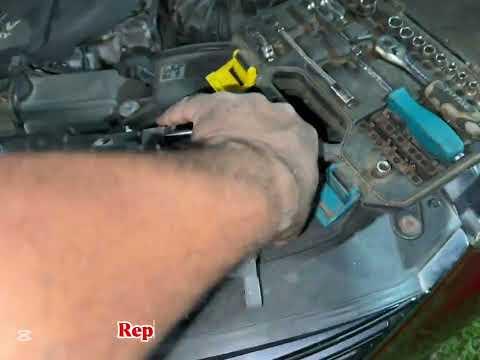
- Use a Phillips screwdriver and 10mm socket to loosen clamps/bolts on the air inlet ducting near the front/upper area as needed for access.
- Use a flat trim clip tool to pop any plastic clips without breaking them. Pry near the clip center pin.
- Move the ducting aside so you can clearly see the alternator and belt.
Step 2: Relieve belt tension and remove the serpentine belt
- Locate the belt tensioner (spring-loaded arm with a pulley).
- Use a 17mm box-end wrench on the tensioner hex and rotate to relieve tension (spring force).
- While holding tension off, slide the belt off the alternator pulley, then slowly release the tensioner.
- Remove the belt from the remaining pulleys if you’re replacing it.
- Go slow—tensioner snap-back can hurt.
Step 3: Disconnect alternator electrical connections
- Unplug the alternator’s control connector by pressing the lock tab and pulling straight out by hand.
- Remove the rubber boot from the alternator B+ terminal (main power stud).
- Use a 10mm socket to remove the B+ terminal nut and lift the cable off the stud.
- Apply a tiny amount of dielectric grease to the connector seal (not the metal pins) before reassembly.
- Torque to 9–12 Nm (80–105 in-lbs) for the B+ terminal nut.
Step 4: Unbolt and remove the alternator
- Support the alternator with one hand as you remove bolts so it doesn’t drop.
- Use a 14mm socket with a 3/8" drive ratchet and extension to remove the alternator mounting bolts.
- Lift the alternator out from the top if space allows; if tight, you may need to reposition the intake ducting more.
- Torque to 35–45 Nm (26–33 ft-lbs) for the alternator mounting bolts.
Step 5: Install the new alternator
- Set the new alternator into position and start the mounting bolts by hand to avoid cross-threading.
- Use a 14mm socket to snug the bolts evenly.
- Use a torque wrench to finish tightening: Torque to 35–45 Nm (26–33 ft-lbs).
Step 6: Reconnect wiring
- Install the B+ cable onto the alternator stud and tighten with a 10mm socket: Torque to 9–12 Nm (80–105 in-lbs).
- Reinstall the rubber boot fully over the stud to prevent corrosion/shorting.
- Plug the alternator connector back in until it clicks.
Step 7: Reinstall/route the belt and set tension
- Route the belt around all pulleys except the alternator pulley, following your photo/sketch.
- Use a 17mm box-end wrench to rotate the tensioner, slip the belt onto the alternator pulley, then slowly release the tensioner.
- Visually confirm the belt ribs are fully seated in every pulley groove (no half-on/half-off).
Step 8: Reinstall intake ducting and reconnect the battery
- Reinstall the intake ducting and any clips using the Phillips screwdriver, flat trim clip tool, and 10mm socket.
- Reconnect the negative battery terminal using a 10mm socket.
- Apply battery terminal protectant spray to help prevent corrosion.
✅ After Repair
- Start the engine and listen: there should be no belt squeal or slapping.
- Use a multimeter at the battery terminals:
- Engine OFF: typically ~12.4–12.7V (healthy battery)
- Engine ON (idle): typically ~13.5–14.7V (charging)
- Check that the battery/charging warning light stays OFF.
- Recheck belt seating after a short 5–10 minute drive (engine off, key out).
💰 DIY vs Shop Cost
Shop Cost: $550-$1,050 (parts + labor)
DIY Cost: $180-$450 (parts only)
You Save: $370-$600 by doing it yourself!
Shop labor rates vary but typically run $100-$150/hour. This repair takes a shop approximately 2-3 hours.
🎯 Ready to get started?
HowToo makes it easy: same-day/2-day shipping on every part, plus all the tools and specialty tools you need! Check out the parts and tools sections below to add everything to your cart.