









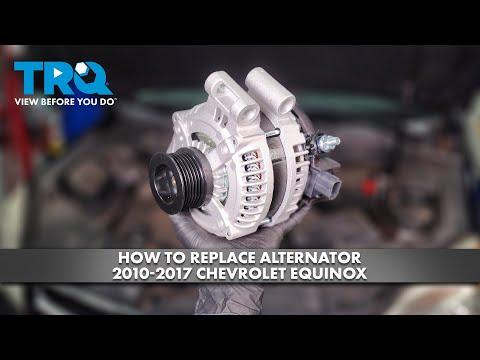





How to Replace the Alternator on a 2010-2017 Chevrolet Equinox 2.4L (Engine: V6 3.6L)
Step-by-step DIY alternator replacement with tools, parts list, torque specs, safety tips, and post-repair checks
How to Replace the Alternator on a 2010-2017 Chevrolet Equinox 2.4L (Engine: V6 3.6L)
Step-by-step DIY alternator replacement with tools, parts list, torque specs, safety tips, and post-repair checks for 2010, 2011, 2012, 2013, 2014, 2015, 2016, 2017


🔧 Equinox - Alternator Replacement
You’ll remove the old alternator, swap it with a new one, and reinstall the drive belt. This restores proper charging so the battery stays healthy and electrical systems work correctly.
Difficulty Level: Intermediate | Estimated Time: 2-3 hours
⚠️ Safety & Precautions
- ⚠️ Always disconnect the negative battery cable before working on the charging system to prevent sparks and short circuits.
- ⚠️ Let the engine cool completely before starting; you’ll work near hot engine parts.
- ⚠️ Keep rings, watches, and metal tools away from the battery positive terminal and alternator power stud.
- ⚠️ Support any loosened components securely so they don’t fall into the belt or pulleys.
- ⚠️ Wear safety glasses and gloves to protect your eyes and hands from slips and sharp edges.
🔧 Required Tools
You'll need the following tools for this repair:
- 🛠️ 10mm socket
- 🛠️ 13mm socket
- 🛠️ 15mm socket
- 🛠️ 3/8" drive ratchet
- 🛠️ 3/8" drive torque wrench (5–75 ft-lbs range)
- 🛠️ 3/8" drive extension (3"–6")
- 🛠️ Serpentine belt tool or 15mm box wrench
- 🛠️ Flathead screwdriver (medium size)
- 🛠️ Needle-nose pliers
- 🛠️ Fender cover or thick towel
- 🛠️ Work light or flashlight
- 🛠️ Mechanic’s gloves
- 🛠️ Safety glasses
🔩 Required Parts
HowToo sells all the parts you need for this repair:
- 🔩 Alternator (correct amperage for 2.4L) - Qty: 1
- 🔩 Serpentine drive belt - Qty: 1 (recommended while you’re in there)
- 🔩 Alternator mounting bolts - Qty: 3 (optional, replace if corroded)
- 🔩 Battery terminal cleaning brush - Qty: 1
- 🔩 Dielectric grease - Qty: 1 small tube
- 🔩 Anti-seize compound - Qty: 1 small tube
- 🔩 Cable tie set - Qty: 1 pack
📋 Before You Begin
- 📝 Park your Equinox on level ground, shift to Park, and set the parking brake.
- 📝 Turn off all electrical accessories (lights, AC, radio) and remove the key.
- 📝 Open the hood and install the hood prop securely.
- 📝 Disconnect the negative battery cable using a 10mm socket, and move the cable end aside so it cannot spring back.
- 📝 Take a clear photo of the serpentine belt routing or locate the under-hood belt routing decal.
🔨 Step-by-Step Instructions
Follow these steps in order:
Step 1: Remove engine cover and air intake duct
- 🛠️ Pull up on the plastic engine cover with your hands; it snaps off rubber mounts. Set it aside. Lift straight up to avoid cracking
- 🛠️ Use a flathead screwdriver to loosen the hose clamp on the air intake duct at the throttle body.
- 🛠️ Use the flathead screwdriver or needle-nose pliers to release any plastic clips or small hoses attached to the air duct.
- 🛠️ Gently pull the intake duct and air box lid assembly upward and toward the fender to create more working space near the alternator.
Step 2: Relieve serpentine belt tension and remove belt from alternator
- 🛠️ Locate the belt tensioner pulley; it’s below and slightly to the passenger side of the alternator.
- 🛠️ Place a 15mm socket on the tensioner bolt using a 3/8" ratchet or serpentine belt tool.
- 🛠️ Rotate the tensioner clockwise with the 15mm socket to relieve belt tension. Hold it firmly.
- 🛠️ While holding tension off, slip the belt off the alternator pulley with your free hand, then slowly let the tensioner return using the 15mm socket.
- 🛠️ You can leave the rest of the belt in place on the other pulleys if you’re reusing it, or remove the whole belt if you’re replacing it.
Step 3: Disconnect wiring from the alternator
- 🛠️ Move your fender cover or thick towel into place to protect paint while you lean over.
- 🛠️ Locate the main power cable on the rear of the alternator (heavy wire with rubber boot).
- 🛠️ Pull back the rubber boot by hand to expose the nut on the power stud.
- 🛠️ Use a 13mm socket and 3/8" ratchet to remove the nut holding the power cable. Set the nut aside. Torque later to 15 Nm (11 ft-lbs)
- 🛠️ Lift the cable eyelet off the stud and move it aside so it cannot touch metal.
- 🛠️ Locate the small electrical connector (voltage regulator plug). Press the locking tab with your thumb or a flathead screwdriver and pull the connector straight out.
Step 4: Remove alternator mounting bolts and bracket
- 🛠️ Identify the alternator mounting bolts: usually two at the top and one at the bottom attaching it to the engine bracket.
- 🛠️ Use a 15mm socket, extension, and 3/8" ratchet to loosen, then remove the upper alternator bolts. Note their lengths.
- 🛠️ Use the same 15mm socket and extension to remove the lower alternator bolt. Support the alternator with your free hand so it doesn’t drop.
- 🛠️ If there is a small brace or bracket attached, remove its bolts with a 13mm socket or 15mm socket as needed. Torque brace bolts later to 25 Nm (18 ft-lbs)
- 🛠️ Wiggle the alternator free from its locating sleeves and lift it out from the top. Use both hands and be patient. Rock it gently side to side
Step 5: Prepare and position the new alternator
- 🛠️ Compare the old and new alternators side by side on a clean surface to confirm mounting points and connectors match.
- 🛠️ Apply a light film of anti-seize compound by hand to the alternator mounting ears and bolts to help future removal.
- 🛠️ Lower the new alternator into place from the top, lining up the bolt holes with the engine bracket. Use your hands to hold it steady.
Step 6: Install alternator bolts and bracket
- 🛠️ Start all alternator mounting bolts by hand to avoid cross-threading.
- 🛠️ Use a 15mm socket, extension, and 3/8" ratchet to snug the lower bolt first, then the upper bolts.
- 🛠️ Attach any brace or small bracket you removed earlier using a 13mm socket or 15mm socket, but do not fully tighten yet.
- 🛠️ Using a 3/8" torque wrench with the 15mm socket, tighten the main alternator mounting bolts to 50 Nm (37 ft-lbs).
- 🛠️ Tighten any brace/bracket bolts with the 3/8" torque wrench and correct socket to 25 Nm (18 ft-lbs).
Step 7: Reconnect alternator wiring
- 🛠️ Push the regulator connector onto the alternator by hand until it clicks. Lightly tug to confirm it’s locked.
- 🛠️ Place the main power cable eyelet back onto the alternator power stud.
- 🛠️ Thread the nut on by hand, then tighten it using a 13mm socket and 3/8" torque wrench to 15 Nm (11 ft-lbs).
- 🛠️ Apply a very small amount of dielectric grease around the stud area if desired, then slide the rubber boot back over the connection by hand.
Step 8: Reinstall or replace serpentine belt
- 🛠️ Route the belt around the pulleys according to your photo or the under-hood diagram, leaving the alternator pulley for last.
- 🛠️ Place a 15mm socket on the tensioner with the serpentine belt tool or 3/8" ratchet and rotate clockwise to relieve tension.
- 🛠️ With the tension off, slip the belt onto the alternator pulley by hand, then slowly release the tensioner using the 15mm socket.
- 🛠️ Inspect the belt by eye on every pulley to ensure it is fully seated in all grooves and not riding on any pulley edge.
Step 9: Reinstall air intake duct and engine cover
- 🛠️ Position the air intake duct back onto the throttle body and air box by hand.
- 🛠️ Use a flathead screwdriver to tighten the hose clamp at the throttle body until snug (do not overtighten).
- 🛠️ Reattach any hoses or clips to the duct by hand or with needle-nose pliers as needed.
- 🛠️ Line up the engine cover over its mounting grommets and press down firmly with your hands until it snaps into place.
Step 10: Reconnect battery and basic checks
- 🛠️ Clean the negative battery terminal with the battery terminal cleaning brush by hand if it’s dirty or corroded.
- 🛠️ Reinstall the negative battery cable using a 10mm socket and 3/8" ratchet. Tighten snugly, but do not overtighten. Torque to about 7–10 Nm (5–7 ft-lbs).
- 🛠️ Remove your tools and rags from the engine bay and make sure nothing is left near the belt or fans.
✅ After Repair
- ✅ Start the engine and watch the belt to ensure it runs smoothly and tracks correctly on all pulleys.
- ✅ Check the instrument cluster for the battery/charging warning light; it should turn off after start-up.
- ✅ If you have a multimeter, measure battery voltage at the terminals with the engine running; it should read about 13.8–14.7 volts.
- ✅ Turn on headlights, rear defogger, and blower fan; confirm there is no dimming or flickering and no unusual noises from the alternator area.
- ✅ After a short drive, recheck under the hood for any loose connectors, belt fraying, or unusual smells.
💰 DIY vs Shop Cost
Shop Cost: $550-$800 (parts + labor)
DIY Cost: $230-$400 (parts only)
You Save: $320-$400 by doing it yourself!
Shop labor rates vary but typically run $100-$150/hour. This repair takes a shop approximately 1.5-2.0 hours.
🎯 Ready to get started?
HowToo makes it easy: same-day/2-day shipping on every part, plus all the tools and specialty tools you need! Check out the parts and tools sections below to add everything to your cart.
Guide for Alternator replace for these Chevrolet vehicles
| Year Make Model | Sub Model | Engine | Body Style |
|---|---|---|---|
| 2017 Chevrolet Equinox | - | Inline 4 2.4L | - |
| 2016 Chevrolet Equinox | - | Inline 4 2.4L | - |
| 2015 Chevrolet Equinox | - | Inline 4 2.4L | - |
| 2014 Chevrolet Equinox | - | Inline 4 2.4L | - |
| 2013 Chevrolet Equinox | - | Inline 4 2.4L | - |
| 2012 Chevrolet Equinox | - | Inline 4 2.4L | - |
| 2011 Chevrolet Equinox | - | Inline 4 2.4L | - |
| 2010 Chevrolet Equinox | - | Inline 4 2.4L | - |