









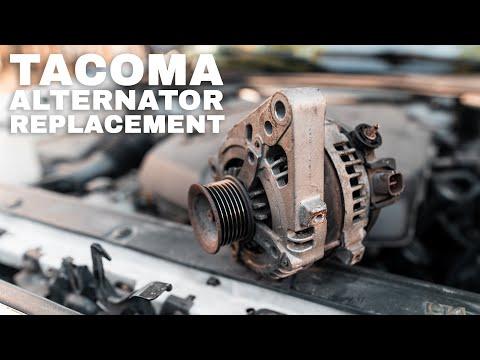







How to Replace the Alternator on a 2005-2015 Toyota Tacoma (Step-by-Step Guide) (Engine: V6 4.0L)
Tools, parts, belt removal steps, wiring reconnect, and key torque specs for a proper install
How to Replace the Alternator on a 2005-2015 Toyota Tacoma (Step-by-Step Guide) (Engine: V6 4.0L)
Tools, parts, belt removal steps, wiring reconnect, and key torque specs for a proper install for 2005, 2006, 2007, 2008, 2009, 2010, 2011, 2012, 2013, 2014, 2015


🔧 Tacoma - Alternator Replacement
Your alternator keeps the battery charged and powers the electrical system while the engine runs. Replacing it on your Tacoma mainly involves removing the serpentine belt, unplugging the alternator wiring, then swapping the unit and reinstalling everything.
Difficulty Level: Intermediate | Estimated Time: 1.5-3.0 hours
⚠️ Safety & Precautions
- ⚠️ Disconnect the negative battery cable first to prevent a short at the alternator power terminal.
- ⚠️ Keep hands and tools away from the belt path; fingers can get pinched when releasing the tensioner.
- ⚠️ Work on a cool engine; the radiator and engine parts can burn you.
- ⚠️ If you raise the front, support with jack stands before going underneath.
🔧 Required Tools
You'll need the following tools for this repair:
- Safety glasses
- Mechanic gloves
- Floor jack (rated 3-ton minimum)
- Jack stands (rated 3-ton minimum)
- Wheel chocks
- 1/4" drive ratchet
- 3/8" drive ratchet
- 3/8" drive torque wrench (10-100 ft-lbs range)
- 10mm socket
- 12mm socket
- 14mm socket
- 10mm wrench
- 14mm wrench
- 3/8" drive extension set
- Flathead screwdriver
- Pliers
- Trim clip removal tool
- Serpentine belt tool (specialty)
- Multimeter
🔩 Required Parts
HowToo sells all the parts you need for this repair:
- Alternator - Qty: 1
- Serpentine drive belt - Qty: 1
- Battery terminal anti-corrosion pads - Qty: 1
- Dielectric grease - Qty: 1
📋 Before You Begin
- Park on level ground, set the parking brake, and chock the rear wheels.
- Open the hood and let the engine cool fully.
- Disconnect the battery: use a 10mm wrench to remove the negative cable first, and move it aside so it can’t spring back.
- Take a quick photo of the belt routing.
🔨 Step-by-Step Instructions
Follow these steps in order:
Step 1: Remove intake ducting for access (if needed)
- Loosen the hose clamps using a flathead screwdriver.
- Unclip/remove any air duct clips using a trim clip removal tool.
- Move the intake tube/ducting out of the way to open up space around the alternator.
Step 2: Release serpentine belt tension
- Locate the automatic belt tensioner (spring-loaded pulley arm).
- Use a serpentine belt tool (specialty) or 14mm wrench on the tensioner hex and rotate to relieve belt tension.
- Slide the belt off the alternator pulley, then slowly release the tensioner back.
- Don’t let the tensioner snap back.
Step 3: Disconnect alternator electrical connections
- Unplug the alternator regulator connector by pressing the lock tab; use pliers gently if the tab is stubborn.
- Remove the rubber boot over the alternator B+ terminal.
- Use a 10mm socket to remove the B+ terminal nut and lift the cable off.
- Torque to 9 Nm (80 in-lbs) when reinstalling the B+ terminal nut.
- Keep the nut somewhere safe—easy to lose.
Step 4: Remove the alternator mounting bolts
- Support the alternator with one hand.
- Use a 14mm socket and 3/8" drive ratchet with a 3/8" drive extension to remove the alternator mounting bolts.
- Lift the alternator out of the engine bay.
- Torque to 39 Nm (29 ft-lbs) for the alternator mounting bolts during reassembly.
Step 5: Install the new alternator
- Set the new alternator into place and hand-start the mounting bolts to avoid cross-threading.
- Tighten the mounting bolts using a 14mm socket, then final-tighten using a 3/8" drive torque wrench.
- Torque to 39 Nm (29 ft-lbs).
Step 6: Reconnect alternator wiring
- Install the main B+ cable and nut using a 10mm socket.
- Torque to 9 Nm (80 in-lbs).
- Reinstall the rubber boot over the terminal.
- Apply a small amount of dielectric grease to the connector seal, then plug the regulator connector back in until it clicks.
Step 7: Reinstall and tension the serpentine belt
- Route the belt according to your photo or the under-hood belt routing label.
- Use the serpentine belt tool (specialty) or 14mm wrench to rotate the tensioner, then slide the belt onto the alternator pulley.
- Slowly release the tensioner and verify the belt is seated in every pulley groove.
- If the belt rides off-center, stop and re-seat it.
Step 8: Reinstall intake ducting
- Reposition the intake tube/ducting.
- Tighten clamps using a flathead screwdriver and reinstall any clips with a trim clip removal tool as needed.
Step 9: Reconnect the battery
- Reconnect the negative battery terminal using a 10mm wrench.
- Torque to 5 Nm (44 in-lbs).
- Install battery terminal anti-corrosion pads if you’re using them.
✅ After Repair
- Start your Tacoma and listen for belt squeal or slapping (signs of misrouting or mis-seated belt).
- Use a multimeter at the battery terminals: engine running should typically read about 13.5-14.8V.
- Verify the battery/charge warning light stays off.
- Recheck for any tools left in the engine bay and confirm the B+ rubber boot is fully covering the terminal.
💰 DIY vs Shop Cost
Shop Cost: $550-$950 (parts + labor)
DIY Cost: $180-$450 (parts only)
You Save: $370-$500 by doing it yourself!
Shop labor rates vary but typically run $100-$150/hour. This repair takes a shop approximately 1.5-3.0 hours.
🎯 Ready to get started?
HowToo makes it easy: same-day/2-day shipping on every part, plus all the tools and specialty tools you need! Check out the parts and tools sections below to add everything to your cart.
Guide for Alternator replace for these Toyota vehicles
| Year Make Model | Sub Model | Engine | Body Style |
|---|---|---|---|
| 2015 Toyota Tacoma | - | V6 4.0L | - |
| 2014 Toyota Tacoma | - | V6 4.0L | - |
| 2013 Toyota Tacoma | - | V6 4.0L | - |
| 2012 Toyota Tacoma | - | V6 4.0L | - |
| 2011 Toyota Tacoma | - | V6 4.0L | - |
| 2010 Toyota Tacoma | - | V6 4.0L | - |
| 2009 Toyota Tacoma | - | V6 4.0L | - |
| 2008 Toyota Tacoma | - | V6 4.0L | - |
| 2007 Toyota Tacoma | - | V6 4.0L | - |
| 2006 Toyota Tacoma | - | V6 4.0L | - |
| 2005 Toyota Tacoma | - | V6 4.0L | - |