









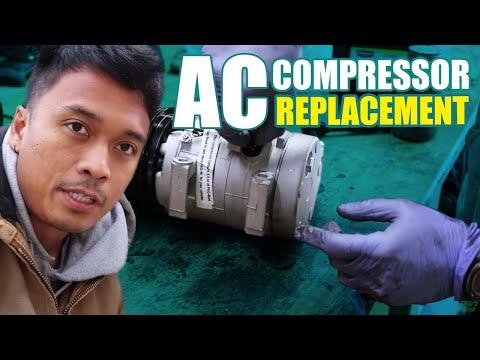






How to Replace the A/C Compressor on a 2021 Toyota Tacoma
Step-by-step DIY Tacoma A/C compressor replacement with tools, parts list, safety tips, and recharge guidance for 2016, 2017, 2018, 2019, 2020, 2021, 2022, 2023
How to Replace the A/C Compressor on a 2021 Toyota Tacoma
Step-by-step DIY Tacoma A/C compressor replacement with tools, parts list, safety tips, and recharge guidance for 2016, 2017, 2018, 2019, 2020, 2021, 2022, 2023


🔧 Tacoma - A/C Compressor Replacement
You’ll be removing the old A/C compressor, installing a new one, and then having the system vacuumed and recharged with the correct refrigerant and oil. On your Tacoma, access is tight but straightforward from underneath once the skid plate is off.
Difficulty Level: Advanced | Estimated Time: 4-6 hours (plus trip to A/C shop)
⚠️ Safety & Precautions
- ⚠️ Do NOT vent refrigerant to the air. By law, the A/C system must be evacuated with a proper recovery machine at a shop before disconnecting any A/C lines.
- ⚠️ Refrigerant can cause serious frostbite and eye injury. Always wear safety glasses and gloves when working near A/C lines.
- ⚠️ Disconnect the negative battery cable before working near the compressor or serpentine belt.
- ⚠️ Support your Tacoma securely on jack stands before going underneath. Never trust only a floor jack.
- ⚠️ The serpentine belt and pulleys can grab loose clothing and fingers. Keep hands clear and engine OFF whenever working on the belt.
- ⚠️ After installation, the system must be evacuated, leak-checked, and recharged by a shop with an A/C machine to avoid compressor damage.
🔧 Required Tools
You'll need the following tools for this repair:
- 🛠️ Floor jack (rated 3-ton minimum)
- 🛠️ Jack stands (rated 3-ton minimum, Qty: 2-4)
- 🛠️ Wheel chocks
- 🛠️ 10mm socket
- 🛠️ 12mm socket
- 🛠️ 14mm socket
- 🛠️ 3/8" drive ratchet
- 🛠️ 3/8" drive torque wrench
- 🛠️ Socket extensions (3"–6")
- 🛠️ Serpentine belt tool or 14mm box wrench
- 🛠️ Flathead screwdriver (medium)
- 🛠️ Pick tool or small pick set
- 🛠️ Needle-nose pliers
- 🛠️ Trim clip removal tool
- 🛠️ Drain pan
- 🛠️ Shop rags
- 🛠️ Safety glasses
- 🛠️ Mechanic gloves
- 🛠️ UV-safe work light
- 🛠️ Refrigerant manifold gauge set (specialty)
- 🛠️ Vacuum pump for A/C systems (specialty)
- 🛠️ Digital scale for refrigerant charging (specialty)
🔩 Required Parts
HowToo sells all the parts you need for this repair:
- 🔩 A/C compressor assembly (with clutch) - Qty: 1
- 🔩 A/C compressor mounting bolt set - Qty: 1 (optional but recommended)
- 🔩 A/C suction and discharge line O-ring set - Qty: 1
- 🔩 PAG A/C compressor oil (correct spec for Tacoma) - Qty: 1 bottle
- 🔩 Serpentine drive belt - Qty: 1 (recommended while you’re here)
- 🔩 A/C system dye and refrigerant (R-134a or R-1234yf per label) - Qty: as specified on under-hood label
- 🔩 Brake cleaner or A/C-safe cleaner - Qty: 1
- 🔩 Shop towels - Qty: 1 pack
- 🔩 Underbody skid plate clips/bolts (if damaged) - Qty: as needed
📋 Before You Begin
- Park the Tacoma on level ground, place it in gear, set the parking brake, and chock the rear wheels.
- Have a licensed A/C shop recover all refrigerant from the system before you disconnect any A/C hoses.
- Open the hood and locate the battery, accessory belt, and A/C compressor (lower front of the engine, passenger side).
- Turn ignition OFF and remove the key.
- Disconnect the negative battery cable using a 10mm socket. Move the cable aside so it cannot spring back.
🔨 Step-by-Step Instructions
Follow these steps in order:
Step 1: Safely raise and support the Tacoma
- Use the floor jack to lift the front of the Tacoma at the front frame or crossmember lifting point.
- Place jack stands under the frame rails on both sides and gently lower the truck onto them.
- Give the truck a firm shake to confirm it’s stable before going underneath.
Step 2: Remove the front skid plate / under cover
- Use a 12mm socket and ratchet to remove the bolts securing the front skid plate.
- If there are plastic clips, use a trim clip removal tool to pop them out without breaking them.
- Lower the skid plate and set it aside.
- Keep bolts laid out in removal order
Step 3: Relieve tension and remove the serpentine belt
- From the front, locate the belt tensioner pulley (spring-loaded pulley that keeps the belt tight).
- Place a serpentine belt tool or 14mm box wrench on the tensioner bolt.
- Rotate the tensioner in the direction that loosens the belt (usually clockwise) and slide the belt off the A/C compressor pulley.
- Slowly release the tensioner back to its rest position.
- Carefully pull the belt out of the engine bay. If reusing, draw a belt routing diagram first.
Step 4: Disconnect electrical connectors from the compressor
- Locate the electrical connector on the compressor clutch and any additional compressor sensors.
- Press the locking tab with your fingers or a flathead screwdriver and gently pull the connector free.
- If a connector is stuck, use a pick tool to lift the lock slightly, but do not break the tab.
Step 5: Disconnect A/C lines from the compressor
- Confirm again that the system has been evacuated by a shop. The lines should not hiss when loosened.
- Place a drain pan under the compressor area to catch any oil drips.
- Use a 12mm socket or the required socket size to remove the bolts holding the suction and discharge lines to the compressor manifold.
- Gently pull the lines away from the compressor. If stuck, wiggle them lightly—do not pry hard on the aluminum.
- Remove and discard the old O-rings using a pick tool. Take care not to scratch the sealing surfaces.
- Cover the open lines and compressor ports with clean shop rags to keep dirt out.
Step 6: Unbolt and remove the old compressor
- Locate the compressor mounting bolts where it attaches to the engine block or mounting bracket.
- Use a 14mm socket and ratchet with an extension as needed to remove all compressor mounting bolts.
- Support the compressor with one hand as you remove the last bolt so it doesn’t fall.
- Lower the compressor out from below the truck.
Step 7: Prepare the new compressor
- Compare the new compressor to the old one: check mounting ears, pulley diameter, connector location, and hose ports.
- Check the label or instructions on the new compressor for how much oil is pre-filled.
- If required, drain the shipping oil by removing the drain plug and rotating the compressor by hand over a drain pan.
- Add the correct amount and type of PAG oil into the new compressor using the supplied ports (follow the compressor or factory instructions for quantity).
- Too much or too little oil can damage the system
Step 8: Install the new compressor
- Lift the new compressor into position from below.
- Align it with the mounting holes on the engine.
- Install the mounting bolts by hand to avoid cross-threading.
- Use a 14mm socket and ratchet to snug all bolts evenly.
- Use a torque wrench and 14mm socket to tighten the compressor mounting bolts to manufacturer specification.
Step 9: Install new O-rings and reconnect A/C lines
- Clean the hose sealing surfaces with a clean rag and a small amount of brake cleaner if needed. Let them dry completely.
- Match the new O-rings to the old ones by size.
- Lightly coat each new O-ring with clean PAG oil using your finger. This helps them seal without tearing.
- Install the new O-rings onto the lines, not in the compressor ports.
- Position the lines onto the new compressor ports.
- Install the line bolts by hand, then tighten them with a 12mm socket and ratchet.
- Use a torque wrench and 12mm socket to tighten the line bolts to manufacturer specification (do not overtighten—these bolts are easy to strip).
Step 10: Reconnect electrical connectors
- Plug the compressor clutch connector back in until you hear or feel a click.
- Reconnect any additional compressor sensor connectors in the same way.
- Gently tug each connector to confirm it is locked.
Step 11: Reinstall the serpentine belt
- Route the new or reused serpentine belt around all pulleys following the belt routing diagram under the hood.
- Leave the A/C compressor pulley for last.
- Use the serpentine belt tool or 14mm box wrench on the tensioner and rotate it to relieve tension.
- Slip the belt over the compressor pulley and slowly release the tensioner.
- Check that the belt sits fully in the grooves on all pulleys with no twist.
Step 12: Reinstall the skid plate
- Lift the skid plate into position under the front of the Tacoma.
- Install the bolts by hand first to avoid cross-threading.
- Use a 12mm socket and ratchet to snug them, then a torque wrench to tighten to manufacturer specification.
- Reinstall any clips using the trim clip removal tool in reverse if needed.
Step 13: Lower the truck and reconnect the battery
- Use the floor jack to lift the Tacoma slightly off the jack stands, remove the stands, and lower it to the ground.
- Reconnect the negative battery cable using a 10mm socket and tighten the nut to manufacturer specification (snug, not overtightened).
Step 14: Evacuate, leak test, and recharge the A/C system
- If you have professional A/C equipment: connect the refrigerant manifold gauge set to the high and low service ports.
- Connect a vacuum pump to the center hose and pull vacuum for at least 30–45 minutes.
- Close the valves and let the system sit for 10–15 minutes to check for vacuum loss (indicates a leak).
- Charge the system with the exact amount of refrigerant listed on the under-hood label using a digital scale.
- If you do not have this equipment, drive the Tacoma to an A/C shop and have them perform vacuum, leak check, and recharge with the correct refrigerant and oil.
✅ After Repair
- Start the engine and turn the A/C to MAX cool, fan on high, recirculation ON.
- Confirm the A/C compressor clutch engages and the center of the pulley spins.
- Let the system run for 5–10 minutes and check for cold air from the vents.
- Inspect all compressor connections and lines for signs of oil or refrigerant leaks.
- Listen for any abnormal noises from the compressor or belt area.
- If vent temperature is not cold or the compressor cycles rapidly, have the system pressures checked with gauges at a shop.
💰 DIY vs Shop Cost
Shop Cost: $1,200–$1,800 (parts + labor + recharge)
DIY Cost: $400–$800 (compressor, belt, O-rings, oil, plus A/C recharge fee)
You Save: $400–$1,000 by doing the mechanical work yourself!
Shop labor rates vary but typically run $100–$150/hour. This repair takes a shop approximately 3–4 hours plus A/C machine time.
🎯 Ready to get started?
HowToo makes it easy: same-day/2-day shipping on every part, plus all the tools and specialty tools you need! Check out the parts and tools sections above to add everything to your cart.