









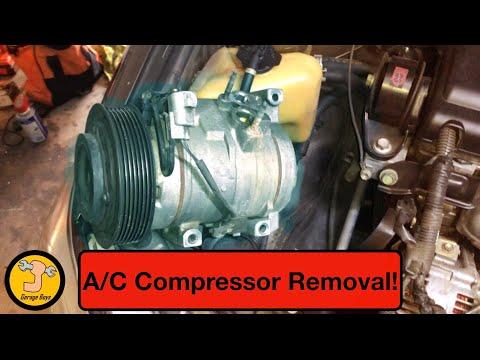







How to Replace the A/C Compressor on a 2019 Toyota Camry
Step-by-step DIY guide with tools, parts list, torque specs, safety tips, and recharge instructions
How to Replace the A/C Compressor on a 2019 Toyota Camry
Step-by-step DIY guide with tools, parts list, torque specs, safety tips, and recharge instructions


🔧 Camry - A/C Compressor Replacement
Replacing the A/C compressor on your Camry involves safely removing the refrigerant, taking off the serpentine belt and compressor, swapping over necessary components, then evacuating and recharging the system. It’s a big job because of the need for special A/C equipment and attention to cleanliness.
Difficulty Level: Advanced | Estimated Time: 4-6 hours (plus A/C evac & recharge time)
⚠️ Safety & Precautions
- ⚠️ Never vent refrigerant to the air. It is illegal and dangerous; it must be recovered using proper A/C equipment.
- ⚠️ Refrigerant can cause severe frostbite if it contacts your skin or eyes. Always wear gloves and safety glasses.
- ⚠️ The engine bay has hot parts and moving belts. Work only with the engine off, key out, and allow things to cool.
- ⚠️ You will need the system evacuated and recharged by a shop if you do not have an A/C recovery machine.
- ⚠️ Disconnect the negative battery terminal before unplugging the compressor to avoid accidental shorts.
- ⚠️ Keep the A/C system sealed as much as possible. Dirt or moisture inside can quickly ruin the new compressor.
🔧 Required Tools
You'll need the following tools for this repair:
- 🛠️ Floor jack (rated 3-ton minimum)
- 🛠️ Jack stands (3-ton pair)
- 🛠️ Wheel chocks
- 🛠️ Safety glasses
- 🛠️ Mechanic gloves
- 🛠️ Metric socket set (8mm-19mm)
- 🛠️ Metric wrench set (10mm-19mm)
- 🛠️ 3/8" drive ratchet
- 🛠️ 3/8" drive torque wrench (5-80 ft-lbs range)
- 🛠️ Flathead screwdriver (medium)
- 🛠️ Trim clip removal tool
- 🛠️ Serpentine belt tool or 3/8" breaker bar
- 🛠️ Pry bar (small)
- 🛠️ Pick tool set
- 🛠️ Digital inspection light or work light
- 🛠️ AC manifold gauge set (R-134a/R-1234yf compatible, specialty)
- 🛠️ Vacuum pump (A/C service, specialty)
- 🛠️ Refrigerant recovery/recharge machine (specialty, or shop service)
- 🛠️ Clean drain pan
- 🛠️ Shop rags
- 🛠️ Plastic line caps or tape
🔩 Required Parts
HowToo sells all the parts you need for this repair:
- 🔩 A/C compressor (new or reman, with clutch) - Qty: 1
- 🔩 A/C compressor mounting bolt set - Qty: 1
- 🔩 A/C O-ring kit for compressor lines - Qty: 1
- 🔩 PAG refrigerant oil (Toyota spec for your compressor) - Qty: As specified with compressor (usually ~120 ml total system, portion in compressor)
- 🔩 Serpentine drive belt - Qty: 1
- 🔩 A/C receiver/drier or condenser with integrated drier - Qty: 1 (recommended with compressor)
- 🔩 A/C system refrigerant (correct type and amount for your Camry) - Qty: As per under-hood label (by weight)
- 🔩 Dielectric grease (for electrical connectors) - Qty: 1 small tube
📋 Before You Begin
- 📝 Park your Camry on a flat, solid surface. Put the transmission in Park and set the parking brake.
- 📝 Have a licensed A/C shop recover the refrigerant from the system before disconnecting any A/C lines if you do not have a recovery machine.
- 📝 Open the hood and let the engine cool completely.
- 📝 Disconnect the negative battery terminal using a 10mm wrench and move the cable aside so it cannot spring back.
- 📝 Check the under-hood A/C label for the correct refrigerant type and charge amount. You will need this for recharging.
- 📝 Lay out clean rags and caps for any A/C ports you open. Keep dirt out at all costs.
🔨 Step-by-Step Instructions
Follow these steps in order:
Step 1: Raise and secure the front of the car
- Place wheel chocks behind the rear wheels.
- Use the floor jack at the front center jacking point to raise the front of your Camry.
- Set the car down onto jack stands under the recommended support points behind the front wheels.
- Give the car a firm shake to be sure it is stable. Never work under just a jack.
Step 2: Remove lower engine splash shields
- Use a 10mm socket and ratchet to remove the bolts holding the plastic splash shield under the engine.
- Use the trim clip removal tool to pop out any plastic clips.
- Lower the shield and set it aside in order so you remember where things go.
Step 3: Verify A/C system is empty
- If you have an A/C manifold gauge set, connect it to the high and low service ports and confirm both read 0 psi (no pressure).
- If you do not have gauges, confirm with the shop that recovered the refrigerant that the system is empty.
- Do not loosen any A/C line if pressure remains.
Step 4: Remove the serpentine belt
- Note the belt routing. Take a clear photo, or check the diagram under the hood if present.
- Locate the belt tensioner. On your V6 it is mounted at the front of the engine.
- Use a serpentine belt tool or 3/8" breaker bar in the tensioner square hole to rotate the tensioner and relieve tension.
- With tension held, slide the belt off the A/C compressor pulley using your free hand.
- Slowly release the tensioner, then remove the belt fully from the pulleys. Inspect the belt; replace it with a new one during reassembly.
Step 5: Access and disconnect the A/C compressor electrical connector
- From below the car, locate the A/C compressor on the lower front of the engine (passenger side).
- Use the inspection light to find the electrical connector going to the compressor clutch/control.
- Use a pick tool or your fingers to gently lift the locking tab and pull the connector straight off.
- Inspect for corrosion and wipe gently with a shop rag if dirty.
Step 6: Disconnect A/C refrigerant lines from the compressor
- Place a clean drain pan under the compressor area to catch any residual oil that may drip.
- Use a 12mm or 14mm socket (size varies) and ratchet to remove the bolts holding the aluminum A/C lines to the compressor.
- Gently wiggle the lines free by hand or with a small pry bar, being careful not to bend them.
- Immediately cap or tape the open line ends and the compressor ports using plastic line caps or tape to keep dirt and moisture out.
Step 7: Remove the A/C compressor mounting bolts
- Use a 14mm socket and ratchet to remove the compressor mounting bolts (usually three or four).
- Support the compressor body with your free hand as you remove the last bolt.
- Note bolt locations; some may be different lengths. Lay them out in order.
- Carefully lower the compressor out of the engine bay. It may be a tight fit; use a small pry bar only if needed and only on sturdy metal, not on thin brackets.
Step 8: Prepare the new compressor
- Place the old and new compressors side by side on a clean bench.
- Check that mounting points, pulley, electrical connector, and ports all match.
- Drain oil from the old compressor into a clean drain pan by tipping it and letting the oil pour out.
- Measure how much oil came out using a small measuring cup. Add this same amount of fresh PAG oil into the new compressor through the suction port, unless the compressor instructions say otherwise.
- Rotate the compressor clutch hub by hand several turns to distribute the oil internally.
Step 9: Install the new compressor
- Lift the new compressor into position from underneath.
- Install the mounting bolts by hand first to avoid cross-threading.
- Use a 14mm socket and ratchet to snug all bolts evenly.
- Then use a torque wrench with 14mm socket to tighten the compressor mounting bolts to 25 Nm (18 ft-lbs) (Toyota spec range; do not overtighten).
Step 10: Install new O-rings and reconnect A/C lines
- Remove the old O-rings from the line fittings using a pick tool. Do not scratch the metal.
- Lightly coat the new O-rings with a dab of fresh PAG oil using your fingers.
- Install the new O-rings into the grooves on the line fittings.
- Position the lines on the new compressor ports carefully, making sure they sit flat.
- Install the line bolts by hand first, then tighten with a 12mm or 14mm socket and torque wrench to 10 Nm (7 ft-lbs). They only need to be snug.
Step 11: Reconnect the electrical connector
- Apply a tiny amount of dielectric grease inside the connector if available.
- Push the connector onto the compressor plug until it clicks.
- Gently tug to confirm it is locked in place.
Step 12: Install the new serpentine belt
- Route the new belt according to your photo or belt diagram. Make sure it sits correctly in every pulley groove.
- Use the serpentine belt tool or 3/8" breaker bar to rotate the tensioner again.
- Slip the belt over the last pulley, then slowly release the tensioner.
- Double-check that the belt is centered and fully seated on each pulley.
Step 13: Reinstall splash shields and lower the car
- Lift the splash shield back into place under the engine.
- Install all bolts with a 10mm socket and clips with the trim clip removal tool (press them back in).
- Use the floor jack to raise the car slightly, remove the jack stands, then lower the car to the ground.
Step 14: Evacuate and recharge the A/C system
- If you have A/C equipment:
- Reconnect the negative battery terminal with a 10mm wrench.
- Hook up the A/C manifold gauge set to the high and low service ports.
- Connect the vacuum pump and draw a vacuum for at least 30 minutes to remove air and moisture.
- Close the valves and verify the system holds vacuum for at least 10 minutes (no rise in pressure).
- Charge the system with the exact refrigerant weight shown on the under-hood label using your refrigerant recovery/recharge machine.
- If you don't have A/C equipment:
- Reconnect the negative battery terminal with a 10mm wrench.
- Drive carefully to an A/C shop and ask them to evacuate and recharge the system to factory spec now that the new compressor is installed.
Step 15: Check for leaks and operation
- With the engine running, turn on the A/C, set it to MAX cold, fan on high.
- Verify the A/C compressor clutch engages and the center of the pulley spins.
- Use the inspection light to look around the compressor fittings and lines for any signs of oil or bubbles if the shop added UV dye.
- Confirm the air from the vents gets cold after a few minutes of running.
✅ After Repair
- ✅ Listen for unusual noises from the compressor area (squeals, grinding, rattling). If you hear them, shut off the engine and recheck belt routing and bolt tightness.
- ✅ Check under the car over the next few days for fresh oily spots that could indicate a refrigerant leak.
- ✅ Monitor A/C performance over the next week. If cooling weakens or cycles rapidly, have pressures checked with gauges.
- ✅ Keep your work area clean and store any leftover PAG oil sealed so it does not absorb moisture.
💰 DIY vs Shop Cost
Shop Cost: $1,200-$1,800 (parts + labor, including evac/recharge)
DIY Cost: $450-$850 (parts only, plus shop evac/recharge if needed)
You Save: $350-$1,100 by doing it yourself!
Shop labor rates vary but typically run $100-$150/hour. This repair takes a shop approximately 3-4 hours plus A/C service time.
🎯 Ready to get started?
HowToo makes it easy: same-day/2-day shipping on every part, plus all the tools and specialty tools you need! Check out the parts and tools sections above to add everything to your cart.