









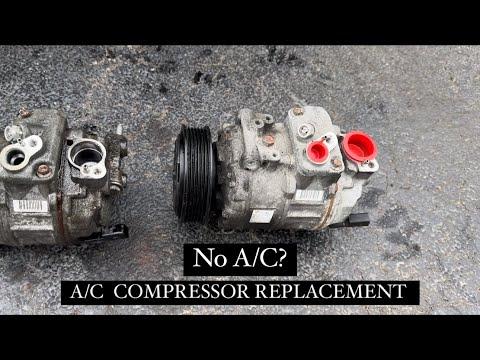







How to Replace the A/C Compressor on a 2018 Volkswagen Golf
Step-by-step compressor swap with required tools, O-rings/oil tips, and evac & recharge safety notes for 2018
How to Replace the A/C Compressor on a 2018 Volkswagen Golf
Step-by-step compressor swap with required tools, O-rings/oil tips, and evac & recharge safety notes for 2018


🔧 Golf - A/C Compressor Replacement
Replacing the A/C compressor on your Golf involves safely recovering the refrigerant, removing the drive belt and compressor, then installing the new unit with new seals before evacuating and recharging the system. Because A/C refrigerant handling and compressor oil quantity are very system-specific, I need 2 quick details to give you exact, trim-correct steps and fill specs.
Difficulty Level: Advanced | Estimated Time: 3-6 hours
⚠️ Safety & Precautions
- ⚠️ A/C refrigerant is under high pressure—do not loosen any A/C line unless the system has been professionally recovered.
- ⚠️ Venting refrigerant to the atmosphere is unsafe and illegal; use an A/C recovery machine or have a shop recover/recharge.
- ⚠️ Keep hands/tools clear of the belt path; the belt system can pinch or cut.
- ⚠️ Let the engine cool fully; the turbo/engine bay gets very hot.
- ⚠️ Disconnect the battery negative terminal before working near the compressor electrical connector.
🔧 Required Tools
You'll need the following tools for this repair:
- Safety glasses
- Nitrile gloves
- Floor jack (rated 3-ton minimum)
- Jack stands (rated 3-ton minimum)
- Wheel chocks
- 3/8" drive ratchet
- 1/4" drive ratchet
- Socket set (metric 8mm–18mm)
- Torx bit set (T20–T30)
- Triple-square bit set (M8–M10)
- Serpentine belt tool (specialty)
- Torque wrench (5–60 Nm range)
- Trim clip removal tool
- Flat-blade screwdriver
- Catch pan
- A/C manifold gauge set (specialty)
- Vacuum pump (specialty)
- Refrigerant recovery/recharge machine (specialty)
🔩 Required Parts
HowToo sells all the parts you need for this repair:
- A/C compressor (correct for your Golf) - Qty: 1
- A/C line O-ring seal set - Qty: 1
- A/C compressor oil (VW-spec PAG oil) - Qty: 1
- Serpentine belt - Qty: 1
📋 Before You Begin
- Park on level ground, set the parking brake, and use wheel chocks.
- If the A/C system still has pressure, schedule refrigerant recovery first. (Recovery means a machine removes and stores the refrigerant safely.)
- Disconnect the battery negative terminal using a 10mm socket.
- Raise the front safely with a floor jack and support with jack stands.
🔨 Step-by-Step Instructions
Follow these steps in order:
Step 1: Confirm refrigerant is recovered (system empty)
- Do not open any A/C line until a shop or an A/C recovery/recharge machine (specialty) has recovered the refrigerant.
- Use an A/C manifold gauge set (specialty) to verify the system is at 0 psi before loosening any fittings.
Step 2: Remove lower engine splash shield
- Use a Torx bit (T25/T30) and trim clip removal tool to remove the fasteners and drop the shield.
Step 3: Release and remove the serpentine belt
- Use a serpentine belt tool (specialty) to rotate the belt tensioner and slip the belt off the A/C compressor pulley.
- Take a quick belt routing photo first.
Step 4: Disconnect the compressor electrical connector
- Use a flat-blade screwdriver to gently release the lock tab, then unplug the connector.
Step 5: Remove A/C lines from the compressor
- Place a catch pan under the connection area.
- Use the correct socket set (metric) to remove the line retaining bolt(s), then pull the lines straight off.
- Immediately remove old O-rings and install new O-rings from the A/C line O-ring seal set.
- Lightly lubricate new O-rings with the correct VW-spec PAG oil before reassembly.
Step 6: Unbolt and remove the compressor
- Support the compressor by hand.
- Use the correct socket or triple-square bit (fastener style varies by setup) to remove the compressor mounting bolts.
- Lower and remove the compressor from underneath.
Step 7: Install the new compressor (with correct oil handling)
- Before bolting in, set the compressor oil amount correctly (this depends on your refrigerant type and what components were replaced).
- Position the compressor and start bolts by hand, then tighten with a torque wrench to the factory specification for your exact compressor/fasteners.
- Reconnect A/C lines with new O-rings; tighten retaining hardware with a torque wrench to factory spec.
- Reconnect the electrical connector.
Step 8: Reinstall belt and splash shield
- Use the serpentine belt tool (specialty) to rotate the tensioner and reinstall the belt.
- Reinstall the splash shield using the Torx bit set.
Step 9: Evacuate and recharge the A/C system
- Use a vacuum pump (specialty) and A/C manifold gauge set (specialty) to pull vacuum and check for leaks.
- Recharge using the correct refrigerant type and exact charge weight for your Golf (this is critical for proper cooling and compressor life).
✅ After Repair
- Reconnect the battery using a 10mm socket.
- Start the engine and turn A/C on MAX; confirm the compressor engages and vent temps drop steadily.
- Check for oily residue or hissing at the compressor line connections (signs of a leak).
- If cooling is weak or pressures look abnormal, stop and re-check charge amount and leaks.
💰 DIY vs Shop Cost
Shop Cost: $900-$1,800 (parts + labor + refrigerant service)
DIY Cost: $350-$900 (parts only; not including A/C machine access)
You Save: $550-$900 by doing it yourself!
Shop labor rates vary but typically run $100-$150/hour. This repair takes a shop approximately 2.5-4.0 hours.
🎯 Ready to get started?
Before I give you the exact, factory-correct refrigerant charge, oil amount, and the correct bolt torque specs for your Golf, answer these 2 quick questions:
- ❓ Is your Golf’s A/C refrigerant R-134a or R-1234yf (it’s listed on the under-hood A/C label)?
- ❓ Are you replacing only the compressor, or did you also replace the condenser/drier or flush the system?
HowToo makes it easy: same-day/2-day shipping on every part, plus all the tools and specialty tools you need! Check out the parts and tools sections below to add everything to your cart.