









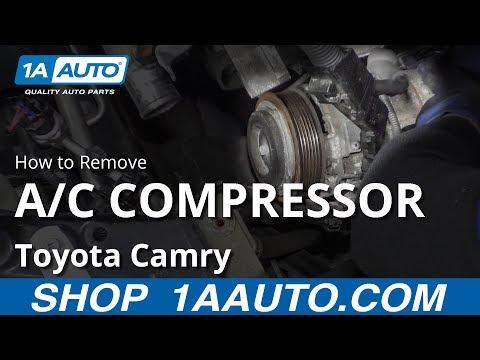







How to Replace the A/C Compressor on a 2018 Toyota Avalon (R-134a Recharge Guide)
Step-by-step removal and install with required tools, O-rings/oil tips, torque specs, vacuum, and proper recharge by weight for 2013, 2014, 2015, 2016, 2017, 2018
How to Replace the A/C Compressor on a 2018 Toyota Avalon (R-134a Recharge Guide)
Step-by-step removal and install with required tools, O-rings/oil tips, torque specs, vacuum, and proper recharge by weight for 2013, 2014, 2015, 2016, 2017, 2018


🔧 Avalon - A/C Compressor Replacement
Replacing the A/C compressor on your Avalon is a big job because the refrigerant must be safely recovered, the system opened without contamination, and then the system must be vacuumed and recharged to an exact specification. If the old compressor failed internally (metal debris), additional parts and flushing may be required to prevent the new compressor from failing quickly.
Difficulty Level: Advanced | Estimated Time: 3-6 hours
⚠️ Safety & Precautions
- ⚠️ Refrigerant must be recovered with proper equipment—do not vent to the air.
- ⚠️ Wear eye protection and gloves; liquid refrigerant can cause frostbite.
- ⚠️ Keep dirt out of A/C lines; cap/plug openings immediately.
- ⚠️ Disconnect the negative battery cable before unplugging the compressor.
- ⚠️ Never run the A/C system with no refrigerant; it can destroy the new compressor.
🔧 Required Tools
You'll need the following tools for this repair:
- Safety glasses
- Nitrile gloves
- Floor jack (rated 3-ton minimum)
- Jack stands (rated 3-ton minimum)
- Wheel chocks
- Metric socket set (8mm, 10mm, 12mm, 14mm)
- 3/8" drive ratchet
- 3/8" drive torque wrench (10–80 ft-lbs)
- 1/4" drive torque wrench (inch-lb range)
- Extensions (3" and 6")
- Trim clip remover
- Serpentine belt tool or 14mm wrench
- Line caps/plugs assortment
- O-ring pick set
- A/C manifold gauge set (specialty)
- Vacuum pump (specialty)
- Refrigerant recovery machine (specialty)
- Refrigerant charging scale (specialty)
🔩 Required Parts
HowToo sells all the parts you need for this repair:
- A/C compressor - Qty: 1
- A/C compressor manifold O-ring set - Qty: 1
- ND-OIL 11 A/C compressor oil - Qty: 1
- R-134a refrigerant - Qty: 1 (amount per under-hood label)
- Receiver/drier (if serviced separately) - Qty: 1
- Condenser (only if compressor failed with debris) - Qty: 1
- Expansion valve (only if compressor failed with debris) - Qty: 1
📋 Before You Begin
- Park on level ground, set the parking brake, and use wheel chocks.
- Have a shop (or your refrigerant recovery machine) recover the refrigerant before any lines are opened.
- Read the under-hood A/C label and note the exact refrigerant charge amount. You will need that exact number to recharge.
- If the old compressor made grinding noises or the oil looked “sparkly,” plan for debris cleanup (often condenser + expansion valve) before installing the new compressor.
🔨 Step-by-Step Instructions
Follow these steps in order:
Step 1: Recover the refrigerant
- Use a refrigerant recovery machine (specialty) connected with an A/C manifold gauge set (specialty) to recover the system completely.
- Do not proceed until pressures are zero.
Step 2: Disconnect battery power
- Open the hood and disconnect the negative battery cable using a 10mm socket.
Step 3: Raise and support the front of the car
- Lift the front with a floor jack (rated 3-ton minimum) and support it on jack stands (rated 3-ton minimum).
Step 4: Remove the lower engine undercover (if equipped)
- Remove the fasteners using a 10mm socket and a trim clip remover.
Step 5: Remove the serpentine belt from the A/C compressor
- Rotate the belt tensioner using a serpentine belt tool or 14mm wrench.
- Slip the belt off the A/C compressor pulley and slowly release the tensioner.
- Take a photo of belt routing.
Step 6: Unplug the compressor electrical connector
- Release the lock tab and unplug the connector by hand.
Step 7: Remove the A/C refrigerant lines from the compressor
- Place rags under the connection area.
- Remove the line/manifold retaining bolt(s) using the correct 10mm socket (common on Toyota A/C manifolds).
- Gently wiggle and pull the manifold off the compressor.
- Immediately cap/plug the open lines using line caps/plugs assortment.
- Remove old O-rings using an O-ring pick set.
- Install new O-rings and lightly lubricate them with ND-OIL 11 A/C compressor oil.
- Torque to 9.8 Nm (87 in-lbs) on the line/manifold bolt(s).
Step 8: Remove the compressor mounting bolts and compressor
- Support the compressor with one hand.
- Remove the compressor mounting bolts using a 12mm socket and 3/8" drive ratchet.
- Lower and remove the compressor from the vehicle.
- Torque to 25 Nm (18 ft-lbs) for the compressor mounting bolts during installation.
Step 9: Set the oil amount in the new compressor
- Oil balancing is critical. If the new compressor comes pre-filled, you must avoid overfilling the system.
- On the old compressor, drain oil into a clean measuring container (by rotating the clutch/pulley by hand while draining).
- Add the same amount of ND-OIL 11 A/C compressor oil into the new compressor (or adjust the pre-fill so the installed amount matches what came out).
- Too much oil reduces cooling.
Step 10: Install the new compressor
- Position the new compressor and start bolts by hand.
- Tighten mounting bolts with a 12mm socket, then use a 3/8" drive torque wrench (10–80 ft-lbs).
- Torque to 25 Nm (18 ft-lbs).
Step 11: Reinstall the refrigerant lines and reconnect electrical
- Install the lubricated new O-rings (if not already installed) and seat the manifold squarely.
- Install the retaining bolt(s) using a 10mm socket, then torque with a 1/4" drive torque wrench (inch-lb range).
- Torque to 9.8 Nm (87 in-lbs).
- Reconnect the compressor electrical connector by hand until it clicks.
Step 12: Reinstall the serpentine belt and undercovers
- Route the belt and rotate the tensioner using a serpentine belt tool or 14mm wrench.
- Reinstall the lower undercover using a 10mm socket and trim clip remover.
Step 13: Evacuate (vacuum) the A/C system
- Connect the A/C manifold gauge set (specialty) and vacuum pump (specialty).
- Pull vacuum for at least 30–45 minutes.
- Close valves and verify it holds vacuum (leak check) for 10–15 minutes.
Step 14: Recharge with the exact amount of R-134a
- Charge by weight using a refrigerant charging scale (specialty).
- Add the exact amount listed on the under-hood label (do not “charge by pressure”).
- Reconnect the battery negative cable using a 10mm socket.
✅ After Repair
- Start the engine and set A/C to MAX; confirm the compressor cycles normally and vents blow cold.
- Check for leaks at the compressor manifold using visual inspection (oil residue) after a short drive.
- Confirm no belt squeal and the belt is fully seated on every pulley.
- If cooling is weak, stop and re-check charge amount by weight and inspect for leaks.
💰 DIY vs Shop Cost
Shop Cost: $1,200-$2,500 (parts + labor)
DIY Cost: $350-$900 (parts only, assuming you already have specialty equipment)
You Save: $850-$1,600 by doing it yourself!
Shop labor rates vary but typically run $100-$150/hour. This repair takes a shop approximately 3-5 hours.
🎯 Ready to get started?
HowToo makes it easy: same-day/2-day shipping on every part, plus all the tools and specialty tools you need! Check out the parts and tools sections below to add everything to your cart.