









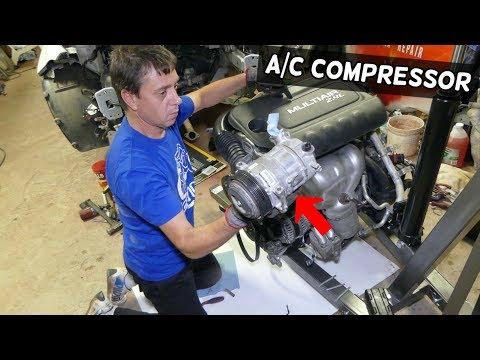







How to Replace the A/C Compressor on a 2018 Jeep Renegade (R-134a System)
Step-by-step replacement with required tools/parts, O-ring and oil tips, plus vacuum & recharge specs and torque values
How to Replace the A/C Compressor on a 2018 Jeep Renegade (R-134a System)
Step-by-step replacement with required tools/parts, O-ring and oil tips, plus vacuum & recharge specs and torque values


🔧 Renegade - A/C Compressor Replacement
Replacing the A/C compressor on your Renegade involves safely evacuating the refrigerant, removing the drive belt, swapping the compressor, then pulling vacuum and recharging the system to the under-hood label spec. Most repeat failures come from skipped refrigerant recovery, contaminated oil, or missed O-rings.
Difficulty Level: Advanced | Estimated Time: 3-6 hours
⚠️ Safety & Precautions
- ⚠️ Refrigerant must be recovered with an A/C machine; venting is unsafe and illegal.
- ⚠️ Do not open A/C lines until the system is fully evacuated (zero pressure).
- ⚠️ Wear gloves and safety glasses; refrigerant/oil can cause frostbite and eye injury.
- ⚠️ Keep hands clear of the belt path; never crank the engine while working near pulleys.
- ⚠️ Support the vehicle with jack stands; never rely on a floor jack alone.
🔧 Required Tools
You'll need the following tools for this repair:
- Safety glasses
- Nitrile gloves
- Floor jack (rated 3-ton minimum)
- Jack stands (rated 3-ton minimum)
- Wheel chocks
- Metric socket set (8mm-18mm)
- 3/8" drive ratchet
- 3/8" drive torque wrench (10-100 Nm range)
- Serpentine belt tool or long 3/8" breaker bar
- Torx bit set (T25-T30)
- Trim clip remover
- Flat-blade screwdriver
- Pick set
- A/C line cap/plug kit
- Shop rags
- UV flashlight
- Manifold gauge set for R-134a
- Vacuum pump
- Refrigerant scale
- Refrigerant recovery machine (specialty)
- Scan tool with A/C data (optional)
🔩 Required Parts
HowToo sells all the parts you need for this repair:
- A/C compressor - Qty: 1
- A/C compressor manifold O-ring kit - Qty: 1
- R-134a refrigerant - Qty: As specified on under-hood label
- PAG A/C oil - Qty: As required to match removed oil
- Serpentine belt - Qty: 1 Optional, if cracked/glazed
📋 Before You Begin
- Park on level ground, set the parking brake, and chock the rear wheels.
- Let the engine cool fully; you’ll work near the radiator and exhaust.
- Have a shop recover the refrigerant first, or use a recovery machine before opening any A/C fitting.
- Locate the under-hood A/C label and note the exact refrigerant charge amount (do not guess).
- A/C oil is measured, not “topped off.” Plan to measure what comes out of the old compressor.
🔨 Step-by-Step Instructions
Follow these steps in order:
Step 1: Recover the refrigerant (required)
- Connect the manifold gauge set for R-134a to the high and low service ports.
- Use a refrigerant recovery machine (specialty) to recover the refrigerant until both gauges read zero and the machine completes its cycle.
- Disconnect the manifold gauge set for R-134a once recovery is complete.
Step 2: Raise the front and remove the lower splash shield
- Lift the front with a floor jack (rated 3-ton minimum) and support it on jack stands (rated 3-ton minimum).
- Remove the lower splash shield/undertray fasteners using a Torx bit set (T25-T30), metric socket set (8mm-18mm), and trim clip remover.
Step 3: Remove the serpentine belt from the A/C compressor
- Use a serpentine belt tool or long 3/8" breaker bar on the belt tensioner and rotate it to relieve belt tension.
- Slip the belt off the A/C compressor pulley first, then slowly release the tensioner.
- Take a photo of belt routing first.
Step 4: Unplug the compressor electrical connector
- Use a flat-blade screwdriver to gently release the locking tab (don’t pry hard).
- Unplug the connector and tuck it aside.
Step 5: Disconnect the A/C line manifold from the compressor
- Place shop rags under the compressor to catch oil drips.
- Remove the line retaining bolt using a metric socket set (8mm-18mm) and 3/8" drive ratchet.
- Carefully wiggle the manifold free; use a pick set only if needed to break the seal.
- Immediately cap/plug the open lines using an A/C line cap/plug kit.
- Torque to 10 Nm (89 in-lbs) for the line retaining bolt during reassembly.
Step 6: Remove the A/C compressor
- Support the compressor with one hand while removing the mounting bolts using a metric socket set (8mm-18mm) and 3/8" drive ratchet.
- Lower and remove the compressor from underneath.
- Torque to 25 Nm (18 ft-lbs) for the compressor mounting bolts during reassembly.
Step 7: Match the oil amount (critical)
- Drain the old compressor oil into a clean measuring container (use shop rags to avoid spills).
- Compare to the new compressor’s oil amount; adjust using PAG A/C oil so the new compressor matches the amount removed.
- Wrong oil amount can kill the new compressor.
Step 8: Install the new compressor
- Position the new compressor and hand-start the mounting bolts using a metric socket set (8mm-18mm).
- Tighten with a 3/8" drive torque wrench (10-100 Nm range): Torque to 25 Nm (18 ft-lbs).
- Reconnect the electrical connector until it clicks.
Step 9: Install new O-rings and reconnect the A/C manifold
- Remove old O-rings using a pick set (do not scratch metal sealing surfaces).
- Install new O-rings from the A/C compressor manifold O-ring kit, lightly lubricated with clean PAG A/C oil.
- Reconnect the manifold, install the retaining bolt, and tighten with a 3/8" drive torque wrench (10-100 Nm range): Torque to 10 Nm (89 in-lbs).
Step 10: Reinstall the serpentine belt
- Route the belt per your photo and the under-hood routing diagram.
- Use the serpentine belt tool or long 3/8" breaker bar to move the tensioner, slip the belt onto the last pulley, then release slowly.
- Visually confirm the belt is seated in every pulley groove using a UV flashlight.
Step 11: Reinstall the splash shield and lower the vehicle
- Reinstall the undertray using a Torx bit set (T25-T30), metric socket set (8mm-18mm), and trim clip remover.
- Lower the vehicle from the jack stands (rated 3-ton minimum) using the floor jack (rated 3-ton minimum).
Step 12: Vacuum and recharge the A/C system
- Connect the manifold gauge set for R-134a and connect a vacuum pump.
- Pull vacuum for at least 30 minutes (longer if humidity is high), then close valves and confirm it holds vacuum for 10 minutes.
- Recharge by weight using a refrigerant scale to the exact amount on the under-hood label.
✅ After Repair
- Start the engine and turn A/C to MAX; confirm the compressor engages and the center vents blow cold.
- Check for leaks at the compressor manifold using a UV flashlight (UV dye may already be in the system).
- Watch manifold pressures; abnormal high-side pressure can indicate overcharge or airflow problems.
- If cooling is weak, verify radiator fan operation and that the condenser isn’t blocked.
💰 DIY vs Shop Cost
Shop Cost: $900-$1,600 (parts + labor + evac/recharge)
DIY Cost: $250-$700 (parts only, assuming you have A/C equipment)
You Save: $650-$900 by doing it yourself!
Shop labor rates vary but typically run $100-$150/hour. This repair takes a shop approximately 2.5-4.0 hours.
🎯 Ready to get started?
HowToo makes it easy: same-day/2-day shipping on every part, plus all the tools and specialty tools you need! Check out the parts and tools sections below to add everything to your cart.