









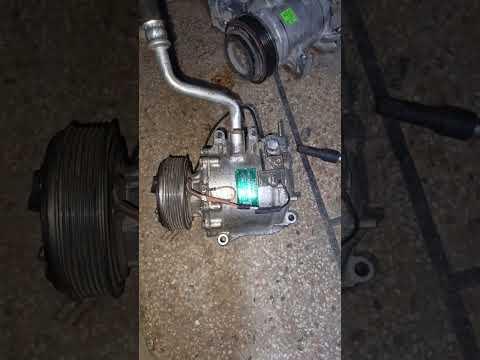







How to Replace the A/C Compressor on a 2018 Honda Civic (Recover, Install, Recharge)
Step-by-step instructions with required tools/parts, safety tips, O-ring/oil steps, vacuum test, and recharge guidance
How to Replace the A/C Compressor on a 2018 Honda Civic (Recover, Install, Recharge)
Step-by-step instructions with required tools/parts, safety tips, O-ring/oil steps, vacuum test, and recharge guidance


🔧 Civic - A/C Compressor Replacement
Replacing the A/C compressor on your Civic means safely recovering the refrigerant, removing the drive belt and refrigerant lines, swapping the compressor, then vacuuming and recharging the system. The most important part is doing the refrigerant/oil steps correctly so the new compressor doesn’t fail.
Difficulty Level: Advanced | Estimated Time: 3-5 hours
⚠️ Safety & Precautions
- ⚠️ Refrigerant must be recovered with proper equipment—do not vent to the air.
- ⚠️ Wear eye protection and gloves; liquid refrigerant can cause frostbite.
- ⚠️ Work on a cool engine; keep hands clear of the radiator fan area.
- ⚠️ If you disconnect A/C lines, replace O-rings and keep openings capped to prevent moisture contamination.
🔧 Required Tools
You'll need the following tools for this repair:
- Safety glasses
- Nitrile gloves
- Floor jack (rated 3-ton minimum)
- Jack stands (rated 3-ton minimum)
- Wheel chocks
- Metric socket set (8mm-19mm)
- 3/8" drive ratchet
- 3/8" drive torque wrench (10-100 Nm range)
- Serpentine belt tool (14mm)
- Trim clip removal tool
- Flathead screwdriver
- Pick tool set
- Line caps/plug kit for A/C openings
- A/C manifold gauge set (specialty)
- Vacuum pump (specialty)
- Refrigerant recovery machine (specialty)
- Refrigerant scale (specialty)
- UV dye leak light (specialty)
🔩 Required Parts
HowToo sells all the parts you need for this repair:
- A/C compressor - Qty: 1
- A/C compressor O-ring set - Qty: 1
- Refrigerant (per under-hood label: R-1234yf or R-134a) - Qty: 1 charge
- A/C compressor oil (type per under-hood label, usually PAG/ND-Oil) - Qty: as needed
- Serpentine belt - Qty: 1 (recommended if worn/cracked)
📋 Before You Begin
- 🅿️ Park on level ground, set the parking brake, and chock the rear wheels.
- 🔌 Plan to disconnect the negative battery cable using a 10mm socket once the car is safely supported.
- 🧪 Confirm the refrigerant type on the under-hood A/C label (this determines the exact equipment and charge process).
- 📸 Send me a clear photo of (1) the under-hood A/C refrigerant label and (2) the torque-spec page/table (or a photo of the compressor/line bolt torque specs) so I can give you exact Honda torque numbers.
- 🛠️ If you don’t have a recovery machine, schedule a shop to recover the refrigerant first, then you can do the mechanical swap and return for vacuum/recharge.
🔨 Step-by-Step Instructions
Follow these steps in order:
Step 1: Recover the refrigerant (required)
- Connect the A/C manifold gauge set (specialty) to the high/low service ports.
- Use a refrigerant recovery machine (specialty) to fully recover the system.
- Do not loosen any A/C line before recovery.
Step 2: Disconnect battery and raise the front
- Use a 10mm socket to disconnect the negative battery terminal.
- Use a floor jack (rated 3-ton minimum) to lift the front and support with jack stands (rated 3-ton minimum).
- Install wheel chocks behind rear tires.
Step 3: Remove lower splash shield/undertray (as needed for access)
- Use a trim clip removal tool and metric socket set (8mm-19mm) with a 3/8" drive ratchet to remove the clips/bolts.
- Set fasteners aside in a tray so they don’t get lost.
Step 4: Remove serpentine belt from the A/C compressor
- Use a serpentine belt tool (14mm) to rotate the belt tensioner and slip the belt off the A/C compressor pulley.
- Take a photo of belt routing first.
Step 5: Disconnect A/C lines from the compressor
- Use the appropriate size from the metric socket set (8mm-19mm) with a 3/8" drive ratchet to remove the line retaining bolt(s).
- Gently wiggle the lines free—do not pry hard on aluminum tubes.
- Immediately install line caps/plug kit for A/C openings to keep moisture out.
- Remove old O-rings using a pick tool set (don’t scratch the sealing surfaces).
Step 6: Unplug compressor electrical connector(s)
- Use a flathead screwdriver only if needed to release the lock tab gently.
- Inspect the connector for oil intrusion or corrosion.
Step 7: Remove the compressor mounting bolts and compressor
- Use the correct socket from the metric socket set (8mm-19mm) with a 3/8" drive ratchet to remove the mounting bolts.
- Lower the compressor out carefully; it’s heavier than it looks.
- Torque spec note: I need your label/torque-spec photo to provide exact Honda torque values for the mounting bolts and line bolts.
Step 8: Prepare and install the new compressor (oil + O-rings)
- Compare the new compressor to the old one (ports, connector, mounting points).
- Lightly lubricate new O-rings with the correct A/C compressor oil (type per under-hood label, usually PAG/ND-Oil) and install them.
- If the new compressor is not pre-filled correctly, adjust oil quantity per Honda procedure (this depends on what parts were replaced and how much oil was lost).
Step 9: Reinstall compressor, reconnect lines, reconnect wiring
- Install the compressor and start bolts by hand to avoid cross-threading.
- Use a 3/8" drive torque wrench (10-100 Nm range) to tighten fasteners once I have your Honda torque values.
- Reconnect the electrical connector until it clicks.
Step 10: Reinstall belt and undertray
- Use a serpentine belt tool (14mm) to move the tensioner and reinstall the belt.
- Reinstall the undertray using a trim clip removal tool and metric socket set (8mm-19mm).
Step 11: Vacuum test and recharge
- Use the A/C manifold gauge set (specialty) and vacuum pump (specialty) to pull a deep vacuum and verify it holds (leak check).
- Recharge using the correct refrigerant (per under-hood label: R-1234yf or R-134a) by weight using a refrigerant scale (specialty).
- If you suspect a leak, use a UV dye leak light (specialty) after running the A/C.
✅ After Repair
- Start the engine and set A/C to MAX cold; verify the compressor engages and vent temps drop.
- Check for unusual noises and re-check for leaks at the compressor line connections.
- Recheck belt alignment on all pulleys.
- If the A/C doesn’t cool, stop and don’t keep running it—low charge can damage the compressor.
💰 DIY vs Shop Cost
Shop Cost: $900-$1,800 (parts + labor)
DIY Cost: $350-$900 (parts only)
You Save: $550-$900 by doing it yourself!
Shop labor rates vary but typically run $100-$150/hour. This repair takes a shop approximately 3-5 hours.
🎯 Ready to get started?
HowToo makes it easy: same-day/2-day shipping on every part, plus all the tools and specialty tools you need! Check out the parts and tools sections below to add everything to your cart.