









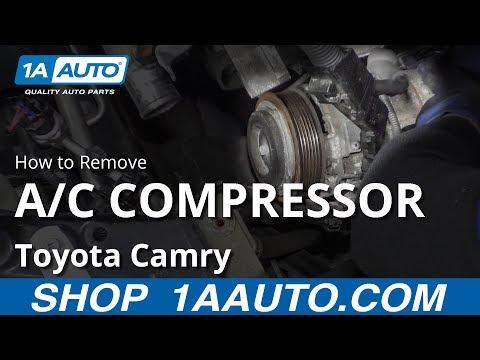





How to Replace the A/C Compressor on a 2018-2020 Toyota Camry (Trim: XSE | Engine: Inline 4 2.5L)
Step-by-step repair guide with tools, parts, safety tips, and A/C recharge instructions
How to Replace the A/C Compressor on a 2018-2020 Toyota Camry (Trim: XSE | Engine: Inline 4 2.5L)
Step-by-step repair guide with tools, parts, safety tips, and A/C recharge instructions for 2018, 2019, 2020


🔧 A/C Compressor - Replacement
The A/C compressor on your Camry must be removed and replaced with the refrigerant system fully evacuated first. This is a major repair because the refrigerant and oil system must be handled correctly to prevent damage and leaks.
Difficulty Level: Advanced | Estimated Time: 4-7 hours
⚠️ Safety & Precautions
- Refrigerant must be recovered by certified equipment before starting. Never vent A/C refrigerant.
- Wear safety glasses and gloves; refrigerant can cause severe frostbite.
- Disconnect the negative battery cable before removing the compressor clutch/electrical connector.
- Keep dirt out of the open A/C lines and compressor ports.
- Replace the receiver/drier or desiccant component if the system has been open for any length of time.
- This repair requires an A/C vacuum and recharge after installation.
🔧 Required Tools
You'll need the following tools for this repair:
- 10mm socket
- 12mm socket
- 14mm socket
- Ratchet
- Short extension
- Torque wrench
- Serpentine belt tool or breaker bar
- A/C line wrench set
- Drain pan
- Fender cover
- O-ring pick
- Clean shop towels
- Safety glasses
- Gloves
- A/C vacuum pump
- A/C manifold gauge set
- Refrigerant recovery/recharge machine (specialty)
🔩 Required Parts
HowToo sells all the parts you need for this repair:
- A/C compressor - Qty: 1
- A/C compressor O-ring set - Qty: 1 set
- A/C compressor oil - Qty: 1 bottle
- Serpentine belt - Qty: 1
- Receiver/drier or desiccant element - Qty: 1
📋 Before You Begin
- Recover the refrigerant with proper equipment before opening the system.
- Park on level ground and set the parking brake.
- Disconnect the negative battery cable.
- Note the belt routing before removing the belt.
- Keep all open A/C lines capped or covered immediately.
🔨 Step-by-Step Instructions
Follow these steps in order:
Step 1: Recover the refrigerant
- Use a refrigerant recovery/recharge machine (specialty) to remove all refrigerant from the system.
- Do not open any A/C line until the system is fully recovered.
Step 2: Disconnect the battery
- Use a 10mm socket to disconnect the negative battery cable.
- Isolate the cable so it cannot touch the terminal.
Step 3: Remove the serpentine belt
- Use a serpentine belt tool or breaker bar to relieve tension from the belt tensioner.
- Slip the belt off the A/C compressor pulley and remove it.
- Take a photo of the belt routing first.
Step 4: Disconnect the compressor electrical connector
- Use your fingers to unplug the compressor connector.
- Inspect the connector for corrosion or damaged terminals.
Step 5: Disconnect the A/C lines
- Use the correct A/C line wrench set to loosen the refrigerant line fittings.
- Remove the line bolts carefully and catch any residual oil in a drain pan.
- Immediately cap or cover the open lines.
Step 6: Remove the compressor mounting bolts
- Use a 12mm socket or 14mm socket with a ratchet and short extension to remove the compressor bolts.
- Support the compressor as you remove the last bolt.
- Torque on installation: tighten the mounting bolts to factory spec for your Camry’s compressor bracket.
Step 7: Remove the old compressor
- Lower the compressor out carefully.
- Compare the old and new units to make sure the hose ports and electrical connector match.
Step 8: Drain and measure oil from the old compressor
- Drain any oil from the old compressor into a clean container.
- Measure the amount removed so you can replace it with the correct amount in the new compressor.
- Add the correct type and amount of A/C compressor oil to the new unit.
Step 9: Install new O-rings and compressor
- Use an O-ring pick to remove the old seals from the line fittings.
- Lube the new O-rings with clean A/C oil.
- Install the new compressor and start all bolts by hand.
- Tighten with the torque wrench to factory specification.
Step 10: Reconnect A/C lines and wiring
- Reinstall the refrigerant line fittings and tighten them evenly.
- Reconnect the compressor electrical connector.
- Make sure the lines sit squarely and do not bind.
Step 11: Reinstall the belt
- Use the serpentine belt tool or breaker bar to release the tensioner again.
- Route the belt correctly and verify it is seated in every pulley groove.
Step 12: Vacuum and recharge the system
- Use an A/C vacuum pump and A/C manifold gauge set to evacuate the system for at least 30 minutes.
- Watch for vacuum loss before recharging.
- Recharge with the exact refrigerant amount listed on the under-hood label.
✅ After Repair
- Start the engine and turn the A/C on MAX.
- Check that the compressor engages and the air gets cold.
- Inspect all line fittings for leaks.
- Listen for belt noise or pulley wobble.
- If cooling is weak, recheck refrigerant charge and system leaks.
💰 DIY vs Shop Cost
Shop Cost: $1,100-$2,100 (parts + labor)
DIY Cost: $450-$950 (parts only)
You Save: $650-$1,150 by doing it yourself!
Shop labor rates vary but typically run $100-$150/hour. This repair takes a shop approximately 4-7 hours.
🎯 Ready to get started?
HowToo makes it easy: same-day/2-day shipping on every part, plus all the tools and specialty tools you need! Check out the parts and tools sections below to add everything to your cart.
Guide for A/C Compressor replace for these Toyota vehicles
| Year Make Model | Sub Model | Engine | Body Style |
|---|---|---|---|
| 2020 Toyota Camry | L | Inline 4 2.5L | - |
| 2020 Toyota Camry | LE | Inline 4 2.5L | - |
| 2020 Toyota Camry | SE | Inline 4 2.5L | - |
| 2020 Toyota Camry | XLE | Inline 4 2.5L | - |
| 2020 Toyota Camry | XLE | V6 3.5L | - |
| 2020 Toyota Camry | XSE | Inline 4 2.5L | - |
| 2020 Toyota Camry | XSE | V6 3.5L | - |
| 2020 Toyota Camry | SE Nightshade | Inline 4 2.5L | - |
| 2020 Toyota Camry | TRD | V6 3.5L | - |
| 2019 Toyota Camry | L | Inline 4 2.5L | - |
| 2019 Toyota Camry | LE | Inline 4 2.5L | - |
| 2019 Toyota Camry | SE | Inline 4 2.5L | - |
| 2019 Toyota Camry | XLE | Inline 4 2.5L | - |
| 2019 Toyota Camry | XLE | V6 3.5L | - |
| 2019 Toyota Camry | XSE | Inline 4 2.5L | - |
| 2019 Toyota Camry | XSE | V6 3.5L | - |
| 2018 Toyota Camry | L | Inline 4 2.5L | - |
| 2018 Toyota Camry | LE | Inline 4 2.5L | - |
| 2018 Toyota Camry | SE | Inline 4 2.5L | - |
| 2018 Toyota Camry | XLE | Inline 4 2.5L | - |
| 2018 Toyota Camry | XLE | V6 3.5L | - |
| 2018 Toyota Camry | XSE | Inline 4 2.5L | - |
| 2018 Toyota Camry | XSE | V6 3.5L | - |