









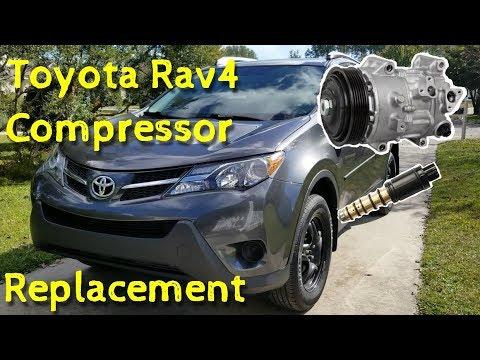





How to Replace the AC Compressor on a 2017 Toyota RAV4 Hybrid
Step-by-step repair guide with tools, parts, safety tips, and recharge procedures for 2016, 2017, 2018
How to Replace the AC Compressor on a 2017 Toyota RAV4 Hybrid
Step-by-step repair guide with tools, parts, safety tips, and recharge procedures for 2016, 2017, 2018


🔧 AC Compressor - Replacement
The AC compressor on your RAV4 Hybrid is an electric, high-voltage component, not a belt-driven compressor like on many gas vehicles. This job requires refrigerant recovery, hybrid-system shutdown, and a full vacuum/recharge after installation.
Difficulty Level: Advanced | Estimated Time: 4-6 hours
⚠️ Safety & Precautions
- High-voltage risk: The AC compressor is powered by the hybrid system. Disable the hybrid system before touching AC components.
- Refrigerant hazard: Refrigerant can cause frostbite and eye injury. It must be recovered with proper equipment before disconnecting lines.
- Oil type matters: Use only the correct electric compressor oil specified for hybrid Toyota AC systems. Mixing the wrong oil can damage the compressor.
- No open flame: Keep sparks, cigarettes, and heat away from refrigerant lines.
- Battery disconnect required: Yes. Disconnect the 12V battery and remove the hybrid service plug before starting.
- Professional recharge required: The system must be evacuated and recharged by weight after installation.
🔧 Required Tools
You'll need the following tools for this repair:
- Safety glasses
- Nitrile gloves
- 10mm socket
- 12mm socket
- 14mm socket
- Ratchet
- Extension bar
- Torque wrench
- Trim panel tool
- Refrigerant recovery machine (specialty)
- Vacuum pump (specialty)
- Manifold gauge set (specialty)
- Hybrid service plug tool or insulated gloves
- Floor jack (rated 3-ton minimum)
- Jack stands
- Drain pan
🔩 Required Parts
HowToo sells all the parts you need for this repair:
- AC compressor assembly - Qty: 1
- AC compressor O-rings - Qty: 1 set
- Hybrid-safe AC compressor oil - Qty: 1 bottle
- Receiver/drier or desiccant bag - Qty: 1
- R-134a refrigerant - Qty: 1 full charge
- Sealing washers - Qty: 1 set
📋 Before You Begin
- Park on a level surface and set the parking brake.
- Make sure the vehicle is fully powered off.
- Recover the refrigerant with approved equipment before opening the AC system.
- Disconnect the negative terminal of the 12V battery.
- Remove the hybrid service plug and wait the specified discharge time before touching AC components.
- Label every hose and connector.
🔨 Step-by-Step Instructions
Follow these steps in order:
Step 1: Recover the refrigerant
- Use a refrigerant recovery machine (specialty) to remove all refrigerant from the system.
- Do not open any AC lines until the system is fully recovered.
Step 2: Disable the hybrid system
- Use the 10mm socket to disconnect the negative terminal of the 12V battery.
- Remove the hybrid service plug following Toyota’s lock-out procedure.
- Wait the required discharge time before continuing.
- Safety first with hybrid systems.
Step 3: Gain access to the compressor
- Use the trim panel tool to remove any splash shields or undercovers blocking access.
- Support the vehicle with a floor jack (rated 3-ton minimum) and jack stands if needed.
Step 4: Disconnect the AC lines and electrical connector
- Use the 10mm socket or 12mm socket as needed to remove the refrigerant line fasteners.
- Carefully disconnect the AC refrigerant lines and cap the openings right away.
- Unplug the compressor electrical connector.
- Replace the old O-rings with new ones lightly coated in the correct compressor oil.
Step 5: Remove the old compressor
- Use the 12mm socket and 14mm socket to remove the compressor mounting bolts.
- Support the compressor while removing the last bolt.
- Lower the compressor out of the vehicle.
- Torque note: Mounting bolt torque is typically in the range of 21 N·m (16 ft-lbs); verify with Toyota service data for your exact build.
Step 6: Prepare the new compressor
- Drain and measure any oil from the old unit if service information calls for it.
- Add the specified amount of hybrid-safe AC compressor oil to the new compressor.
- Rotate the compressor by hand a few turns to distribute oil.
- Do not overfill the oil.
Step 7: Install the new compressor
- Set the new compressor in place by hand.
- Use the 12mm socket and 14mm socket to install the mounting bolts.
- Torque to factory specification; verify exact value with Toyota service data.
- Reconnect the electrical connector.
Step 8: Reconnect the refrigerant lines
- Use the 10mm socket if line retainers or brackets need removal.
- Install new O-rings and reconnect the AC lines.
- Torque to factory specification for the line fittings; do not overtighten.
Step 9: Reassemble and restore power
- Reinstall all shields and covers using the trim panel tool and 10mm socket.
- Reinstall the hybrid service plug.
- Reconnect the 12V battery negative terminal with the 10mm socket.
Step 10: Evacuate and recharge the AC system
- Use a vacuum pump (specialty) and manifold gauge set (specialty) to evacuate the system.
- Hold vacuum and check for leaks.
- Recharge the system with the exact refrigerant weight specified on the under-hood label.
- Do not guess the charge amount.
✅ After Repair
- Start the vehicle and turn the AC on Max.
- Check for cold air at the vents.
- Inspect all AC line connections for leaks.
- Listen for abnormal compressor noise.
- Verify the compressor cycles normally and no warning lights appear.
- If the system was opened for a long time, replace the receiver/drier or desiccant as required.
💰 DIY vs Shop Cost
Shop Cost: $1,300-$2,200 (parts + labor)
DIY Cost: $450-$950 (parts only)
You Save: $850-$1,250 by doing it yourself!
Shop labor rates vary but typically run $100-$150/hour. This repair takes a shop approximately 4-6 hours.
🎯 Ready to get started?
HowToo makes it easy: same-day/2-day shipping on every part, plus all the tools and specialty tools you need! Check out the parts and tools sections below to add everything to your cart.