









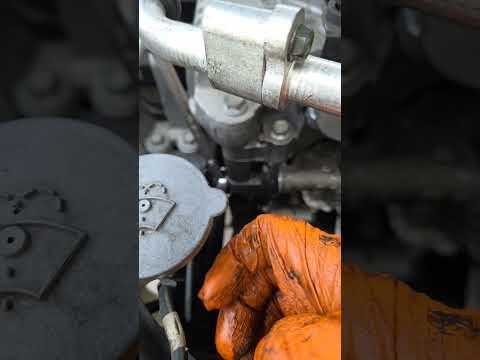






How to Replace the A/C Compressor on a 2017 Nissan Rogue Hybrid
Step-by-step DIY guide with safety procedures, required tools, parts list, torque specs, and shop recharge tips
How to Replace the A/C Compressor on a 2017 Nissan Rogue Hybrid
Step-by-step DIY guide with safety procedures, required tools, parts list, torque specs, and shop recharge tips


🔧 Rogue - A/C Compressor Replacement
You’ll be removing the A/C compressor from your Rogue and installing a new one, then the system must be evacuated and recharged with the correct refrigerant and hybrid-safe compressor oil. On this hybrid, the compressor is high-voltage electric, so safety and the right oil are absolutely critical.
Difficulty Level: Advanced | Estimated Time: 3-5 hours (plus shop time for refrigerant service)
⚠️ Safety & Precautions
- ⚠️ Refrigerant law: In most regions, it is illegal to vent A/C refrigerant to the atmosphere. Recovery must be done with an approved recovery machine by a certified shop.
- ⚠️ Hybrid high voltage: Your Rogue Hybrid uses a high-voltage electric A/C compressor with orange cables. Mishandling can cause severe shock or death. Always disable the high-voltage system before touching the compressor or orange cables.
- ⚠️ Correct oil only: This electric compressor requires Nissan electric compressor oil (ND-OIL 11 or equivalent POE for hybrids). Using normal PAG oil can destroy the compressor and damage insulation.
- ⚠️ Battery disconnect: Always disconnect the 12V negative battery terminal and remove the hybrid system service plug before working on the compressor.
- ⚠️ Hot engine parts: Let the engine bay cool completely before working near the front of the engine.
- ⚠️ Support the vehicle correctly: If you raise the front, always use a proper floor jack and jack stands, never rely only on the jack.
- ⚠️ Eye and skin protection: Refrigerant can cause frostbite and eye injury; always wear safety glasses and gloves.
- ⚠️ DIY limitation: You can do the physical removal and installation, but you should have a trusted A/C shop recover the old refrigerant and perform final evacuation and recharge.
🔧 Required Tools
You'll need the following tools for this repair:
- 🛠️ Metric socket set (8mm-19mm)
- 🛠️ 3/8" drive ratchet
- 🛠️ 3/8" drive torque wrench (5-80 ft-lbs range)
- 🛠️ Short and long socket extensions (3" and 6")
- 🛠️ Metric combination wrench set (8mm-19mm)
- 🛠️ Flathead screwdriver (medium)
- 🛠️ Phillips screwdriver (medium)
- 🛠️ Plastic trim removal tool set
- 🛠️ Pliers set (needle-nose and standard)
- 🛠️ Belt tensioner tool or 3/8" breaker bar
- 🛠️ Floor jack (rated 3-ton minimum)
- 🛠️ Jack stands (2-ton or higher, Qty: 2)
- 🛠️ Wheel chocks (rubber)
- 🛠️ Shop light or headlamp
- 🛠️ Fender cover
- 🛠️ AC manifold gauge set (R134a) (specialty)
- 🛠️ Refrigerant recovery machine (R134a) (specialty)
- 🛠️ Vacuum pump (AC service) (specialty)
- 🛠️ Electronic leak detector (AC) (specialty)
- 🛠️ OBD2 scan tool with Nissan support (specialty)
- 🛠️ Digital multimeter (CAT III rated)
- 🛠️ Insulated high-voltage gloves (rated for hybrid systems) (specialty)
- 🛠️ Safety glasses
- 🛠️ Mechanic gloves
- 🛠️ Shop rags
- 🛠️ Drain pan (for any incidental fluid drips)
🔩 Required Parts
HowToo sells all the parts you need for this repair:
- 🔩 A/C electric compressor (hybrid-specific for Rogue) - Qty: 1
- 🔩 Compressor mounting bolt set - Qty: 1
- 🔩 A/C compressor manifold O-ring set - Qty: 1
- 🔩 Nissan electric compressor oil (ND-OIL 11 or equivalent POE) - Qty: As specified by manufacturer (typically 120-180 ml)
- 🔩 R134a refrigerant (virgin, new) - Qty: As per under-hood label (approx. 0.5-0.7 kg, verify label)
- 🔩 Serpentine drive belt - Qty: 1 (recommended while you are in there)
- 🔩 Front lower splash shield clips/fasteners - Qty: As needed
- 🔩 Brake cleaner spray - Qty: 1 (for cleaning surfaces, not on electricals)
- 🔩 Dielectric grease - Qty: 1 (for electrical connector pins, very small amount)
📋 Before You Begin
- Park the Rogue on level ground, set the parking brake, and place wheel chocks behind the rear wheels.
- Make sure the climate control is OFF and the ignition is fully off with the key removed or fob away from the car.
- Open the hood and let the engine bay cool completely.
- Locate the under-hood A/C service label; note the specified refrigerant type and capacity for recharging later.
- If you do not have a recovery machine, arrange with a local A/C shop to recover the refrigerant before you open any A/C lines.
- Plan the job in two stages:
- Stage 1: Shop recovers refrigerant.
- Stage 2: You replace compressor and reassemble.
- Stage 3: Shop evacuates and recharges system, checks for leaks.
- Review your hybrid system owner’s information for the location of the high-voltage service plug and any model-specific shutdown notes.
🔨 Step-by-Step Instructions
Follow these steps in order:
Step 1: Recover the refrigerant (shop step)
- Drive the Rogue to an A/C shop with your system still sealed and ask them to recover the refrigerant using their recovery machine.
- They will connect an AC manifold gauge set and a recovery machine and pull all refrigerant into a storage cylinder.
- Drive home only after the system is fully recovered and the lines are capped; the A/C will not cool until recharge is done later.
Step 2: Disable high-voltage and 12V systems
- Open the hood and disconnect the 12V battery negative cable using a 10mm socket. Move the cable aside so it cannot spring back.
- Access the hybrid battery service plug (typically under the rear cargo floor on the Rogue Hybrid; remove trim with a plastic trim tool and Phillips screwdriver as needed).
- Wearing insulated high-voltage gloves and safety glasses, pull the service plug following the label instructions: usually slide, lift, then pull out.
- Wait at least 10 minutes to allow high-voltage capacitors in the system to discharge.
- Use a digital multimeter to confirm there is no voltage present on the compressor’s orange cables if you will be working near bare terminals.
Step 3: Raise the front and remove splash shields
- Place a floor jack under the front jacking point and lift the front of the Rogue.
- Support both sides with jack stands under the proper frame or pinch weld locations.
- Remove the front lower splash shield and any side covers using a Phillips screwdriver and 10mm socket for bolts and a plastic trim tool for clips.
- Keep fasteners in labeled containers.
Step 4: Relieve belt tension and remove the serpentine belt
- From the front of the engine bay, locate the serpentine belt and the belt tensioner.
- Use a belt tensioner tool or 3/8" breaker bar on the tensioner square drive to rotate it and relieve belt tension.
- Slide the belt off the A/C compressor pulley and then off the rest of the pulleys; note the routing or take a photo.
- Inspect the belt; if worn or cracked, replace it with the new belt at reassembly.
Step 5: Access the A/C compressor
- The compressor is mounted low on the engine, typically at the front right (passenger side) area.
- From below, with the splash shields removed, use a shop light to clearly see the compressor body, its mounting bolts, the A/C lines, and the electrical connector.
- Move any wiring harness retainers out of the way using pliers or a trim tool, being careful not to damage them.
Step 6: Disconnect the compressor electrical connector
- Locate the compressor’s electrical connector (for the electric motor/inverter control).
- Press the tab and gently pull the connector off using your fingers or a flathead screwdriver to help lift the tab if needed.
- Inspect the connector for corrosion; lightly clean with shop rags if dirty. Do not spray with brake cleaner.
Step 7: Disconnect the A/C lines from the compressor
- Place a drain pan under the compressor connection area in case of any oily residue.
- Using the correct-size metric socket (typically 10mm-12mm) and ratchet, remove the bolts holding the A/C suction and discharge lines to the compressor manifold.
- Gently wiggle and pull the lines away from the compressor; do not bend or kink them.
- Immediately cap or cover the open lines and compressor ports with clean caps or tape to keep out moisture and dirt.
- Do not leave the system open longer than necessary.
Step 8: Remove the compressor mounting bolts and compressor
- Locate the compressor mounting bolts (usually 3-4) attaching it to the engine block or bracket.
- Use an appropriate metric socket (typically 12mm-14mm), ratchet, and extensions as needed to remove each mounting bolt.
- Support the compressor with one hand while removing the final bolt to prevent it from dropping.
- Carefully lower the compressor out through the bottom; you may need to slightly rotate it to clear brackets.
Step 9: Prepare the new compressor
- Place the old and new compressors side by side and verify that the ports, mounting feet, and electrical connector are identical.
- Check if the new compressor is pre-filled with Nissan electric compressor oil (ND-OIL 11 or equivalent). Many hybrid compressors arrive pre-oiled; follow the compressor manufacturer’s instructions.
- If you must adjust oil amount, pour out the oil from the old compressor into a graduated container and match that volume in the new compressor using only the correct hybrid-safe oil.
- Never mix different A/C oils.
Step 10: Install the new compressor
- Lift the new compressor into place from below, aligning it with the mounting holes.
- Install the mounting bolts by hand first to avoid cross-threading.
- Tighten the bolts evenly with a ratchet and appropriate socket.
- Then torque the compressor mounting bolts with a torque wrench to 24 Nm (17 ft-lbs) unless otherwise specified by Nissan service data.
Step 11: Install new O-rings and reconnect A/C lines
- Remove the old O-rings from the A/C lines using a pick tool or needle-nose pliers, being careful not to scratch the metal surfaces.
- Install new O-rings from the A/C compressor manifold O-ring set, lightly coating each O-ring with a small amount of the same compressor oil you are using.
- Position the lines onto the compressor ports, ensuring they seat squarely.
- Install and hand-tighten the line bolts with the correct-size metric socket.
- Torque the A/C line bolts with a torque wrench to 9.8 Nm (87 in-lbs).
Step 12: Reconnect electrical connector
- If desired, apply a tiny amount of dielectric grease to the connector seal (not the pins themselves).
- Push the connector onto the compressor until it clicks into place.
- Secure any harness clips back to their brackets using pliers or by hand.
Step 13: Reinstall the serpentine belt
- Route the new or existing serpentine belt over the pulleys following your photo or the belt routing diagram under the hood.
- Use the belt tensioner tool or breaker bar to rotate the tensioner and slip the belt onto the last pulley.
- Slowly release tensioner pressure and check that the belt is seated correctly on all pulley grooves.
Step 14: Reinstall splash shields and lower the vehicle
- Reinstall the lower splash shield and any side covers using a Phillips screwdriver, 10mm socket, and trim tool for clips.
- Double-check that no tools are left under the vehicle.
- Raise the vehicle slightly with the floor jack, remove the jack stands, then carefully lower the Rogue to the ground.
Step 15: Reconnect high-voltage and 12V systems
- Reinstall the hybrid system service plug in reverse order of removal, making sure it locks fully into place.
- Reinstall any trim panels over the hybrid battery using a trim tool and Phillips screwdriver.
- Reconnect the 12V battery negative cable with a 10mm socket and tighten securely.
Step 16: Evacuate and recharge the A/C system (shop step)
- Drive to the A/C shop and tell them the compressor has been replaced and the system is empty and sealed.
- They should connect an AC manifold gauge set and vacuum pump, evacuate the system for at least 30 minutes to remove air and moisture, then verify it holds vacuum.
- They will then charge the system with the correct weight of R134a refrigerant and confirm there are no leaks, and that system pressures and vent temperatures are within Nissan specifications.
- If they have a scan tool, they can also check for and clear any HVAC or hybrid system codes.
Step 17: Basic function check
- After recharge, start the Rogue, let it idle, and turn the A/C on to MAX COOL with the blower on high.
- Check that the A/C compressor operates quietly, with no unusual noises.
- Feel the center vents; they should blow cold after a few minutes.
- Check under the vehicle for any refrigerant oil leaks at the compressor connections.
✅ After Repair
- Verify that the A/C cools well at idle and while driving, and that there are no strange noises or vibrations from the compressor area.
- Use a scan tool to check for and clear any stored DTCs in the HVAC and hybrid control modules.
- Inspect the new serpentine belt while the engine is idling to ensure it runs true and does not wander on the pulleys.
- Over the next few days, occasionally check for any oil spots or leaks under the front of the Rogue.
💰 DIY vs Shop Cost
Shop Cost: $1,200-$1,800 (parts + labor + refrigerant service)
DIY Cost: $450-$900 (compressor, belt, O-rings, oil, plus shop evac/recharge fee)
You Save: $300-$800 by doing the physical compressor replacement yourself and only paying for professional refrigerant service.
Shop labor rates vary but typically run $100-$150/hour. This repair takes a shop approximately 3-4 hours plus A/C machine time.
🎯 Ready to get started?
HowToo makes it easy: same-day/2-day shipping on every part, plus all the tools and specialty tools you need! Check out the parts and tools sections above to add everything to your cart.