









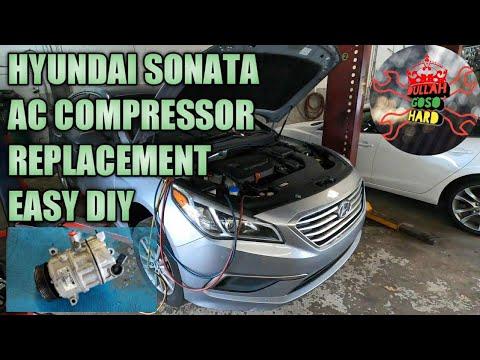







How to Replace the A/C Compressor on a 2016 Hyundai Sonata (R-134a System)
Step-by-step DIY instructions with required tools/parts, PAG oil charge tips, and evacuate/recharge safety checks
How to Replace the A/C Compressor on a 2016 Hyundai Sonata (R-134a System)
Step-by-step DIY instructions with required tools/parts, PAG oil charge tips, and evacuate/recharge safety checks


🔧 Sonata - A/C Compressor Replacement
Replacing the A/C compressor on your Sonata involves safely recovering the refrigerant, removing the drive belt and compressor, then installing the new compressor with new seals and the correct oil charge. The most important part is doing the refrigerant recovery/evacuation/recharge correctly—otherwise the A/C may not cool and you can damage the new compressor.
Difficulty Level: Advanced | Estimated Time: 3-6 hours
Assumption: Your Sonata uses R-134a refrigerant (common on this model year); verify the under-hood A/C label for refrigerant and oil type/amount.
⚠️ Safety & Precautions
- ⚠️ Refrigerant can cause frostbite and eye injury; wear gloves and safety glasses.
- ⚠️ Do not vent refrigerant to the air; have the system professionally recovered.
- ⚠️ Keep hands clear of the belt path; never work near moving pulleys.
- ⚠️ Let the engine cool; the radiator/condenser area can be hot.
- ⚠️ Disconnect the battery negative cable before unplugging the compressor electrical connector.
- ⚠️ Cap/plug A/C lines immediately to keep moisture/dirt out.
🔧 Required Tools
You'll need the following tools for this repair:
- Safety glasses
- Nitrile gloves
- Wheel chocks
- Floor jack (rated 2-ton minimum)
- Jack stands (rated 2-ton minimum)
- 10mm socket
- 12mm socket
- 14mm socket
- 17mm socket
- 3/8" drive ratchet
- 3/8" drive torque wrench
- Socket extension set
- Serpentine belt tool
- Trim clip removal tool
- Flathead screwdriver
- Drain pan
- Shop rags
- A/C manifold gauge set (specialty)
- Vacuum pump (specialty)
- Refrigerant recovery machine (specialty)
- Refrigerant scale (specialty)
- UV dye and UV light (specialty)
🔩 Required Parts
HowToo sells all the parts you need for this repair:
- A/C compressor (with clutch/pulley, if equipped) - Qty: 1
- A/C compressor manifold O-ring set - Qty: 1
- PAG A/C oil (correct type per under-hood label) - Qty: 1
- Receiver/drier or desiccant component (if serviceable separately) - Qty: 1
- Serpentine belt - Qty: 1
- R-134a refrigerant (amount per under-hood label) - Qty: 1
📋 Before You Begin
- Park on level ground, set the parking brake, and place wheel chocks behind the rear wheels.
- Have the A/C refrigerant recovered before opening the system. (Recovery means pulling refrigerant into a machine tank instead of releasing it.)
- Disconnect the negative battery terminal using a 10mm socket.
- Plan to replace any opened O-rings and keep all A/C openings capped until reassembly.
🔨 Step-by-Step Instructions
Follow these steps in order:
Step 1: Recover the refrigerant
- Use a refrigerant recovery machine (specialty) to recover the refrigerant from the high and low service ports.
- Do not loosen any A/C line yet.
Step 2: Raise and support the front of the car
- Place wheel chocks, then lift the front using a floor jack.
- Support the vehicle securely with jack stands at the proper lift points.
Step 3: Remove the lower splash shield
- Remove underbody clips/screws using a trim clip removal tool and 10mm socket.
- Set hardware aside in a tray so nothing gets lost.
Step 4: Remove the serpentine belt from the A/C compressor
- Use a serpentine belt tool to rotate the belt tensioner and relieve belt tension.
- Slip the belt off the A/C compressor pulley first, then remove the belt if you’re replacing it.
- Take a quick photo of belt routing.
Step 5: Unplug the A/C compressor electrical connector
- Locate the compressor connector and release the lock tab using a flathead screwdriver (gently).
- Pull the connector straight off (don’t yank the wires).
Step 6: Disconnect the A/C lines from the compressor
- Place a drain pan under the compressor to catch any oil.
- Remove the compressor line/manifold retaining bolt(s) using a 12mm socket or 14mm socket (varies by setup).
- Carefully wiggle the manifold block/lines free.
- Immediately cap/plug the lines and compressor ports using shop rags to prevent moisture entry.
- Remove old O-rings and discard them.
Step 7: Remove the A/C compressor
- Support the compressor by hand.
- Remove the compressor mounting bolts using a 14mm socket and socket extensions.
- Lower the compressor out carefully (it’s heavier than it looks).
- Torque on install: Torque to Hyundai specification (service manual spec for your engine)
Step 8: Prepare the new compressor (oil balancing)
- Drain the oil from the old compressor into a drain pan and measure what came out.
- Drain any shipping oil from the new compressor into the drain pan.
- Add the correct amount/type of PAG A/C oil to the new compressor to match the amount removed, unless the under-hood label/service info specifies a different amount.
- Rotate the compressor hub by hand a few turns to distribute oil evenly.
- Too much oil can reduce cooling.
Step 9: Install the new compressor
- Position the compressor and hand-start all mounting bolts using your fingers first.
- Tighten mounting bolts evenly using a 14mm socket.
- Torque: Torque to Hyundai specification (service manual spec)
Step 10: Install new O-rings and reconnect A/C lines
- Install new O-rings from the A/C compressor manifold O-ring set.
- Lightly coat O-rings with clean PAG A/C oil before assembly (this helps prevent tearing).
- Reinstall the line/manifold and tighten the retaining bolt(s) using a 12mm socket or 14mm socket.
- Torque: Torque to Hyundai specification (service manual spec)
Step 11: Reconnect the electrical connector
- Push the connector on until it clicks and locks.
Step 12: Reinstall the serpentine belt
- Route the belt correctly and use the serpentine belt tool to rotate the tensioner.
- Slip the belt onto the A/C compressor pulley last.
- Visually confirm the belt ribs are seated in every pulley groove.
Step 13: Reinstall the splash shield and lower the car
- Reinstall the underbody shield using the 10mm socket and trim clip removal tool.
- Lower the vehicle from jack stands using the floor jack.
Step 14: Evacuate and recharge the A/C system
- Connect the A/C manifold gauge set (specialty) to the high and low service ports.
- Use a vacuum pump (specialty) to pull a deep vacuum and hold it to confirm no leaks.
- Recharge by weight using a refrigerant scale (specialty) with the exact amount listed on the under-hood label.
- If needed, add UV dye and UV light (specialty) to help find small leaks later.
Step 15: Reconnect battery
- Reconnect the negative terminal using a 10mm socket.
✅ After Repair
- Start the engine and set A/C to MAX, recirculation ON, blower medium-high.
- Verify the compressor engages and the center vents blow cold after a few minutes.
- Check for leaks at the compressor line connection using UV light (specialty) if dye was added.
- Listen for belt squeal or abnormal knocking; shut off immediately if heard.
- If cooling is weak, do not “top off” blindly—recover and recharge by weight again.
💰 DIY vs Shop Cost
Shop Cost: $900-$1,800 (parts + labor + recover/recharge)
DIY Cost: $250-$750 (parts only, assuming you have access to A/C service equipment)
You Save: $650-$1,050 by doing it yourself!
Shop labor rates vary but typically run $100-$150/hour. This repair takes a shop approximately 3-5 hours.
🎯 Ready to get started?
HowToo makes it easy: same-day/2-day shipping on every part, plus all the tools and specialty tools you need! Check out the parts and tools sections below to add everything to your cart.