









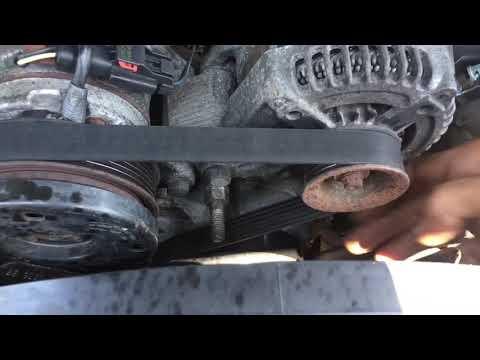





How to Replace the A/C Compressor on a 2016-2019 Jeep Grand Cherokee (Trim: High Altitude | Engine: V8 5.7L)
Step-by-step guide with tools, parts, torque specs, refrigerant safety, and recharge tips
How to Replace the A/C Compressor on a 2016-2019 Jeep Grand Cherokee (Trim: High Altitude | Engine: V8 5.7L)
Step-by-step guide with tools, parts, torque specs, refrigerant safety, and recharge tips for 2016


🔧 Grand Cherokee - A/C Compressor Replacement
Replacing the A/C compressor on your Grand Cherokee requires recovering the refrigerant, removing the drive belt, swapping the compressor, replacing the sealing O-rings, then vacuuming and recharging the system. This job involves refrigerant handling, so the refrigerant must be professionally recovered before you loosen any A/C lines.
Difficulty Level: Advanced | Estimated Time: 3-5 hours
⚠️ Safety & Precautions
- ⚠️ Do not vent refrigerant into the air. Have the A/C system recovered with proper equipment before opening any lines.
- ⚠️ Wear safety glasses and gloves. Refrigerant can cause frostbite if it contacts skin or eyes.
- ⚠️ Disconnect the negative battery cable before working near the compressor clutch connector and engine accessories.
- ⚠️ Keep dirt and moisture out of open A/C lines. Cap all open fittings immediately.
- ⚠️ If the old compressor failed internally, the condenser, receiver/drier or desiccant, expansion valve, and lines may need flushing or replacement to prevent repeat failure.
- ⚠️ The refrigerant must be vacuumed and charged by weight. “Adding cans until cold” can damage the system.
🔧 Required Tools
You'll need the following tools for this repair:
- 10mm socket
- 13mm socket
- 15mm socket
- 3/8-inch ratchet
- 3/8-inch breaker bar
- 3/8-inch torque wrench
- Serpentine belt tool (specialty)
- Flat trim clip remover
- Flat-blade screwdriver
- A/C line disconnect cap set (specialty)
- Refrigerant recovery machine (specialty)
- A/C manifold gauge set R-134a (specialty)
- A/C vacuum pump (specialty)
- Digital refrigerant scale (specialty)
- PAG oil measuring cup
- Pick tool
- Floor jack rated 3-ton minimum
- Jack stands rated 3-ton minimum
- Wheel chocks
- Nitrile gloves
- Safety glasses
🔩 Required Parts
HowToo sells all the parts you need for this repair:
- A/C compressor assembly - Qty: 1
- A/C compressor line O-ring seal kit - Qty: 1
- PAG compressor oil - Qty: As needed
- R-134a refrigerant - Qty: Charge by under-hood label weight
- Serpentine belt - Qty: 1
- A/C condenser with receiver/drier - Qty: 1 if compressor failed internally
- A/C expansion valve - Qty: 1 if compressor failed internally
📋 Before You Begin
- Park your Grand Cherokee on level ground, shift to Park, and set the parking brake.
- Let the engine cool completely before working near the belt, radiator fan, and A/C lines.
- Have the refrigerant professionally recovered before loosening any A/C fitting.
- A recovery machine removes refrigerant safely into a sealed tank instead of releasing it into the air.
- Disconnect the negative battery cable using a 10mm socket.
- Check the under-hood A/C label for the exact refrigerant charge weight. Use that label as the final authority.
- If the compressor made grinding noises or sent metal through the system, do not just replace the compressor. Contamination must be cleaned out first.
🔨 Step-by-Step Instructions
Follow these steps in order:
Step 1: Recover the Refrigerant
- Use an A/C manifold gauge set R-134a and refrigerant recovery machine to recover the refrigerant from the system.
- If you do not have certified recovery equipment, stop here and have a repair shop recover the system first.
- Confirm both high-side and low-side gauges read 0 psi after recovery.
- Never loosen charged A/C lines.
Step 2: Disconnect the Battery
- Open the hood and locate the battery jump/negative connection area as equipped.
- Use a 10mm socket and 3/8-inch ratchet to loosen the negative battery cable clamp.
- Move the negative cable aside so it cannot spring back onto the terminal.
Step 3: Raise the Front Safely
- Place wheel chocks behind the rear wheels.
- Use a floor jack rated 3-ton minimum at the correct front lifting point.
- Support the vehicle with jack stands rated 3-ton minimum.
- Gently shake the vehicle by hand to confirm it is stable before going underneath.
Step 4: Remove the Lower Splash Shield
- Use a 10mm socket to remove the lower splash shield fasteners.
- Use a flat trim clip remover for any plastic push clips.
- Set the shield and fasteners aside in order.
- Take photos before removing covers.
Step 5: Remove the Serpentine Belt
- Find the belt routing diagram under the hood before removing the belt.
- Use a serpentine belt tool or 3/8-inch breaker bar on the belt tensioner.
- The tensioner is the spring-loaded pulley that keeps the belt tight.
- Rotate the tensioner to release belt tension, then slide the belt off the A/C compressor pulley.
- Inspect the belt. Replace it if cracked, glazed, oil-soaked, or stretched.
Step 6: Disconnect the Compressor Electrical Connector
- Locate the electrical connector on the A/C compressor.
- Use a flat-blade screwdriver only if needed to gently lift the connector lock.
- Pull the connector straight off. Do not pull on the wires.
Step 7: Disconnect the A/C Lines from the Compressor
- Use a 13mm socket and 3/8-inch ratchet to remove the A/C line retaining bolt at the compressor.
- Carefully pull the A/C line block away from the compressor.
- Use an A/C line disconnect cap set to cap the open lines and compressor ports immediately.
- Use a pick tool to remove the old O-rings from the line fittings.
- Do not scratch the aluminum sealing surfaces.
Step 8: Remove the A/C Compressor
- Support the compressor with one hand before removing the last bolt.
- Use a 13mm socket or 15mm socket with a 3/8-inch ratchet to remove the compressor mounting bolts.
- Lower the compressor out carefully from underneath.
- Keep the old compressor upright to avoid spilling oil before you measure it.
Step 9: Measure and Prepare Compressor Oil
- Drain the oil from the old compressor into a PAG oil measuring cup.
- Drain shipping oil from the new compressor into a clean PAG oil measuring cup.
- Add the same amount of fresh PAG compressor oil to the new compressor that came out of the old one, unless the compressor instructions specify otherwise.
- Rotate the new compressor hub by hand several turns to spread the oil internally.
- Do not rotate by the pulley alone; rotate the center hub if accessible.
Step 10: Install the New Compressor
- Lift the new compressor into position by hand.
- Start all mounting bolts by hand first to avoid cross-threading.
- Use a 13mm socket or 15mm socket with a 3/8-inch ratchet to snug the bolts evenly.
- Use a 3/8-inch torque wrench to tighten the compressor mounting bolts to Torque to 28 Nm (21 ft-lbs).
Step 11: Install New A/C Line O-Rings
- Lightly coat the new O-rings with clean PAG compressor oil.
- Install the O-rings by hand onto the A/C line fittings.
- Seat the line block squarely against the compressor.
- Use a 13mm socket and 3/8-inch torque wrench to tighten the A/C line retaining bolt to Torque to 12 Nm (106 in-lbs).
- O-rings seal best when lightly oiled.
Step 12: Reconnect the Electrical Connector
- Push the compressor electrical connector onto the compressor until it clicks.
- Lightly tug the connector by hand to confirm it is locked.
Step 13: Reinstall the Serpentine Belt
- Route the belt around the pulleys using the under-hood belt diagram.
- Use a serpentine belt tool or 3/8-inch breaker bar to rotate the tensioner.
- Slide the belt over the last pulley, then slowly release the tensioner.
- Check every pulley groove with a flashlight to make sure the belt is fully seated.
Step 14: Reinstall the Lower Splash Shield
- Position the splash shield under the front of the vehicle.
- Use a flat trim clip remover by hand to align plastic clips if needed.
- Use a 10mm socket and 3/8-inch ratchet to reinstall the fasteners snugly.
Step 15: Lower the Vehicle and Reconnect the Battery
- Use the floor jack rated 3-ton minimum to lift slightly off the jack stands.
- Remove the jack stands rated 3-ton minimum.
- Lower the vehicle slowly.
- Use a 10mm socket to reconnect the negative battery cable.
- Tighten the cable clamp snugly. Do not overtighten it.
Step 16: Vacuum the A/C System
- Connect the A/C manifold gauge set R-134a to the high-side and low-side service ports.
- Connect the manifold center hose to the A/C vacuum pump.
- Run the vacuum pump for at least 30-45 minutes.
- Close the manifold valves and verify the system holds vacuum for at least 10 minutes.
- If vacuum drops, there is a leak that must be fixed before charging.
Step 17: Recharge the A/C System by Weight
- Place the refrigerant container on a digital refrigerant scale.
- Use the A/C manifold gauge set R-134a to charge the system with the exact amount shown on the under-hood label.
- Charge through the low-side service port only when the engine is running and the compressor is operating.
- Do not overcharge the system.
- Correct refrigerant weight prevents damage.
✅ After Repair
- Start the engine and set A/C to Max Cool, recirculation on, and blower high.
- Check that the compressor engages and the center vents blow cold air.
- Use the A/C manifold gauge set R-134a to verify pressures are stable and appropriate for ambient temperature.
- Listen for belt squeal, rattling, or grinding.
- Inspect all A/C line connections for oily residue, which can indicate a refrigerant leak.
- Confirm the serpentine belt is tracking straight on every pulley.
- If the A/C is still warm, do not keep adding refrigerant. Recheck charge weight, leaks, compressor command, cooling fan operation, and pressure readings.
💰 DIY vs Shop Cost
Shop Cost: $950-$1,650 (parts + labor)
DIY Cost: $350-$750 (parts only, not including recovery/recharge equipment)
You Save: $400-$900 by doing it yourself!
Shop labor rates vary but typically run $100-$150/hour. This repair takes a shop approximately 3-5 hours.
🎯 Ready to get started?
HowToo makes it easy: same-day/2-day shipping on every part, plus all the tools and specialty tools you need! Check out the parts and tools sections below to add everything to your cart.
Guide for A/C Compressor replace for these Jeep vehicles
| Year Make Model | Sub Model | Engine | Body Style |
|---|---|---|---|
| 2019 Jeep Grand Cherokee | Laredo | V6 3.6L | - |
| 2019 Jeep Grand Cherokee | Limited | V6 3.6L | - |
| 2019 Jeep Grand Cherokee | Overland | V6 3.6L | - |
| 2019 Jeep Grand Cherokee | Summit | V6 3.6L | - |
| 2019 Jeep Grand Cherokee | Trailhawk | V6 3.6L | - |
| 2019 Jeep Grand Cherokee | Altitude | V6 3.6L | - |
| 2019 Jeep Grand Cherokee | High Altitude | V6 3.6L | - |
| 2019 Jeep Grand Cherokee | Limited X | V6 3.6L | - |
| 2019 Jeep Grand Cherokee | Upland | V6 3.6L | - |
| 2018 Jeep Grand Cherokee | Laredo | V6 3.6L | - |
| 2018 Jeep Grand Cherokee | Limited | V6 3.6L | - |
| 2018 Jeep Grand Cherokee | Overland | V6 3.6L | - |
| 2018 Jeep Grand Cherokee | Summit | V6 3.6L | - |
| 2018 Jeep Grand Cherokee | Trailhawk | V6 3.6L | - |
| 2018 Jeep Grand Cherokee | Altitude | V6 3.6L | - |
| 2018 Jeep Grand Cherokee | High Altitude | V6 3.6L | - |
| 2017 Jeep Grand Cherokee | Laredo | V6 3.6L | - |
| 2017 Jeep Grand Cherokee | Limited | V6 3.6L | - |
| 2017 Jeep Grand Cherokee | Overland | V6 3.6L | - |
| 2017 Jeep Grand Cherokee | Summit | V6 3.6L | - |
| 2017 Jeep Grand Cherokee | Trailhawk | V6 3.6L | - |
| 2016 Jeep Grand Cherokee | 75th Anniversary | V6 3.6L | - |
| 2016 Jeep Grand Cherokee | Laredo | V6 3.6L | - |
| 2016 Jeep Grand Cherokee | Limited | V6 3.6L | - |
| 2016 Jeep Grand Cherokee | Overland | V6 3.6L | - |
| 2016 Jeep Grand Cherokee | Summit | V6 3.6L | - |