









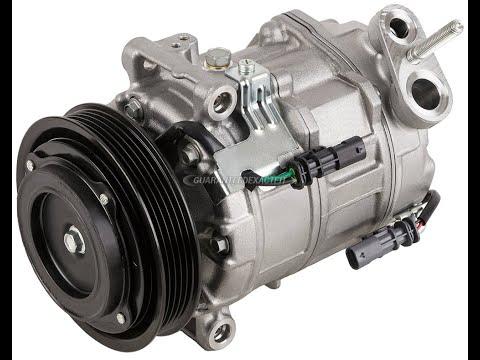






How to Replace the A/C Compressor on a 2014 Chevrolet Equinox 2.4L
Step-by-step DIY guide with tools, parts list, torque specs, and A/C recharge instructions
How to Replace the A/C Compressor on a 2014 Chevrolet Equinox 2.4L
Step-by-step DIY guide with tools, parts list, torque specs, and A/C recharge instructions


🔧 Equinox - A/C Compressor Replacement
You’ll be removing the A/C compressor from the engine front, swapping it for a new unit, and then having the system evacuated and recharged. The mechanical work is very doable at home, but refrigerant recovery and refilling must be done with proper equipment.
Difficulty Level: Advanced (for a beginner) | Estimated Time: 4–6 hours (plus shop time for A/C recharge)
⚠️ Safety & Precautions
- ⚠️ Do NOT vent refrigerant to the air. It is illegal and dangerous; it can cause severe frostbite and eye injury.
- ⚠️ Have a shop or mobile A/C technician recover the refrigerant before you loosen any A/C line.
- ⚠️ Always support the Equinox with jack stands, never only a jack.
- ⚠️ Let the engine cool completely before working near the serpentine belt and compressor.
- ⚠️ Disconnect the battery negative cable before unplugging the compressor electrical connector.
- ⚠️ Wear safety glasses and gloves when working under the vehicle and around A/C lines.
🔧 Required Tools
You'll need the following tools for this repair:
- 🛠️ Floor jack (rated 3-ton minimum)
- 🛠️ Jack stands (rated 3-ton minimum), Qty: 2
- 🛠️ Wheel chocks
- 🛠️ Metric socket set (8mm–19mm)
- 🛠️ 10mm socket
- 🛠️ 13mm socket
- 🛠️ 15mm socket
- 🛠️ 3/8" drive ratchet
- 🛠️ 3/8" drive torque wrench (7–80 ft-lbs range)
- 🛠️ Serpentine belt tool or long-handled 15mm wrench
- 🛠️ Flat-blade screwdriver (medium size)
- 🛠️ Plastic trim clip remover
- 🛠️ Needle-nose pliers
- 🛠️ Shop rags
- 🛠️ Small drain pan
- 🛠️ Safety glasses
- 🛠️ Mechanic’s gloves
- 🛠️ A/C manifold gauge set (R-134a) (specialty)
- 🛠️ Vacuum pump for A/C systems (specialty)
- 🛠️ Digital scale for refrigerant charging (specialty)
🔩 Required Parts
HowToo sells all the parts you need for this repair:
- 🔩 A/C compressor (with clutch) for 2.4L - Qty: 1
- 🔩 Compressor mounting bolt set (if corroded) - Qty: 1 set
- 🔩 A/C manifold gasket / O-ring kit (compressor line seals) - Qty: 1 kit
- 🔩 PAG A/C compressor oil (GM spec PAG, e.g., PAG 46) - Qty: 1 bottle
- 🔩 Serpentine drive belt (2.4L engine) - Qty: 1 (recommended while you’re there)
- 🔩 A/C orifice tube (liquid line metering device) - Qty: 1 (recommended)
- 🔩 R-134a refrigerant - Qty: approx. 0.6 kg / 1.3 lb total fill
- 🔩 A/C system flush solvent - Qty: as needed (only if flushing)
- 🔩 Nitrile gloves - Qty: 1 box
📋 Before You Begin
- Park the Equinox on level ground, set the parking brake, and chock the rear wheels.
- Have a shop or mobile A/C technician recover all R-134a refrigerant from the system before you open any A/C lines.
- Open the hood and disconnect the negative battery cable using a 10mm socket. Move the cable aside so it cannot touch.
- Gather all tools and parts so you don’t have to crawl out from under the vehicle repeatedly.
- If you plan to recharge the A/C yourself, keep your A/C manifold gauges, vacuum pump, and refrigerant ready and read their instructions first.
🔨 Step-by-Step Instructions
Follow these steps in order:
Step 1: Safely lift and support the front
- Use the floor jack to lift the front of the Equinox at the front subframe or factory jacking point (see owner’s manual diagram).
- Place jack stands under the left and right reinforced frame areas, then gently lower the vehicle onto the stands.
- Give the vehicle a shake test to ensure it is stable before getting underneath.
- Never work under a car supported only by a jack.
Step 2: Remove the lower splash shield
- From under the front bumper area, locate the plastic splash shield covering the bottom of the engine area.
- Use a flat-blade screwdriver or plastic trim clip remover to pop out the plastic push clips.
- Use a 10mm socket and ratchet to remove any small bolts holding the shield.
- Lower the shield and set it aside, keeping all clips and bolts together.
Step 3: Relieve tension and remove the serpentine belt from compressor
- Note the belt routing; take a photo or refer to the belt diagram sticker under the hood.
- Locate the belt tensioner (spring-loaded pulley).
- Use a serpentine belt tool or long-handled 15mm wrench on the tensioner bolt, and rotate to relieve belt tension.
- While holding tension off with the tool, slip the belt off the A/C compressor pulley first, then slowly release the tensioner.
- You can leave the belt looped around the other pulleys if you are only changing the compressor, but if replacing the belt, remove it completely.
Step 4: Disconnect the A/C compressor electrical connector
- Locate the electrical connector on the A/C compressor (front lower area of the engine, usually on the compressor body).
- Use your fingers or needle-nose pliers carefully to lift the plastic locking tab.
- Pull the connector straight off and move the wiring harness out of the way.
Step 5: Disconnect A/C lines from the compressor
- Confirm the system has been professionally evacuated (zero pressure). If not absolutely sure, stop here and have it recovered.
- Place a small drain pan and some shop rags under the rear of the compressor to catch any residual oil.
- Use a 13mm socket and ratchet to remove the bolt(s) on the A/C line manifold where the high and low lines attach to the compressor.
- Gently pull the lines straight off the compressor. You may need to wiggle slightly by hand, but do not bend the aluminum tubes sharply.
- Immediately cap or cover the open lines with clean shop rags to keep dirt and moisture out.
Step 6: Remove the A/C compressor from the engine
- Locate the compressor mounting bolts (usually 3–4 bolts attaching the compressor to the engine block).
- Use a 15mm socket and ratchet to remove the mounting bolts. Support the compressor with your free hand as you remove the last bolt.
- Carefully lower the compressor down and out through the bottom of the engine bay.
- Watch for drips of oil from the compressor ports.
Step 7: Prepare the new compressor (oil check)
- On a workbench, set the old and new compressors side by side.
- Carefully drain the oil from the old compressor into a clean container by tilting it and turning the shaft by hand.
- Measure how much oil came out (for example, with a measuring cup).
- Check the new compressor instructions for how much oil it contains from the factory.
- Adjust the oil in the new compressor: drain or add PAG oil so the amount in the new compressor matches what came out of the old one (unless the instructions specify a different amount for a full system service).
- Too much or too little oil can damage the system.
Step 8: Install new O-rings on A/C lines
- Remove the old O-rings or gasket from the A/C line manifold that bolts to the compressor. You can use needle-nose pliers if needed, gently.
- Match new O-rings or gasket from your A/C manifold gasket / O-ring kit.
- Lightly coat the new O-rings with clean PAG oil using a clean fingertip. This helps them seal and not tear.
Step 9: Install the new compressor
- Position the new compressor under the vehicle and lift it into place by hand.
- Align the mounting holes with the engine block brackets.
- Install the compressor mounting bolts by hand first to avoid cross-threading.
- Use a 15mm socket and ratchet to snug all bolts evenly.
- Then use the torque wrench with 15mm socket to tighten the compressor mounting bolts to 25 Nm (18 ft-lbs).
Step 10: Reattach A/C lines and electrical connector
- Position the A/C line manifold against the rear of the compressor, making sure the new O-rings stay in place.
- Install the line manifold bolt(s) by hand.
- Use a 13mm socket and ratchet to tighten, then finish with the torque wrench with 13mm socket to 20 Nm (15 ft-lbs).
- Reconnect the compressor electrical connector; push until you feel or hear it click.
Step 11: Reinstall the serpentine belt
- Route the belt according to your photo or the under-hood diagram, leaving the A/C compressor pulley for last.
- Use the serpentine belt tool or 15mm wrench on the tensioner to rotate it and relieve tension.
- Slip the belt over the A/C compressor pulley, then slowly release the tensioner.
- Double-check that the belt sits properly in all pulley grooves and is not twisted.
Step 12: Reinstall the lower splash shield
- Lift the splash shield back into position under the front of the Equinox.
- Install the bolts with a 10mm socket and ratchet, snug but not overtightened (about 8–10 Nm / 6–7 ft-lbs).
- Reinstall plastic clips by pushing them firmly into their holes.
Step 13: Lower the vehicle and reconnect the battery
- Use the floor jack to raise the front slightly and remove the jack stands.
- Lower the vehicle to the ground.
- Reconnect the negative battery cable using a 10mm socket and tighten to about 10 Nm (7 ft-lbs) (snug plus a bit).
Step 14: Evacuate and recharge the A/C system
- If you are not comfortable with A/C gauges and vacuum pump, have a shop perform this step. You already did the hard mechanical work.
- Connect your A/C manifold gauge set to the high and low service ports.
- Connect the vacuum pump to the center hose and run the pump for at least 30–45 minutes to pull a deep vacuum (around –29 inHg).
- Close the manifold valves and shut off the pump. Let the system sit for at least 10–15 minutes to ensure the vacuum holds (no leaks).
- Place the refrigerant can on a digital scale and zero it.
- Carefully charge R-134a by weight according to the under-hood label (for your Equinox 2.4L, it is typically about 0.59 kg / 1.3 lb—use your sticker value if different).
- Follow the manifold gauge instructions to charge through the low-side port, engine running and A/C on MAX once initial vapor is in.
✅ After Repair
- Start the engine and turn the A/C on MAX with the blower on high and recirculation on.
- Check that the compressor clutch engages and cycles normally without unusual noises (squealing, grinding, or knocking).
- Measure vent temperature in the cabin; it should become noticeably cold after a few minutes.
- Inspect all A/C line connections at the compressor and around the engine bay for oil or dye that would indicate leaks.
- Listen for belt noise; if you hear chirping, recheck belt routing and tensioner condition.
💰 DIY vs Shop Cost
Shop Cost: $900–$1,400 (parts + labor, including evac/recharge)
DIY Cost: $300–$600 (compressor, seals, refrigerant, oil; not counting tools)
You Save: $300–$800 by doing the mechanical work yourself!
Shop labor rates vary but typically run $100–$150/hour. This repair takes a shop approximately 3–4 hours including A/C service.
🎯 Ready to get started?
HowToo makes it easy: same-day/2-day shipping on every part, plus all the tools and specialty tools you need! Check out the parts and tools sections above to add everything to your cart and tackle your Equinox A/C repair with confidence.