









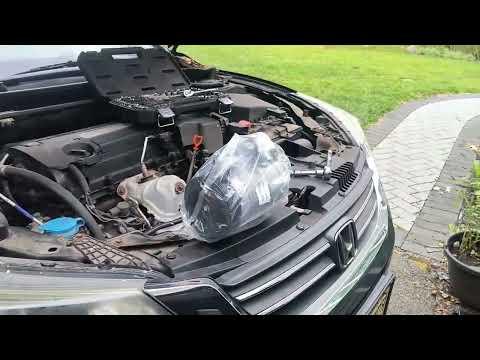




How to Replace the A/C Compressor on a 2013-2017 Honda Accord (Trim: Touring | Engine: V6 3.5L)
Step-by-step instructions with tools, parts, safety tips, and recharge guidance
How to Replace the A/C Compressor on a 2013-2017 Honda Accord (Trim: Touring | Engine: V6 3.5L)
Step-by-step instructions with tools, parts, safety tips, and recharge guidance for 2013, 2014, 2015, 2016, 2017


🔧 A/C Compressor - Replacement
The A/C compressor on your Accord is part of the sealed refrigerant system, so the refrigerant must be recovered before any lines are opened. After the compressor is replaced, the system needs to be evacuated, sealed, and recharged so it can cool properly again.
Difficulty Level: Advanced | Estimated Time: 3-5 hours
⚠️ Safety & Precautions
- The A/C system contains refrigerant under high pressure. Do not loosen any A/C line until the refrigerant has been professionally recovered.
- Wear safety glasses and gloves. Refrigerant can cause frostbite.
- Disconnect the negative battery cable before starting.
- Keep hands, tools, and clothing away from the drive belt and pulleys.
- Have the system evacuated and recharged with the correct refrigerant amount after repair. Do not “top off” by guesswork.
- Do not run the A/C with the system open.
🔧 Required Tools
You'll need the following tools for this repair:
- 10mm socket
- 12mm socket
- 14mm socket
- 1/4-inch ratchet
- 3/8-inch ratchet
- Breaker bar
- Belt tensioner tool
- Torque wrench
- Line wrench set
- Drain pan
- Serpentine belt routing diagram
- Safety glasses
- Gloves
🔩 Required Parts
HowToo sells all the parts you need for this repair:
- A/C compressor - Qty: 1
- A/C compressor clutch relay - Qty: 1
- Receiver drier or desiccant element - Qty: 1
- O-ring set for A/C lines - Qty: 1
- Compressor oil - Qty: 1 bottle
- Serpentine belt - Qty: 1
📋 Before You Begin
- Have the refrigerant professionally recovered before opening the system.
- Park on level ground and set the parking brake.
- Disconnect the negative battery cable.
- Take a photo of the belt routing before removing it.
- Replace the receiver drier and O-rings every time.
🔨 Step-by-Step Instructions
Follow these steps in order:
Step 1: Recover refrigerant and disconnect battery
- Have the refrigerant recovered by an A/C machine before touching any lines.
- Use a 10mm socket to disconnect the negative battery cable.
Step 2: Remove the serpentine belt
- Use a belt tensioner tool or breaker bar to rotate the tensioner.
- Slip the belt off the compressor pulley and remove it from the engine.
- Check the belt for cracks while it is off.
Step 3: Remove access parts if needed
- If access is tight, remove any engine covers or nearby ducting using the correct 10mm socket or 12mm socket.
- Set all fasteners aside in order.
Step 4: Disconnect the A/C lines from the compressor
- Use a line wrench set to loosen the refrigerant line fittings.
- Carefully remove the lines and catch any small oil residue in a drain pan.
- Discard the old O-rings.
Step 5: Remove the compressor
- Use a 12mm socket or 14mm socket to remove the compressor mounting bolts.
- Support the compressor with one hand as you remove the last bolt.
- Lower the compressor out of the engine bay.
- Torque on reinstall: tighten compressor mounting bolts to Honda specification.
Step 6: Prepare and install the new compressor
- Compare the new compressor to the old one before installing.
- Add the correct amount of compressor oil to the new unit if it is not prefilled.
- Install new O-rings on the A/C line fittings.
- Use a 10mm socket, 12mm socket, or 14mm socket as needed to install the compressor.
- Torque to Honda specification on all mounting bolts.
Step 7: Reconnect the A/C lines
- Reconnect both refrigerant lines by hand first.
- Use a line wrench set to tighten the fittings.
- Torque to Honda specification for the line fittings.
- Do not pinch the new O-rings.
Step 8: Reinstall the belt and finish assembly
- Route the serpentine belt using the routing diagram.
- Use the belt tensioner tool or breaker bar to install the belt on the last pulley.
- Reinstall any removed covers or ducting with the correct socket.
- Reconnect the negative battery cable with a 10mm socket.
Step 9: Evacuate and recharge the system
- Have the system vacuum-evacuated with A/C service equipment.
- Recharge with the exact factory refrigerant amount for your Accord.
- Check for leaks before running the system normally.
✅ After Repair
- Start the engine and turn the A/C on max.
- Verify the compressor engages and the air gets cold.
- Listen for belt noise or pulley wobble.
- Check all line fittings for leaks with proper A/C leak detection equipment.
- If cooling is weak, recheck charge level and condenser fan operation.
💰 DIY vs Shop Cost
Shop Cost: $1,100-$2,000 (parts + labor)
DIY Cost: $350-$900 (parts only)
You Save: $750-$1,100 by doing it yourself!
Shop labor rates vary but typically run $100-$150/hour. This repair takes a shop approximately 3-5 hours.
🎯 Ready to get started?
HowToo makes it easy: same-day/2-day shipping on every part, plus all the tools and specialty tools you need! Check out the parts and tools sections below to add everything to your cart.
Guide for A/C Compressor replace for these Honda vehicles
| Year Make Model | Sub Model | Engine | Body Style |
|---|---|---|---|
| 2017 Honda Accord | EX | Inline 4 2.4L | - |
| 2017 Honda Accord | EX-L | Inline 4 2.4L | - |
| 2017 Honda Accord | EX-L | V6 3.5L | - |
| 2017 Honda Accord | LX | Inline 4 2.4L | - |
| 2017 Honda Accord | LX-S | Inline 4 2.4L | - |
| 2017 Honda Accord | Sport | Inline 4 2.4L | - |
| 2017 Honda Accord | Touring | V6 3.5L | - |
| 2016 Honda Accord | EX | Inline 4 2.4L | - |
| 2016 Honda Accord | EX-L | Inline 4 2.4L | - |
| 2016 Honda Accord | EX-L | V6 3.5L | - |
| 2016 Honda Accord | LX | Inline 4 2.4L | - |
| 2016 Honda Accord | LX-S | Inline 4 2.4L | - |
| 2016 Honda Accord | Sport | Inline 4 2.4L | - |
| 2016 Honda Accord | Touring | V6 3.5L | - |
| 2015 Honda Accord | EX | Inline 4 2.4L | - |
| 2015 Honda Accord | EX-L | Inline 4 2.4L | - |
| 2015 Honda Accord | EX-L | V6 3.5L | - |
| 2015 Honda Accord | LX | Inline 4 2.4L | - |
| 2015 Honda Accord | LX-S | Inline 4 2.4L | - |
| 2015 Honda Accord | Sport | Inline 4 2.4L | - |
| 2015 Honda Accord | Touring | V6 3.5L | - |
| 2014 Honda Accord | EX | Inline 4 2.4L | - |
| 2014 Honda Accord | EX-L | Inline 4 2.4L | - |
| 2014 Honda Accord | EX-L | V6 3.5L | - |
| 2014 Honda Accord | LX | Inline 4 2.4L | - |
| 2014 Honda Accord | LX-S | Inline 4 2.4L | - |
| 2014 Honda Accord | Sport | Inline 4 2.4L | - |
| 2014 Honda Accord | Touring | V6 3.5L | - |
| 2013 Honda Accord | EX | Inline 4 2.4L | - |
| 2013 Honda Accord | EX-L | Inline 4 2.4L | - |
| 2013 Honda Accord | EX-L | V6 3.5L | - |
| 2013 Honda Accord | LX | Inline 4 2.4L | - |
| 2013 Honda Accord | LX-S | Inline 4 2.4L | - |
| 2013 Honda Accord | Sport | Inline 4 2.4L | - |
| 2013 Honda Accord | Touring | V6 3.5L | - |