














How to Replace the A/C Compressor on a 2012 Chevy Silverado 1500
Step-by-step DIY compressor swap with tools, parts list, safety tips, and recharge guidance for 2000, 2001, 2002, 2003, 2004, 2005, 2006, 2007, 2008, 2009, 2010, 2011, 2012, 2013
How to Replace the A/C Compressor on a 2012 Chevy Silverado 1500
Step-by-step DIY compressor swap with tools, parts list, safety tips, and recharge guidance for 2000, 2001, 2002, 2003, 2004, 2005, 2006, 2007, 2008, 2009, 2010, 2011, 2012, 2013


🔧 Silverado 1500 - A/C Compressor Replacement
You’ll be removing the old A/C compressor from your Silverado 1500 and installing a new one, then having the system properly evacuated and recharged. This restores cold air and protects the system from damage caused by a seized or leaking compressor.
Difficulty Level: Advanced | Estimated Time: 3-5 hours (plus shop time for recharge)
⚠️ Safety & Precautions
- ⚠️ Do NOT vent refrigerant into the air. Have a licensed A/C shop recover the refrigerant before you start and evacuate/recharge when you finish (required by law).
- ⚠️ Work only on a completely discharged A/C system. Liquid refrigerant can cause frostbite and eye injury.
- ⚠️ On your hybrid, do not touch any orange cables or connectors (high-voltage). They are not part of the A/C compressor circuit but may be nearby.
- ⚠️ Disconnect the negative battery cable before working around the compressor to prevent the engine from cranking and to avoid shorts.
- ⚠️ Support the truck securely with jack stands if you raise the front. Never rely only on a floor jack.
- ⚠️ Let the engine cool completely before working near belts and pulleys.
🔧 Required Tools
You'll need the following tools for this repair:
- 🧰 3/8" drive ratchet
- 🧰 1/2" drive ratchet
- 🧰 3/8" drive torque wrench (7-80 ft-lbs range)
- 🧰 1/2" drive torque wrench (20-150 ft-lbs range)
- 🧰 10mm socket
- 🧰 13mm socket
- 🧰 15mm socket
- 🧰 18mm socket
- 🧰 E10 external Torx socket
- 🧰 Short socket extension set (3" and 6")
- 🧰 15mm combination wrench
- 🧰 Serpentine belt tool or long 1/2" breaker bar (specialty)
- 🧰 Flat trim tool or flat-blade screwdriver (medium)
- 🧰 Pry bar (small)
- 🧰 Pick tool set (straight and hook picks)
- 🧰 Line plug kit for A/C hoses (assorted sizes) (specialty)
- 🧰 Shop rags
- 🧰 Floor jack (rated 3-ton minimum)
- 🧰 Jack stands (rated 3-ton minimum)
- 🧰 Wheel chocks
- 🧰 Safety glasses
- 🧰 Mechanic gloves
- 🧰 Work light or LED lamp
🔩 Required Parts
HowToo sells all the parts you need for this repair:
- 🧱 A/C compressor assembly (with clutch, for 6.0L hybrid) - Qty: 1
- 🧱 A/C compressor mounting bolts (if corroded or damaged) - Qty: 4
- 🧱 A/C manifold gasket or seal kit (compressor to line block) - Qty: 1
- 🧱 A/C O-ring kit (R-134a compatible, GM truck) - Qty: 1
- 🧱 PAG A/C compressor oil (correct viscosity for GM R-134a) - Qty: As specified for replacement compressor
- 🧱 Serpentine drive belt (A/C drive belt if separate) - Qty: 1
- 🧱 A/C system dye and oil charge (shop will usually supply) - Qty: As required
- 🧱 R-134a refrigerant - Qty: As specified on under-hood label
- 🧱 Brake cleaner or A/C-safe cleaner - Qty: 1 can
📋 Before You Begin
- Park the Silverado on level ground, set the parking brake, and chock the rear wheels.
- Have a local A/C shop recover all refrigerant from the system before loosening any A/C line.
- Open the hood and locate the battery on the driver side of the engine bay.
- Use a 10mm socket to loosen the negative battery terminal bolt and remove the cable. Isolate it so it cannot touch the post.
- If you need more access under the front, use a floor jack to lift the front crossmember and set the truck securely on jack stands.
- Study the belt routing diagram on the fan shroud or radiator support; take a photo as backup.
🔨 Step-by-Step Instructions
Follow these steps in order:
Step 1: Confirm A/C is discharged and prepare work area
- After the shop has recovered refrigerant, lightly press the Schrader valve on the A/C service port using a small pick tool to confirm there is no pressure. Wear safety glasses.
- Lay shop rags under the compressor area to catch any oil drips.
- Set up your work light so you can clearly see the compressor and surrounding components.
Step 2: Remove the engine cover and create access
- Use a 10mm socket to remove any bolts holding the plastic engine cover (if equipped), then lift it off.
- Unclip any air intake duct sections that block access to the front of the engine using a flat trim tool or your hands.
- Move wiring harnesses slightly aside if needed, being careful not to pull on them. Use shop rags to pad any sharp edges.
Step 3: Remove the serpentine belt from the A/C compressor
- Locate the belt tensioner (spring-loaded pulley) for the main drive belt.
- Place a serpentine belt tool or 1/2" breaker bar into the tensioner square drive, then rotate it to relieve belt tension.
- While holding tension off with the tool, slip the belt off the A/C compressor pulley by hand.
- Slowly release the tensioner back to its resting position.
- If your truck uses a separate A/C drive belt, repeat with the smaller belt tensioner and remove that belt completely.
Step 4: Disconnect the A/C compressor electrical connector
- Locate the electrical connector on the A/C compressor body (for the clutch). On your hybrid, this is a low-voltage connector.
- Use a pick tool to gently lift the locking tab, then unplug the connector by hand.
- Secure the harness away from the work area with a zip tie or tuck it safely aside.
Step 5: Disconnect A/C lines from the compressor
- Identify the aluminum line block bolted to the rear or top of the compressor.
- Use a 13mm socket and 3/8" ratchet to remove the line block bolt.
- Gently wiggle the line block loose by hand; use a small pry bar only if needed, very gently, to avoid bending lines.
- Immediately plug the open lines with your line plug kit to keep dirt and moisture out.
- Cover the compressor ports with shop rags to prevent contamination.
- Keep all dirt out of open A/C parts.
Step 6: Remove the A/C compressor from the engine
- Locate the four compressor mounting bolts (front and rear ears on the compressor).
- Use an E10 external Torx socket with a 3/8" ratchet to break each bolt loose.
- Remove all four bolts and keep track of their locations.
- Support the compressor with one hand and carefully lift it out from the bottom or top, depending on access. You may need to slightly move hoses using a small pry bar for clearance.
Step 7: Prepare the new compressor
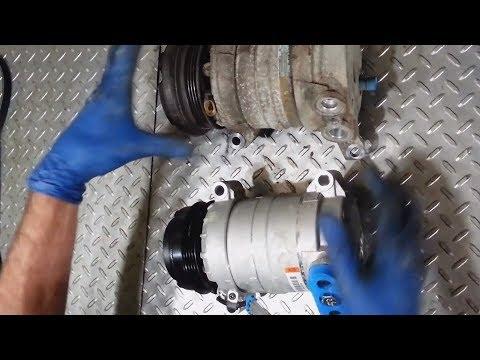
- Compare the old and new compressors side by side to ensure the mounting ears, ports, and pulley match.
- Drain oil from the old compressor into a measuring cup by turning the front hub by hand while tipping it. This tells you the oil amount.
- Follow the new compressor’s instructions: typically, add fresh PAG oil using the supplied amount, adjusted to match what you drained.
- Use a pick tool to remove any shipping plugs from the new compressor ports, but keep them handy until just before installation to keep it clean.
Step 8: Install the new compressor
- Position the new compressor in place the same way the old one came out.
- Install the four mounting bolts by hand to avoid cross-threading.
- Use an E10 external Torx socket and 3/8" ratchet to snug the bolts evenly.
- Using a 3/8" torque wrench, tighten the compressor mounting bolts to 37 Nm (27 ft-lbs).
- Tighten in a crisscross pattern for even seating.
Step 9: Install new seals and reconnect A/C lines
- Use a pick tool to carefully remove the old O-rings or manifold gasket from the line block. Do not scratch the metal.
- Clean the sealing surfaces on the line block and compressor with brake cleaner sprayed onto a shop rag, not directly onto ports.
- Install new O-rings or gasket from your A/C O-ring kit, lightly coating them with a small amount of clean PAG oil using your finger.
- Remove the shipping plugs from the compressor ports.
- Position the line block onto the compressor, making sure it seats flat and isn’t pinching any O-ring.
- Install the line block bolt by hand, then tighten with a 13mm socket and 3/8" torque wrench to 18 Nm (13 ft-lbs).
Step 10: Reconnect electrical connector
- Plug the electrical connector back into the compressor clutch until it clicks.
- Gently tug to verify it is locked in place.
- Ensure the harness is routed away from any moving belt or pulley.
Step 11: Reinstall serpentine belt(s)
- Route the belt according to the belt routing diagram or your photo.
- Use the serpentine belt tool or 1/2" breaker bar to rotate the tensioner and slip the belt over the A/C compressor pulley last.
- Double-check that the belt sits properly in all pulley grooves, not on any ridges.
- Slowly release the tensioner back into position.
Step 12: Reinstall intake ducting and engine cover
- Reattach any air intake components you removed earlier, snapping them in or tightening clamps as needed by hand or with a flat-blade screwdriver.
- Place the engine cover back on and secure it using a 10mm socket for any bolts.
Step 13: Reconnect the battery
- Reconnect the negative battery cable to the battery post.
- Use a 10mm socket to tighten the clamp bolt snugly. Do not overtighten.
Step 14: Have the A/C system evacuated and recharged
- Drive (or tow if needed) the truck to an A/C shop.
- Ask them to perform a vacuum leak test, evacuate the system, and recharge with the exact amount of R-134a shown on your under-hood label.
- Ensure they add the correct amount and type of PAG oil if it was not prefilled, and any UV dye if desired.
- Tell the shop you replaced the compressor.
✅ After Repair
- Once recharged, start the engine and let it idle with the A/C on MAX A/C, fan on high, windows open.
- Verify the A/C clutch engages and the compressor runs smoothly without squealing, grinding, or rhythmic clicking.
- Check for cold air from the vents after 5-10 minutes; it should be much colder than outside air.
- Inspect the compressor area with a work light for any oily residue around the line block or fittings (sign of a leak).
- After a short test drive, recheck belt tracking and listen for abnormal noises under the hood.
💰 DIY vs Shop Cost
Shop Cost: $900-$1,400 (parts + labor + recharge)
DIY Cost: $350-$650 (compressor, seals, belt, plus shop recharge)
You Save: $250-$750 by doing it yourself!
Shop labor rates vary but typically run $100-$150/hour. This repair takes a shop approximately 3-4 hours including evacuate and recharge time.
🎯 Ready to get started?
HowToo makes it easy: same-day/2-day shipping on every part, plus all the tools and specialty tools you need! Check out the parts and tools sections above to add everything to your cart.