









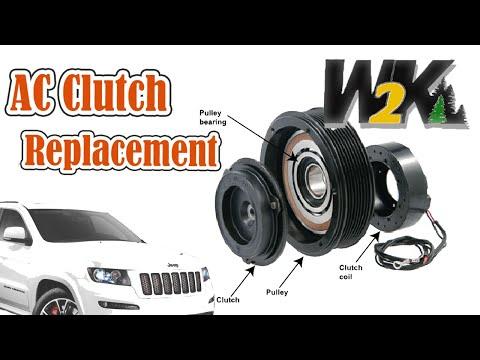





How to Replace the A/C Compressor on a 2012-2018 Jeep Grand Cherokee (Engine: V6 3.6L)
Step-by-step guide with tools, parts, torque specs, refrigerant safety, and recharge tips
How to Replace the A/C Compressor on a 2012-2018 Jeep Grand Cherokee (Engine: V6 3.6L)
Step-by-step guide with tools, parts, torque specs, refrigerant safety, and recharge tips for 2012, 2013, 2014, 2015, 2016, 2017, 2018


🔧 Grand Cherokee - A/C Compressor Replacement
Replacing the A/C compressor on your Grand Cherokee requires safely recovering the refrigerant, removing the serpentine belt, replacing the compressor and sealing O-rings, then evacuating and recharging the A/C system. This repair must be done carefully because the A/C system is pressurized and refrigerant handling requires proper equipment.
Difficulty Level: Advanced | Estimated Time: 3-5 hours
⚠️ Safety & Precautions
- ⚠️ Do not vent refrigerant into the air. Refrigerant must be recovered using an A/C recovery machine.
- ⚠️ Wear safety glasses and nitrile gloves. Liquid refrigerant can cause frostbite.
- ⚠️ Disconnect the negative battery cable before working near the compressor clutch wiring.
- ⚠️ The engine, belt, and A/C lines can be hot. Let the engine cool before starting.
- ⚠️ Keep the A/C line openings capped after removal. Moisture can damage the system.
- ⚠️ If the old compressor failed internally, replace the receiver/drier and expansion valve, and flush the A/C lines before installing the new compressor.
🔧 Required Tools
You'll need the following tools for this repair:
- 10mm socket
- 13mm socket
- 15mm socket
- 3/8-inch drive ratchet
- 3/8-inch drive extension set
- Serpentine belt tool (specialty)
- Torque wrench 10-100 Nm
- A/C manifold gauge set (specialty)
- A/C vacuum pump (specialty)
- A/C recovery machine (specialty)
- Refrigerant scale (specialty)
- Plastic line caps
- Pick tool set
- Belt routing diagram tool or phone camera
- Floor jack rated 3-ton minimum
- Jack stands rated 3-ton minimum
- Wheel chocks
- Drain pan
- Nitrile gloves
- Safety glasses
🔩 Required Parts
HowToo sells all the parts you need for this repair:
- A/C compressor with clutch - Qty: 1
- A/C compressor line O-ring seal kit - Qty: 1
- PAG refrigerant oil - Qty: As required by compressor instructions
- R-134a refrigerant - Qty: Per under-hood A/C charge label
- Serpentine belt - Qty: 1 if worn, cracked, or oil-soaked
- A/C receiver/drier or accumulator - Qty: 1 if compressor failed internally or system was open too long
- A/C expansion valve - Qty: 1 if compressor failed internally
- A/C flush solvent - Qty: 1 if compressor failed internally
📋 Before You Begin
- 🚗 Park your Grand Cherokee on level ground, shift to Park, and set the parking brake.
- 🧱 Place wheel chocks behind the rear wheels before lifting the front.
- 📸 Use a phone camera to take a clear picture of the serpentine belt routing before removing it.
- 🔋 Use a 10mm socket to disconnect the negative battery cable.
- ❄️ Have the refrigerant professionally recovered before opening the A/C system. Recovery means removing refrigerant into an approved machine instead of releasing it.
- 🧪 Check the new compressor instructions for oil amount. Some compressors ship dry, while others are pre-filled.
🔨 Step-by-Step Instructions
Follow these steps in order:
Step 1: Recover the Refrigerant
- Connect the A/C recovery machine to the high-side and low-side service ports.
- Recover the refrigerant completely according to the machine instructions.
- Confirm both gauges read zero pressure before opening any A/C line.
- Never loosen A/C lines under pressure.
Step 2: Disconnect the Battery
- Use a 10mm socket to loosen the negative battery terminal clamp.
- Remove the cable from the battery and move it aside so it cannot spring back.
Step 3: Raise and Support the Front
- Use a floor jack rated 3-ton minimum to lift the front of your Grand Cherokee at the proper front lift point.
- Place jack stands rated 3-ton minimum under the front support points.
- Lower the vehicle gently onto the stands before working underneath.
- Keep the floor jack lightly supporting as a backup.
Step 4: Remove the Serpentine Belt
- Use the serpentine belt tool on the belt tensioner. The tensioner is the spring-loaded pulley that keeps the belt tight.
- Rotate the tensioner to release belt tension.
- Slide the belt off the A/C compressor pulley first, then slowly release the tensioner.
- Remove the belt if you are replacing it, or lay it aside if reusing it.
- Take a belt routing photo first.
Step 5: Disconnect the Compressor Electrical Connector
- Locate the A/C compressor clutch connector on the compressor body.
- Press the locking tab by hand and unplug the connector.
- If the tab is stuck, use a pick tool gently. Do not break the connector lock.
Step 6: Remove the A/C Lines from the Compressor
- Place a drain pan under the compressor area to catch any oil drips.
- Use a 13mm socket to remove the A/C line retaining bolt from the compressor manifold block.
- Carefully pull the A/C line block away from the compressor.
- Use plastic line caps to cap the open lines and compressor ports immediately.
- Use a pick tool to remove the old O-rings from the line block.
Step 7: Remove the A/C Compressor Mounting Bolts
- Support the compressor by hand before removing the last bolt.
- Use a 15mm socket, 3/8-inch drive ratchet, and 3/8-inch drive extension to remove the compressor mounting bolts.
- Lower the compressor out carefully from the bottom.
- Compare the old and new compressors side by side before installation.
Step 8: Prepare the New Compressor
- Read the compressor label and instructions to confirm whether it is pre-filled with oil.
- If oil adjustment is needed, use the correct PAG refrigerant oil and add only the specified amount.
- Turn the compressor clutch plate by hand 8-10 full turns to distribute oil inside.
- Lubricate the new O-rings with a small amount of PAG refrigerant oil.
Step 9: Install the New Compressor
- Position the new compressor in place by hand.
- Start all mounting bolts by hand first to avoid cross-threading.
- Use a 15mm socket and torque wrench 10-100 Nm to tighten the compressor mounting bolts.
- Torque to 54 Nm (40 ft-lbs).
Step 10: Reconnect the A/C Lines
- Install the new lubricated O-rings onto the A/C line block by hand.
- Remove the plastic line caps only when you are ready to connect the lines.
- Push the line block squarely into the compressor ports.
- Use a 13mm socket and torque wrench 10-100 Nm to tighten the retaining bolt.
- Torque to 23 Nm (17 ft-lbs).
Step 11: Reconnect the Electrical Connector
- Push the compressor clutch connector into place by hand until it clicks.
- Lightly tug the connector to confirm it is locked.
Step 12: Reinstall the Serpentine Belt
- Route the belt around the pulleys using your photo or belt routing diagram.
- Use the serpentine belt tool to rotate the tensioner.
- Slide the belt over the A/C compressor pulley last.
- Slowly release the tensioner.
- Check that the belt ribs sit fully in every pulley groove.
Step 13: Reconnect the Battery
- Install the negative battery cable onto the battery post.
- Use a 10mm socket to tighten the terminal clamp snugly.
- Do not overtighten the battery clamp.
Step 14: Evacuate the A/C System
- Connect the A/C manifold gauge set to the high-side and low-side service ports.
- Connect the center hose to the A/C vacuum pump.
- Run the vacuum pump for at least 30-45 minutes.
- Close the manifold valves and turn off the pump.
- Watch the gauges for 10-15 minutes. Vacuum should hold steady.
- If vacuum drops, there is a leak that must be fixed before charging.
Step 15: Recharge the A/C System
- Use a refrigerant scale to charge the exact R-134a amount listed on the under-hood A/C label.
- Charge through the low-side service port using the A/C manifold gauge set.
- Start the engine only when the charging process instructions call for it.
- Set the climate control to maximum A/C, coldest temperature, and medium blower speed.
- Do not overcharge the system. Too much refrigerant can damage the compressor.
✅ After Repair
- ✅ Let the engine idle with A/C on for several minutes and listen for abnormal noises.
- ✅ Check that the compressor clutch engages and disengages normally.
- ✅ Use the A/C manifold gauge set to verify pressures are in a normal range for the outside temperature.
- ✅ Check the compressor line connections for oil stains or refrigerant dye, which can indicate a leak.
- ✅ Confirm cold air from the center vents after the system stabilizes.
- ✅ If the battery was disconnected, reset the clock, radio presets, and one-touch window function if needed.
💰 DIY vs Shop Cost
Shop Cost: $950-$1,600 (parts + labor)
DIY Cost: $350-$750 (parts only, not including refrigerant recovery equipment)
You Save: $600-$850 by doing it yourself!
Shop labor rates vary but typically run $100-$150/hour. This repair takes a shop approximately 3-5 hours.
🎯 Ready to get started?
HowToo makes it easy: same-day/2-day shipping on every part, plus all the tools and specialty tools you need! Check out the parts and tools sections below to add everything to your cart.
Guide for A/C Receiver Drier / Desiccant Element Kit replace for these Jeep vehicles
| Year Make Model | Sub Model | Engine | Body Style |
|---|---|---|---|
| 2018 Jeep Grand Cherokee | - | V8 5.7L | - |
| 2018 Jeep Grand Cherokee | - | V8 6.4L | - |
| 2018 Jeep Grand Cherokee | - | V6 3.0L | - |
| 2017 Jeep Grand Cherokee | - | V8 5.7L | - |
| 2017 Jeep Grand Cherokee | - | V8 6.4L | - |
| 2017 Jeep Grand Cherokee | - | V6 3.0L | - |
| 2016 Jeep Grand Cherokee | - | V8 5.7L | - |
| 2016 Jeep Grand Cherokee | - | V8 6.4L | - |
| 2016 Jeep Grand Cherokee | - | V6 3.0L | - |
| 2015 Jeep Grand Cherokee | - | V8 5.7L | - |
| 2015 Jeep Grand Cherokee | - | V8 6.4L | - |
| 2015 Jeep Grand Cherokee | - | V6 3.0L | - |
| 2014 Jeep Grand Cherokee | - | V8 5.7L | - |
| 2014 Jeep Grand Cherokee | - | V8 6.4L | - |
| 2014 Jeep Grand Cherokee | - | V6 3.0L | - |
| 2013 Jeep Grand Cherokee | - | V8 5.7L | - |
| 2013 Jeep Grand Cherokee | - | V8 6.4L | - |
| 2012 Jeep Grand Cherokee | - | V8 5.7L | - |
| 2012 Jeep Grand Cherokee | - | V8 6.4L | - |