









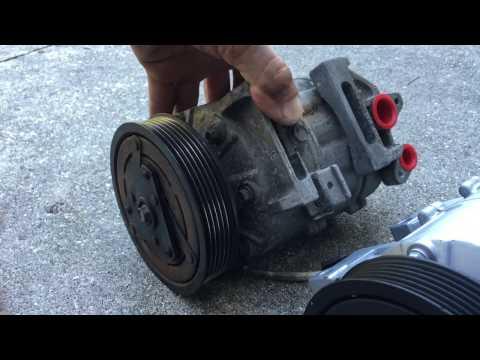







How to Replace the A/C Compressor on a 2008 Nissan Altima (R134a System)
Step-by-step removal and install guide with required tools/parts, PAG oil, O-rings, vacuum, and recharge tips for 2007, 2008, 2009, 2010, 2011, 2012, 2013
How to Replace the A/C Compressor on a 2008 Nissan Altima (R134a System)
Step-by-step removal and install guide with required tools/parts, PAG oil, O-rings, vacuum, and recharge tips for 2007, 2008, 2009, 2010, 2011, 2012, 2013


🔧 Altima - A/C Compressor Replacement
Replacing the A/C compressor on your Altima means removing the drive belt, disconnecting the refrigerant lines, unbolting the compressor, then installing the new unit with new seals and the correct oil amount. The system must be properly recovered, vacuumed, and recharged by weight or you can damage parts and get poor cooling.
Difficulty Level: Advanced | Estimated Time: 3-6 hours
Quick questions (to avoid doing this twice): (1) Did the old compressor seize/make metal-noise or did the clutch fail electrically? (2) Was the system open to air for more than 30 minutes?
⚠️ Safety & Precautions
- ⚠️ Do not vent refrigerant—recover it with approved equipment before loosening any A/C line.
- ⚠️ Wear safety glasses and nitrile gloves; refrigerant/oil can freeze-burn skin and eyes.
- ⚠️ Keep hands/clothes away from the belt and pulleys.
- ⚠️ Support the car with jack stands on a level surface—never rely on a floor jack alone.
- ⚠️ If the compressor failed “grenade-style” (metal debris), the condenser and expansion valve can be contaminated and must be addressed or the new compressor can fail quickly.
- ⚠️ Battery disconnect: recommended before unplugging the compressor clutch connector.
🔧 Required Tools
You'll need the following tools for this repair:
- Safety glasses
- Nitrile gloves
- Floor jack (rated 3-ton minimum)
- Jack stands (rated 3-ton minimum)
- Wheel chocks
- 3/8" drive ratchet
- 1/2" drive breaker bar
- Torque wrench (10–100 ft-lbs range)
- Socket set (8mm–19mm)
- Wrench set (10mm–19mm)
- Screwdriver set (Phillips #2, flathead)
- Trim clip removal tool
- Serpentine belt tool or long-handled 14mm wrench
- A/C manifold gauge set for R134a
- Vacuum pump (specialty)
- Refrigerant recovery machine (specialty)
- Refrigerant scale (specialty)
- A/C flush gun (specialty)
- Oil injector or graduated measuring cup (specialty)
- Shop rags
- Drain pan
🔩 Required Parts
HowToo sells all the parts you need for this repair:
- A/C compressor (new or remanufactured) - Qty: 1
- A/C compressor clutch (if replacing clutch only, if applicable) - Qty: 1
- A/C line O-ring seal kit (R134a-compatible) - Qty: 1
- PAG A/C oil (Nissan-spec for Altima R134a) - Qty: 1
- Refrigerant (R134a) - Qty: 1 (charge by weight)
- Condenser assembly (receiver/drier is built in) - Qty: 1 (recommended if compressor failed with debris)
- Expansion valve - Qty: 1 (recommended if compressor failed with debris)
📋 Before You Begin
- Park on level ground, set the parking brake, and place wheel chocks at the rear wheels.
- Have the refrigerant professionally recovered, or use a refrigerant recovery machine (specialty) before disconnecting any A/C lines.
- Disconnect the negative battery cable using a 10mm wrench.
- Manifold gauge set = the two-gauge hose set used to read system pressures and connect to vacuum/refrigerant.
- Vacuum pump = removes air/moisture so the A/C cools correctly and parts don’t corrode.
🔨 Step-by-Step Instructions
Follow these steps in order:
Step 1: Recover refrigerant safely
- Connect the A/C manifold gauge set for R134a to the high- and low-side service ports.
- Use the refrigerant recovery machine (specialty) to fully recover the refrigerant from the system.
- Confirm both gauges read ~0 psi before you open any A/C line.
Step 2: Raise the front of the car and remove splash shields
- Use a floor jack (rated 3-ton minimum) to lift the front, then support with jack stands (rated 3-ton minimum).
- Remove the lower engine splash shield using a trim clip removal tool and socket set (8mm–12mm).
Step 3: Remove the drive belt from the A/C compressor
- Relieve belt tension with a serpentine belt tool or long-handled 14mm wrench on the belt tensioner.
- Slip the belt off the compressor pulley and slowly release the tensioner.
- Take a quick belt-routing photo first.
Step 4: Disconnect the compressor electrical connector
- Unplug the compressor clutch connector by hand; if tight, gently help with a flathead screwdriver.
- Move the harness aside so it can’t get pinched.
Step 5: Remove the A/C refrigerant lines from the compressor
- Place a drain pan under the compressor for oil drips.
- Remove the line retaining bolt(s) using a socket set (10mm–12mm).
- Carefully wiggle the lines free—do not pry hard on the aluminum tubes.
- Remove and discard old seals; install new ones from the A/C line O-ring seal kit after lightly coating them with PAG A/C oil.
- Torque to Nissan service-manual specification using a torque wrench (10–100 ft-lbs range).
Step 6: Unbolt and remove the compressor
- Support the compressor with one hand.
- Remove the compressor mounting bolts using a socket set (12mm–14mm) and 3/8" drive ratchet.
- Lower the compressor out from underneath.
- Torque to Nissan service-manual specification during reinstallation using a torque wrench (10–100 ft-lbs range).
Step 7: Set the oil amount in the new compressor
- Drain the oil from the old compressor into a graduated measuring cup (specialty) and note the amount and condition.
- Add the same amount of fresh PAG A/C oil (Nissan-spec for Altima R134a) into the new compressor using an oil injector or graduated measuring cup (specialty), unless the new compressor instructions say it is pre-filled.
- If the old oil is glittery/metallic or dark, treat it as contamination (see Step 8).
Step 8: If the compressor failed with debris, flush and replace contamination traps
- If you saw metal debris: replace the condenser assembly (receiver/drier is built in) and the expansion valve.
- Flush remaining lines with an A/C flush gun (specialty) following the flush chemical directions, then blow out thoroughly (do not leave solvent inside).
- Skipping this is the #1 cause of repeat failure.
Step 9: Install the new compressor
- Position the compressor and start mounting bolts by hand to avoid cross-threading.
- Tighten with a socket set (12mm–14mm) and torque wrench: Torque to Nissan service-manual specification.
- Reconnect the refrigerant lines with new O-rings and tighten fasteners: Torque to Nissan service-manual specification.
- Plug in the compressor electrical connector.
Step 10: Reinstall the belt and shields
- Route the belt correctly and relieve tension with the serpentine belt tool or long-handled 14mm wrench.
- Reinstall the splash shield using the trim clip removal tool and socket set (8mm–12mm).
- Lower the car from the jack stands using the floor jack.
Step 11: Evacuate (vacuum) the system
- Reconnect the A/C manifold gauge set for R134a.
- Run the vacuum pump (specialty) to pull a deep vacuum.
- Close the valves and verify it holds vacuum (leak check). If it won’t hold, fix leaks before charging.
Step 12: Recharge by weight and verify operation
- Charge the exact specified amount of R134a using a refrigerant scale (specialty).
- Reconnect the negative battery cable using a 10mm wrench.
- Start the engine, turn A/C to MAX, and verify stable pressures on the manifold gauge set and cold vent temps.
✅ After Repair
- Check for abnormal compressor noise and confirm the clutch engages smoothly.
- Inspect every A/C connection for oil residue (a common sign of a small leak).
- Verify the radiator fans run when the A/C is on.
- Recheck belt alignment and listen for belt squeal.
- If cooling is weak: confirm charge amount by weight first, then check for airflow issues (condenser blockage, fans).
💰 DIY vs Shop Cost
Shop Cost: $900-$1,800 (parts + labor, more if condenser/valve needed)
DIY Cost: $250-$900 (parts only, depending on what failed)
You Save: $650-$900+ by doing it yourself!
Shop labor rates vary but typically run $100-$150/hour. This repair takes a shop approximately 3-5 hours.
🎯 Ready to get started?
HowToo makes it easy: same-day/2-day shipping on every part, plus all the tools and specialty tools you need! Check out the parts and tools sections below to add everything to your cart.