









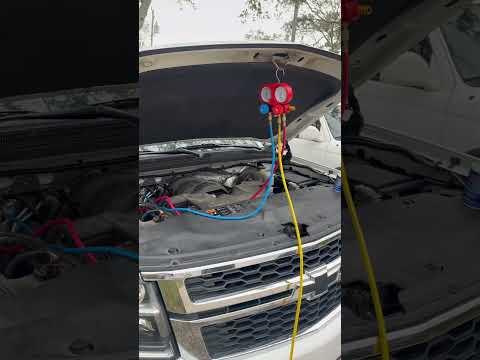







How to Replace the A/C Compressor on a 2008 Chevrolet Tahoe (R-134a System)
Step-by-step instructions with tools, parts (accumulator & orifice tube), oil setup, evacuation, and recharge tips
How to Replace the A/C Compressor on a 2008 Chevrolet Tahoe (R-134a System)
Step-by-step instructions with tools, parts (accumulator & orifice tube), oil setup, evacuation, and recharge tips


🔧 Tahoe - A/C Compressor Replacement
Replacing the A/C compressor on your Tahoe is a multi-step job because the refrigerant must be safely recovered, the compressor swapped, and then the system must be vacuum-evacuated and recharged by weight. Most repeat failures happen when debris/oil contamination isn’t addressed, so parts replaced with the compressor matters.
Difficulty Level: Advanced | Estimated Time: 3-6 hours
⚠️ Safety & Precautions
- ⚠️ Refrigerant must be recovered with proper equipment; venting to the air is illegal and dangerous.
- ⚠️ Wear safety glasses and gloves; liquid refrigerant can cause frostbite burns.
- ⚠️ Keep dirt out of A/C lines; cap/plug open lines immediately.
- ⚠️ Let the engine cool fully before working near the radiator and belt drive.
- 🔋 Disconnect the negative battery cable before unplugging compressor electrical connectors.
- 🧯 Work in a well-ventilated area; avoid open flames near refrigerant/oil.
🔧 Required Tools
You'll need the following tools for this repair:
- Safety glasses
- Nitrile gloves
- Floor jack (rated 3-ton minimum)
- Jack stands (rated 3-ton minimum)
- Wheel chocks
- Metric socket set (8mm-15mm)
- 3/8" drive ratchet
- 1/2" drive breaker bar
- Serpentine belt tool (specialty)
- Torque wrench (10-150 ft-lbs range)
- Flat trim tool
- Pick set
- Line caps/plugs kit
- Catch pan
- A/C manifold gauge set for R-134a
- Vacuum pump (specialty)
- Refrigerant recovery machine (specialty)
- Refrigerant scale (specialty)
- Oil injector/syringe (specialty)
- UV leak detection light (specialty)
🔩 Required Parts
HowToo sells all the parts you need for this repair:
- A/C compressor - Qty: 1
- A/C compressor manifold seal O-rings - Qty: 1 set
- A/C accumulator (receiver/drier) - Qty: 1
- Orifice tube - Qty: 1
- PAG A/C compressor oil (viscosity per underhood label) - Qty: 1
- R-134a refrigerant (charge amount per underhood label) - Qty: 1
- Optional: A/C system flush solvent - Qty: 1
📋 Before You Begin
- Park on level ground, set the parking brake, and chock the rear wheels.
- Use a shop with a recovery machine to recover the refrigerant before you loosen any A/C fittings.
- Open the hood and read the underhood A/C label for the correct R-134a charge weight and PAG oil specification.
- If the old compressor failed catastrophically (metal debris), plan to replace the accumulator and orifice tube, and consider flushing the lines and condenser.
🔨 Step-by-Step Instructions
Follow these steps in order:
Step 1: Recover the refrigerant
- Use a refrigerant recovery machine (specialty) to recover the system completely.
- Verify with the machine that the system is at 0 psi before opening the system.
Step 2: Disconnect the battery
- Use a 10mm socket to disconnect the negative battery cable.
Step 3: Raise and support the front of the Tahoe
- Use a floor jack (rated 3-ton minimum) to lift the front safely.
- Support with jack stands (rated 3-ton minimum) under the frame.
Step 4: Remove the lower splash shield (if equipped)
- Use a metric socket set (8mm-15mm) and trim tool to remove bolts/clips.
- Set hardware aside in a tray. Keep bolts grouped by location.
Step 5: Remove the serpentine belt from the A/C compressor
- Use a serpentine belt tool (specialty) to rotate the belt tensioner and relieve tension.
- Slip the belt off the A/C compressor pulley only, and leave it routed on other pulleys if possible.
Step 6: Unplug the compressor electrical connector
- Use a pick set to lift the connector lock (if present), then unplug the connector.
Step 7: Disconnect the A/C lines from the compressor
- Place a catch pan under the compressor area.
- Use the correct-size metric socket to remove the bolt(s) holding the line manifold to the compressor.
- Pull the manifold straight off and immediately install line caps/plugs on the open lines and compressor ports.
- Remove old O-rings with a pick set (do not scratch sealing surfaces).
Step 8: Remove the A/C compressor
- Support the compressor with one hand.
- Use a metric socket set (8mm-15mm) and ratchet to remove the compressor mounting bolts.
- Remove the compressor from the vehicle.
Step 9: Set the oil amount correctly
- Drain the old compressor oil into a measuring container in your catch pan.
- Add oil to the new compressor using an oil injector/syringe (specialty).
- Use the underhood label/service information for the correct PAG oil type and total system oil amount.
- Too much oil can reduce cooling.
Step 10: Install new O-rings on the line manifold
- Install new O-rings from the A/C compressor manifold seal O-rings set.
- Lightly lubricate O-rings with the correct PAG oil using the oil injector/syringe (specialty).
Step 11: Install the new compressor
- Position the compressor and start mounting bolts by hand to avoid cross-threading.
- Use a torque wrench to tighten mounting bolts to OEM specification (service manual).
Step 12: Reconnect the A/C line manifold
- Remove line caps/plugs.
- Push the line manifold on squarely (do not force it).
- Use a torque wrench to tighten the manifold bolt(s) to OEM specification (service manual).
Step 13: Reinstall the belt and shields
- Use a serpentine belt tool (specialty) to rotate the tensioner and reinstall the belt.
- Visually confirm the belt is seated in every pulley groove.
- Reinstall the splash shield using a metric socket set (8mm-15mm).
Step 14: Reconnect the battery
- Use a 10mm socket to reconnect the negative battery cable.
Step 15: Replace the accumulator and orifice tube (recommended with compressor)
- Replace the A/C accumulator and orifice tube per their locations in the A/C lines.
- Use a pick set for O-rings and a metric socket set (8mm-15mm) for any brackets.
- Use a torque wrench to tighten fittings to OEM specification (service manual).
- Accumulator replacement helps prevent repeat failure.
Step 16: Evacuate and recharge the system
- Connect the A/C manifold gauge set for R-134a and a vacuum pump (specialty).
- Evacuate for at least 30-45 minutes, then close valves and verify it holds vacuum (leak check).
- Recharge with R-134a refrigerant using a refrigerant scale (specialty) to the exact charge weight on the underhood label.
- Use a UV leak detection light (specialty) to check for leaks at the compressor manifold and any opened fittings.
✅ After Repair
- Start the engine and set A/C to MAX; confirm the compressor engages and the air gets cold.
- Watch the manifold gauges for normal operating pressures (varies with temperature/humidity).
- Listen for belt squeal or knocking; shut down and recheck belt routing if abnormal.
- Recheck for oily residue at fittings after a short test drive (sign of a leak).
💰 DIY vs Shop Cost
Shop Cost: $900-$1,800 (parts + labor)
DIY Cost: $250-$750 (parts only, assuming you can recover/evacuate/recharge)
You Save: $650-$1,050 by doing it yourself!
Shop labor rates vary but typically run $100-$150/hour. This repair takes a shop approximately 3-6 hours.
🎯 Ready to get started?
HowToo makes it easy: same-day/2-day shipping on every part, plus all the tools and specialty tools you need! Check out the parts and tools sections below to add everything to your cart.