














How to Replace the 12V Battery on a 2020 Toyota GR Supra (Rear Cargo Area)
Step-by-step battery swap with tools/parts list, safety tips, terminal order, and battery registration guidance for 2020, 2021, 2022, 2023, 2024
How to Replace the 12V Battery on a 2020 Toyota GR Supra (Rear Cargo Area)
Step-by-step battery swap with tools/parts list, safety tips, terminal order, and battery registration guidance for 2020, 2021, 2022, 2023, 2024


🔧 Supra - 12V Battery Replacement
Your Supra’s 12V battery lives in the rear cargo area. Replacing it is straightforward, but you must disconnect/reconnect in the correct order and (ideally) register the new battery so the charging system knows it’s new.
Difficulty Level: Intermediate | Estimated Time: 0.5-1.0 hours
⚠️ Safety & Precautions
- 🛑 Turn the car OFF, key/fob away from the car, and wait 5-10 minutes before touching the battery (modules go to sleep).
- 🧤 Wear gloves and safety glasses; batteries can spark if tools touch metal.
- 🔌 Disconnect the negative (-) terminal first and reconnect it last.
- 🚫 Do not let your wrench touch the body metal while on the positive (+) terminal.
- 🔋 Use the same type battery (typically AGM) to avoid charging issues.
🔧 Required Tools
You'll need the following tools for this repair:
- 10mm socket
- 13mm socket
- Ratchet
- 6" socket extension
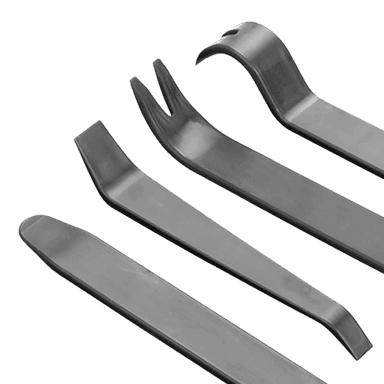
- Trim clip removal tool
- Torque wrench (5–30 Nm range)
- Work gloves
- Safety glasses
- OBD memory saver (optional)
- Scan tool with battery registration (specialty)
🔩 Required Parts
HowToo sells all the parts you need for this repair:
- 12V AGM battery (OEM-equivalent fit for Supra) - Qty: 1
- Battery terminal protectant spray - Qty: 1
- Anti-corrosion terminal washers (optional) - Qty: 1 set
📋 Before You Begin
- 🅿️ Park on level ground, shift to Park, and set the parking brake.
- 🔑 Keep the key/fob at least 10 feet away from the car.
- ⏳ Wait 5-10 minutes after shutting the car off before disconnecting the battery.
- 🔌 If you’re using an OBD memory saver (a device that keeps power to the car while the battery is out), connect it now per its instructions.
- 🧠 Plan for battery registration: if you install a new battery without registering, the car may not charge it correctly or may set faults.
🔨 Step-by-Step Instructions
Follow these steps in order:
Step 1: Access the battery in the rear cargo area
- Open the hatch.
- Lift the cargo floor panel.
- Use a trim clip removal tool to carefully remove any clips/fasteners holding the right-side access cover (battery area), then remove the cover.
Step 2: Disconnect the negative (-) terminal
- Locate the negative (-) clamp on the battery.
- Use a 10mm socket with a ratchet to loosen the clamp nut.
- Lift the clamp off the battery post and tuck it aside so it cannot spring back onto the post.
- Tip: Wrap the cable end with a rag.
- When reinstalling later: Torque to 5 Nm (44 in-lbs).
Step 3: Disconnect the positive (+) terminal
- Open the positive (+) terminal cover (usually a red plastic cover).
- Use a 10mm socket with a ratchet to loosen the clamp nut.
- Lift the clamp straight up off the post and position it aside so it cannot touch metal.
- When reinstalling later: Torque to 5 Nm (44 in-lbs).
Step 4: Disconnect the battery vent tube (if equipped)
- Look for a small plastic hose on the side of the battery (this vents battery gases).
- Pull it straight out by hand. Do not tear or kink it.
Step 5: Remove the battery hold-down and lift the battery out
- Find the battery hold-down bracket at the base of the battery.
- Use a 13mm socket, ratchet, and 6" socket extension to remove the hold-down bolt(s).
- Lift the battery straight up and out. Batteries are heavy—use both hands.
- When reinstalling later: Torque hold-down to 24 Nm (18 ft-lbs).
Step 6: Install the new battery
- Set the new battery into the tray in the same orientation as the old one.
- Reinstall the hold-down bracket using the 13mm socket, then Torque hold-down to 24 Nm (18 ft-lbs) using a torque wrench.
- Reconnect the vent tube by pushing it fully into the battery vent port (if equipped).
Step 7: Reconnect terminals (positive first, negative last)
- Install the positive (+) clamp first. Use a 10mm socket and torque wrench: Torque to 5 Nm (44 in-lbs).
- Close the positive terminal cover.
- Install the negative (-) clamp last. Use a 10mm socket and torque wrench: Torque to 5 Nm (44 in-lbs).
- Spray a light coat of battery terminal protectant on the connections.
Step 8: Register the new battery (recommended)
- Connect a scan tool with battery registration (specialty) to the OBD port.
- Use the scan tool’s function for Battery Replacement / Battery Registration and follow the prompts.
- If the battery type/capacity changed (example: different Ah rating), select the correct option during registration.
Step 9: Reinstall trim and cargo floor
- Reinstall the battery access cover and any clips using the trim clip removal tool.
- Reinstall the cargo floor panel.
✅ After Repair
- 🔎 Start the car and confirm there are no warning messages.
- 🧾 If you used no memory saver, reset the clock/date and check radio settings as needed.
- 🪟 If a window acts odd, fully raise it, then hold the switch up for 5 seconds (relearn).
- 🧰 Scan for codes if any lights remain on after a short drive.
💰 DIY vs Shop Cost
Shop Cost: $350-$650 (parts + labor)
DIY Cost: $200-$450 (parts only)
You Save: $150-$200 by doing it yourself!
Shop labor rates vary but typically run $100-$150/hour. This repair takes a shop approximately 0.5-1.0 hours.
🎯 Ready to get started?
HowToo makes it easy: same-day/2-day shipping on every part, plus all the tools and specialty tools you need! Check out the parts and tools sections below to add everything to your cart.