









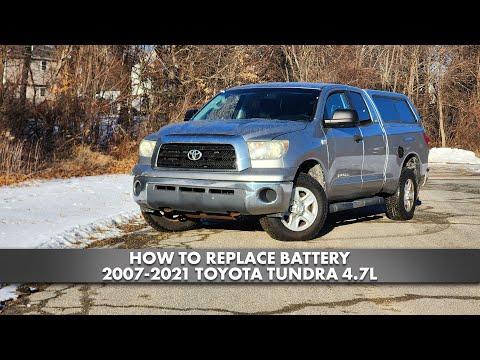






How to Replace the 12V Battery on a 2018 Toyota Tundra (Step-by-Step Guide)
Tools, battery group size (24F/27F), safety tips, terminal order, and torque specs included for 2000, 2001, 2002, 2003, 2004, 2022, 2023
How to Replace the 12V Battery on a 2018 Toyota Tundra (Step-by-Step Guide)
Tools, battery group size (24F/27F), safety tips, terminal order, and torque specs included for 2000, 2001, 2002, 2003, 2004, 2022, 2023


🔧 Tundra - Battery Replacement
On your Tundra, replacing the 12V battery is a simple job: remove the old battery, clean the terminals, and install the new one in the same orientation. Doing it carefully prevents electrical damage and avoids loose connections that can cause no-starts.
Difficulty Level: Beginner | Estimated Time: 0.5-1.0 hours
⚠️ Safety & Precautions
- 🧤 Batteries can vent acid and hydrogen gas—wear eye/hand protection and keep sparks/flames away.
- ⚡ Always disconnect the negative (-) terminal first and reconnect it last to reduce short-circuit risk.
- 🏋️ The battery is heavy—lift with both hands and keep it level.
- 🔑 Make sure the ignition is OFF and the key/fob is away from the truck before starting.
- 🔌 Battery disconnect is required for this replacement.
🔧 Required Tools
You'll need the following tools for this repair:
- Safety glasses
- Nitrile gloves
- 10mm socket
- 12mm socket
- 3/8" ratchet
- 6" socket extension
- Torque wrench (in-lb)
- Torque wrench (ft-lb)
- Battery terminal cleaning brush
- Digital multimeter
- Battery terminal puller (specialty)
🔩 Required Parts
HowToo sells all the parts you need for this repair:
- 12V battery (Group 24F or 27F, depending on what’s currently installed) - Qty: 1
- Battery terminal anti-corrosion spray - Qty: 1
- Battery terminal felt washers - Qty: 1 set
📋 Before You Begin
- 🅿️ Park on level ground, shift to Park, and set the parking brake.
- 🔦 Open the hood and locate the battery (engine bay).
- 📸 Take a quick photo of the battery orientation and cable routing with your phone.
- ❓Quick check: does your current battery label show 24F or 27F? If you tell me, I’ll confirm the correct fit.
🔨 Step-by-Step Instructions
Follow these steps in order:
Step 1: Power down and access the battery
- Turn the ignition OFF and remove the key/fob from the truck.
- Put on safety glasses and nitrile gloves.
Step 2: Disconnect the negative (-) battery terminal
- Use a 10mm socket with a 3/8" ratchet to loosen the nut on the negative (-) terminal clamp.
- Wiggle the clamp straight up off the post. If it’s stuck, use a battery terminal puller (specialty) (a small puller that lifts the clamp off without prying).
- Move the negative cable aside so it cannot spring back to the battery post.
- When reinstalling later: Torque to 5.4 Nm (48 in-lbs).
Step 3: Disconnect the positive (+) battery terminal
- Use a 10mm socket with a 3/8" ratchet to loosen the nut on the positive (+) terminal clamp.
- Lift the clamp off and position it safely away from the battery.
- When reinstalling later: Torque to 5.4 Nm (48 in-lbs).
Step 4: Remove the battery hold-down bracket
- Use a 12mm socket, 6" extension, and 3/8" ratchet to remove the battery hold-down hardware.
- Set the bracket and bolts/nuts aside where they won’t be lost.
- When reinstalling later: Torque to 18 Nm (13 ft-lbs).
Step 5: Remove the old battery
- Lift the battery straight up and out using both hands. Keep it upright.
- Place it on the ground in a safe spot.
Step 6: Clean and prep the connections
- Use a battery terminal cleaning brush to clean the inside of both cable clamps until the metal is shiny.
- If you’re installing battery terminal felt washers, place them on the battery posts now (one per post).
Step 7: Install the new battery
- Carefully lower the new battery into the tray in the same orientation as the old one.
- Reinstall the hold-down bracket using the 12mm socket, extension, and ratchet.
- Tighten with a torque wrench (ft-lb): Torque to 18 Nm (13 ft-lbs).
Step 8: Reconnect terminals (positive first)
- Install the positive (+) clamp first. Use a 10mm socket to tighten, then use a torque wrench (in-lb): Torque to 5.4 Nm (48 in-lbs).
- Install the negative (-) clamp last. Tighten with a 10mm socket, then: Torque to 5.4 Nm (48 in-lbs).
- Apply battery terminal anti-corrosion spray to help prevent future corrosion.
Step 9: Verify operation and charging
- Start the engine and confirm it cranks normally.
- Use a digital multimeter at the battery posts with the engine running.
- Charging voltage is typically in the mid-13V to mid-14V range; if it’s very low or very high, tell me what you read.
✅ After Repair
- 🔍 Make sure the battery is clamped securely and doesn’t move when pushed by hand.
- 🧼 If you see white/blue fuzz (corrosion) later, re-clean and re-apply anti-corrosion spray.
- 🕒 Reset clock and re-save radio presets if they were lost.
💰 DIY vs Shop Cost
Shop Cost: $250-$450 (parts + labor)
DIY Cost: $170-$320 (parts only)
You Save: $80-$130 by doing it yourself!
Shop labor rates vary but typically run $100-$150/hour. This repair takes a shop approximately 0.5-1.0 hours.
🎯 Ready to get started?
HowToo makes it easy: same-day/2-day shipping on every part, plus all the tools and specialty tools you need! Check out the parts and tools sections below to add everything to your cart.