
















How to Replace the 12V Battery on a 2018 Nissan Altima (Safe Step-by-Step Guide)
Tools, parts, safety tips, and torque specs to swap the battery without damaging the negative cable sensor
How to Replace the 12V Battery on a 2018 Nissan Altima (Safe Step-by-Step Guide)
Tools, parts, safety tips, and torque specs to swap the battery without damaging the negative cable sensor


🔧 Altima - 12V Battery Replacement
You’ll remove the old 12V battery, transfer any insulators/vent parts if equipped, and install the new one with clean, tight connections. Doing it correctly prevents no-start issues and protects the Altima’s electrical system (especially the sensor on the negative cable).
Difficulty Level: Beginner | Estimated Time: 0.5-1.0 hours
⚠️ Safety & Precautions
- ⚠️ Turn the car OFF, remove the key, and keep it away from the car while working.
- ⚠️ Wear eye protection; battery acid corrosion can irritate skin/eyes.
- ⚠️ Always disconnect the negative (-) terminal first, reconnect it last.
- ⚠️ Do not pry on or strike the battery current sensor (the plastic sensor ring/module on the negative cable). It measures battery current for charging control.
- ⚠️ No battery disconnect “coding” is typically required on your Altima, but you may lose radio presets/clock.
🔧 Required Tools
You'll need the following tools for this repair:
- 10mm socket
- 1/4" drive ratchet
- 6" extension for 1/4" drive
- Torque wrench (inch-pound) 20-200 in-lb
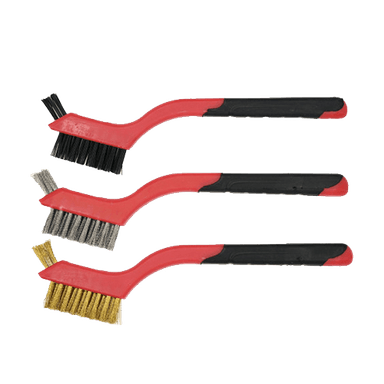
- Battery terminal brush
- Nitrile gloves
- Safety glasses
- Fender cover
🔩 Required Parts
HowToo sells all the parts you need for this repair:
- 12V battery (match your current group size and CCA) - Qty: 1
- Battery terminal anti-corrosion pads - Qty: 2
- Battery terminal protectant spray - Qty: 1
📋 Before You Begin
- Park on level ground, shift to Park, and set the parking brake.
- Open the hood and let the engine bay cool if it’s hot.
- If you want to keep settings, use a memory saver (a small backup power device) only if you’re familiar with it; otherwise skip it for safety.
🔨 Step-by-Step Instructions
Follow these steps in order:
Step 1: Locate the battery and identify terminals
- Remove any battery cover/insulator (if equipped) by hand.
- Identify the negative (-) terminal (usually black/marked “-”) and positive (+) terminal (usually under a red cover).
Step 2: Disconnect the negative (-) terminal first
- Use a 10mm socket with a 1/4" ratchet to loosen the negative terminal clamp nut.
- Wiggle the clamp upward to remove it from the post; do not pull on wires.
- Move the cable aside so it cannot spring back onto the battery post.
Step 3: Disconnect the positive (+) terminal
- Flip open/remove the red cover (if equipped).
- Use a 10mm socket to loosen the positive terminal clamp nut.
- Remove the clamp from the post and position it aside so it cannot touch metal.
Step 4: Remove the battery hold-down
- Use a 10mm socket with an extension to remove the hold-down nuts on the J-bolts (the long threaded rods).
- Lift off the hold-down bracket and set it aside.
Step 5: Remove the old battery
- With nitrile gloves on, lift the battery straight up and out. Batteries are heavy; keep your back straight.
- Inspect the tray area for corrosion or dampness.
Step 6: Clean the terminals and tray
- Use a battery terminal brush to clean the inside of both cable clamps until shiny metal shows.
- If corrosion is heavy, clean and dry the area before installing the new battery.
- Install battery terminal anti-corrosion pads on the posts (one per post).
Step 7: Install the new battery and secure it
- Place the new battery into the tray in the same orientation as the old one.
- Reinstall the hold-down bracket and start the nuts by hand to avoid cross-threading.
- Use a 10mm socket to snug the hold-down nuts evenly.
- Use an inch-pound torque wrench: Torque the battery hold-down nuts to 48 in-lb (5.4 N·m).
Step 8: Reconnect the positive (+) terminal first
- Install the positive clamp onto the positive post.
- Use a 10mm socket to tighten the clamp.
- Use an inch-pound torque wrench: Torque the terminal clamp nut to 48 in-lb (5.4 N·m).
- Close the red terminal cover (if equipped).
Step 9: Reconnect the negative (-) terminal last
- Install the negative clamp onto the negative post carefully, keeping the battery current sensor aligned and not stressed.
- Use a 10mm socket to tighten the clamp.
- Use an inch-pound torque wrench: Torque the terminal clamp nut to 48 in-lb (5.4 N·m).
- Spray a light coat of battery terminal protectant spray on both terminals.
Step 10: Reinstall any battery cover/insulator
- Reinstall the cover/insulator by hand so it sits fully and doesn’t pinch cables.
✅ After Repair
- Start the Altima and verify it cranks strongly and the charging light is off.
- Set the clock and re-save radio presets if needed.
- If your power windows lost “auto” function: with the engine running, fully raise the window and hold the switch in the UP position for a few seconds, then test auto-up/auto-down.
- Check that the battery is secure (no movement) and cables are tight (no rotation on posts).
💰 DIY vs Shop Cost
Shop Cost: $180-$350 (parts + labor)
DIY Cost: $120-$260 (parts only)
You Save: $60-$150 by doing it yourself!
Shop labor rates vary but typically run $100-$150/hour. This repair takes a shop approximately 0.5-1.0 hours.
🎯 Ready to get started?
HowToo makes it easy: same-day/2-day shipping on every part, plus all the tools and specialty tools you need! Check out the parts and tools sections below to add everything to your cart.