









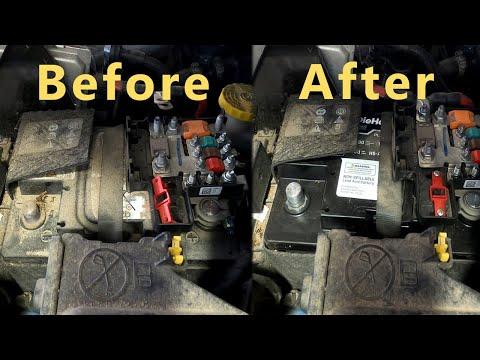






How to Replace the 12V Battery on a 2018 Jeep Compass (Step-by-Step Guide)
Tools, correct battery type (AGM for Start/Stop), safety tips, and torque specs for a clean install
How to Replace the 12V Battery on a 2018 Jeep Compass (Step-by-Step Guide)
Tools, correct battery type (AGM for Start/Stop), safety tips, and torque specs for a clean install


🔧 Compass - 12V Battery Replacement
Replacing your Compass battery means safely disconnecting the old 12V battery, swapping it for the correct type, and reconnecting in the right order. Doing it carefully prevents electrical glitches and protects sensitive modules.
Difficulty Level: Beginner | Estimated Time: 0.5-1.0 hours
⚠️ Safety & Precautions
- ⚠️ Wear eye protection and gloves—battery acid is corrosive.
- ⚠️ Key off, remove key, and wait 3 minutes before disconnecting to let modules “go to sleep.”
- ⚠️ Disconnect negative (-) first and reconnect negative (-) last to reduce short-circuit risk.
- ⚠️ Do not let a wrench touch the body/metal while on the positive (+) terminal.
- 🧠 If equipped with Auto Start/Stop, use an AGM battery (incorrect type can cause warnings and poor performance).
🔧 Required Tools
You'll need the following tools for this repair:
- 10mm socket
- 13mm socket
- 3/8" ratchet
- 3" extension (3/8" drive)
- Torque wrench (5-30 Nm range)
- Trim clip tool
- Battery terminal puller (specialty)
- Battery post cleaning brush
- Shop rags
- Nitrile gloves
- Safety glasses
🔩 Required Parts
HowToo sells all the parts you need for this repair:
- 12V battery (correct fitment for Compass 2.4L) - Qty: 1
- Battery terminal anti-corrosion pads - Qty: 2
- Battery terminal protectant spray - Qty: 1
📋 Before You Begin
- Park on level ground, turn the engine off, and open the hood.
- Turn off all accessories (headlights, HVAC blower, radio).
- Wait at least 3 minutes before disconnecting the battery.
- If your Compass has Auto Start/Stop (often shown by an “A” with a circular arrow on the dash), plan on installing an AGM battery.
🔨 Step-by-Step Instructions
Follow these steps in order:
Step 1: Access the battery
- Open the hood and locate the battery in the engine bay.
- If there’s a plastic battery cover or intake snorkel in the way, remove it using a trim clip tool and/or a 10mm socket.
- Take a photo before removing anything.
Step 2: Disconnect the negative (-) cable
- Use a 10mm socket with a 3/8" ratchet to loosen the negative (-) terminal clamp nut.
- Wiggle the clamp up and off the battery post. If it’s stuck, use a battery terminal puller (specialty) (a small puller that lifts the clamp off without prying).
- Tuck the negative cable to the side so it can’t spring back onto the post.
- Torque to 5 Nm (44 in-lbs) when reinstalling later.
Step 3: Disconnect the positive (+) cable
- Use a 10mm socket to loosen the positive (+) terminal clamp nut.
- Lift the clamp off the post and move it aside.
- Torque to 5 Nm (44 in-lbs) when reinstalling later.
Step 4: Remove the battery hold-down
- At the base of the battery, remove the hold-down bolt using a 13mm socket, 3" extension, and 3/8" ratchet.
- Remove the hold-down bracket and set it aside.
- Torque to 20 Nm (15 ft-lbs) when reinstalling later.
Step 5: Lift out the old battery
- Lift the battery straight up and out using safe lifting technique (bend knees, keep back straight).
- Set it on the ground—keep it upright.
Step 6: Clean terminals and prep the new battery
- Use a battery post cleaning brush to lightly clean the inside of both cable clamps.
- Install battery terminal anti-corrosion pads on the new battery posts.
- Clean metal-to-metal contact prevents no-start issues.
Step 7: Install the new battery and secure it
- Place the new battery into the tray in the same orientation as the old one.
- Reinstall the hold-down bracket and bolt using a 13mm socket.
- Torque to 20 Nm (15 ft-lbs).
Step 8: Reconnect cables (positive first, negative last)
- Reconnect the positive (+) clamp first using a 10mm socket.
- Torque to 5 Nm (44 in-lbs).
- Reconnect the negative (-) clamp last using a 10mm socket.
- Torque to 5 Nm (44 in-lbs).
- Spray terminals with battery terminal protectant spray.
Step 9: Reinstall covers and any removed intake pieces
- Reinstall the battery cover/snorkel using the trim clip tool and a 10mm socket as needed.
- Make sure nothing is rubbing on the battery cables.
✅ After Repair
- Start the engine and confirm normal cranking speed and no warning messages.
- Check that headlights, horn, and power windows work normally.
- If you see a battery/charging warning light, stop and re-check both clamps for tightness and clean contact.
- If equipped with Auto Start/Stop: it may take a few drives to relearn and enable; if it never returns, the battery type/capacity may be incorrect.
💰 DIY vs Shop Cost
Shop Cost: ₹7,000-₹15,000 (parts + labor)
DIY Cost: ₹6,000-₹14,000 (parts only)
You Save: ₹1,000-₹3,000 by doing it yourself!
Shop labor rates vary but typically run ₹1,000-₹2,500/hour. This repair takes a shop approximately 0.5-1.0 hours.
🎯 Ready to get started?
HowToo makes it easy: same-day/2-day shipping on every part, plus all the tools and specialty tools you need! Check out the parts and tools sections below to add everything to your cart.