









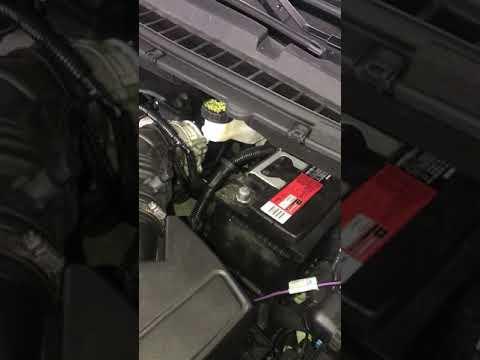





How to Replace the 12V Battery on a 2015-2024 Ford Edge (Under-Cowl Location) (Engine: V6 3.5L)
Step-by-step battery swap with tools/parts list, terminal torque specs, and BMS reset procedure
How to Replace the 12V Battery on a 2015-2024 Ford Edge (Under-Cowl Location) (Engine: V6 3.5L)
Step-by-step battery swap with tools/parts list, terminal torque specs, and BMS reset procedure for 2015, 2016, 2017, 2018, 2019, 2020, 2021, 2022, 2023, 2024


🔧 Edge - 12V Battery Replacement
On your Edge, the 12V battery sits under the cowl area at the back of the engine bay, so you’ll remove a few plastic covers to access it. The job is mostly careful disassembly, then swapping the battery and resetting the Battery Monitoring System (BMS) so charging works correctly.
Difficulty Level: Intermediate | Estimated Time: 0.8-1.5 hours
⚠️ Safety & Precautions
- ⚠️ Keep the key far away and ignition OFF before touching battery cables.
- ⚠️ Disconnect the negative (-) terminal first and reconnect it last to reduce short-circuit risk.
- ⚠️ Do not let a tool touch both the battery post and metal body parts at the same time.
- ⚠️ Battery acid is corrosive; wear gloves and safety glasses.
- ⚠️ If your Edge has auto up/down windows, you may need to relearn them after power loss.
- ⚠️ Battery disconnect is required for this repair.
🔧 Required Tools
You'll need the following tools for this repair:
- 10mm socket
- 13mm socket
- 1/4" ratchet
- 3/8" ratchet
- 6" socket extension
- Trim clip removal tool
- Flat-blade screwdriver
- Torque wrench (in-lb)
- Torque wrench (ft-lb)
- Battery terminal cleaning brush
- Shop rags
- Nitrile gloves
- Safety glasses
- 12V memory saver (specialty)
🔩 Required Parts
HowToo sells all the parts you need for this repair:
- 12V battery (Group H6/48 size, correct terminals) - Qty: 1
- Battery terminal anti-corrosion washers or spray - Qty: 1
- Dielectric grease - Qty: 1
📋 Before You Begin
- Park on level ground, shift to P, and set the parking brake.
- Open the hood and keep it supported securely.
- If you’re using a 12V memory saver (a device that keeps settings alive during battery removal), connect it now per its instructions.
- Make sure all lights/accessories are OFF and the ignition is OFF.
🔨 Step-by-Step Instructions
Follow these steps in order:
Step 1: Access the battery under the cowl
- Remove the rubber weatherstrip at the rear of the engine bay by pulling it up by hand.
- Use a trim clip removal tool to pop up any plastic push-clips holding the upper cowl cover(s).
- Use a flat-blade screwdriver to gently release any locking tabs, then lift the plastic cowl cover(s) out of the way.
- Go slow—plastic clips break easily.
Step 2: Disconnect the negative (-) battery terminal
- Locate the negative (-) cable (usually black, marked “-”).
- Use a 10mm socket to loosen the terminal pinch bolt.
- Wiggle and lift the terminal off the battery post, then tuck it aside so it cannot spring back.
- Torque to 7 Nm (62 in-lb) when reinstalling.
- If it’s stuck, twist—don’t pry hard.
Step 3: Disconnect the positive (+) battery terminal
- Flip open/remove the positive terminal cover (if equipped).
- Use a 10mm socket to loosen the positive terminal pinch bolt.
- Remove the terminal from the battery post and position it safely aside.
- Torque to 7 Nm (62 in-lb) when reinstalling.
Step 4: Remove the battery hold-down
- At the base of the battery, remove the hold-down bolt using a 13mm socket and ratchet.
- Lift out the hold-down bracket/wedge and set it aside.
- Torque to 10 Nm (89 in-lb) when reinstalling.
Step 5: Remove the old battery
- Lift the battery straight up and out. Batteries are heavy—use good lifting posture.
- Set the old battery on the ground upright.
Step 6: Clean the terminals and prep for install
- Use a battery terminal cleaning brush to clean the inside of both cable terminals.
- Wipe with shop rags.
- Install anti-corrosion washers/spray, then apply a thin layer of dielectric grease to help prevent corrosion.
- Clean metal-to-metal contact is key.
Step 7: Install the new battery
- Place the new battery into the tray in the same orientation as the old one (terminals matching the cables).
- Reinstall the hold-down bracket and bolt using a 13mm socket.
- Torque to 10 Nm (89 in-lb).
Step 8: Reconnect the battery cables (positive first)
- Install the positive (+) terminal first. Use a 10mm socket to tighten.
- Torque to 7 Nm (62 in-lb).
- Install the negative (-) terminal last. Use a 10mm socket to tighten.
- Torque to 7 Nm (62 in-lb).
Step 9: Reinstall the cowl cover(s) and weatherstrip
- Reposition the cowl cover(s) and press them into place.
- Reinstall push-clips by pressing them in by hand (use the trim clip removal tool only if needed to align).
- Press the rubber weatherstrip back into place along the rear edge.
Step 10: Reset the Battery Monitoring System (BMS)
- Turn ignition to ON (engine OFF).
- Within 10 seconds, flash the high beams 5 times (pull the stalk toward you 5 times).
- Then press and release the brake pedal 3 times.
- Watch the battery/charging indicator on the cluster; it should flash to confirm the reset (if equipped).
- This helps charging strategy match the new battery.
✅ After Repair
- Start the engine and confirm normal cranking and no warning messages.
- Check that headlights, wipers, and HVAC blower all work normally.
- If power windows act weird, relearn them: fully down, hold 2 seconds; fully up, hold 2 seconds.
- Verify radio clock/settings; restore presets if needed.
- Recheck battery terminals after a short drive—make sure they’re fully seated and not loose.
💰 DIY vs Shop Cost
Shop Cost: $250-$450 (parts + labor)
DIY Cost: $180-$320 (parts only)
You Save: $70-$130 by doing it yourself!
Shop labor rates vary but typically run $100-$150/hour. This repair takes a shop approximately 0.8-1.2 hours.
🎯 Ready to get started?
HowToo makes it easy: same-day/2-day shipping on every part, plus all the tools and specialty tools you need! Check out the parts and tools sections below to add everything to your cart.
Guide for Vehicle Battery replace for these Ford vehicles
| Year Make Model | Sub Model | Engine | Body Style |
|---|---|---|---|
| 2024 Ford Edge | - | Inline 4 2.0L | - |
| 2024 Ford Edge | - | V6 2.7L | - |
| 2023 Ford Edge | - | Inline 4 2.0L | - |
| 2023 Ford Edge | - | V6 2.7L | - |
| 2022 Ford Edge | - | Inline 4 2.0L | - |
| 2022 Ford Edge | - | V6 2.7L | - |
| 2021 Ford Edge | - | Inline 4 2.0L | - |
| 2021 Ford Edge | - | V6 2.7L | - |
| 2020 Ford Edge | - | Inline 4 2.0L | - |
| 2020 Ford Edge | - | V6 2.7L | - |
| 2019 Ford Edge | - | Inline 4 2.0L | - |
| 2019 Ford Edge | - | V6 2.7L | - |
| 2018 Ford Edge | - | Inline 4 2.0L | - |
| 2018 Ford Edge | - | V6 2.7L | - |
| 2017 Ford Edge | - | Inline 4 2.0L | - |
| 2017 Ford Edge | - | V6 2.7L | - |
| 2016 Ford Edge | - | Inline 4 2.0L | - |
| 2016 Ford Edge | - | V6 2.7L | - |
| 2015 Ford Edge | - | Inline 4 2.0L | - |
| 2015 Ford Edge | - | V6 2.7L | - |