









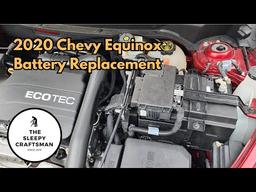





How to Replace the 12V Battery on a 2010-2024 Chevrolet Equinox (Engine: Inline 4 1.5L)
Step-by-step DIY battery change with tools, parts list, torque specs, safety tips, and cost savings
How to Replace the 12V Battery on a 2010-2024 Chevrolet Equinox (Engine: Inline 4 1.5L)
Step-by-step DIY battery change with tools, parts list, torque specs, safety tips, and cost savings for 2010, 2011, 2012


🔧 Equinox - 12V Battery Replacement
You’ll remove the old 12V battery from under the hood of your Equinox and install a new one, then reconnect everything safely. This restores reliable starting and prevents electrical issues caused by a weak battery.
Difficulty Level: Beginner | Estimated Time: 0.5–1 hour
⚠️ Safety & Precautions
- ⚠️ Always wear safety glasses and gloves; batteries contain acid and can leak or crack.
- ⚠️ Never let metal tools touch both battery terminals at the same time; this can cause a short circuit and sparks.
- ⚠️ Disconnect the negative (-) terminal first and reconnect it last to reduce risk of shorting.
- ⚠️ Keep flames, cigarettes, and sparks away from the battery; it can emit flammable gas.
- ⚠️ The battery is heavy; lift with both hands and bend your knees, not your back.
- ⚠️ You will be disconnecting the battery; some settings like clock and radio presets may reset.
🔧 Required Tools
You'll need the following tools for this repair:
- 🧰 10mm socket
- 🧰 13mm socket
- 🧰 1/4" drive ratchet
- 🧰 3/8" drive ratchet
- 🧰 3" socket extension
- 🧰 Flathead screwdriver (medium)
- 🧰 Trim removal tool (plastic)
- 🧰 OBD2 memory saver with 12V power source (specialty)
- 🧰 Battery carrier strap (specialty)
- 🧰 Digital multimeter
- 🧰 Work gloves
- 🧰 Safety glasses
- 🧰 Shop towels or rags
- 🧰 Small wire brush
🔩 Required Parts
HowToo sells all the parts you need for this repair:
- 🔩 12V battery (H5 / Group 47, AGM or flooded as equipped) - Qty: 1
- 🔩 Battery terminal anti-corrosion spray - Qty: 1
- 🔩 Battery terminal felt washers (red and green) - Qty: 1 set
- 🔩 Dielectric grease - Qty: 1 small tube
- 🔩 Battery hold-down bolt and clamp set - Qty: 1 (optional, if original is corroded)
- 🔩 Shop towels - Qty: 1 pack
📋 Before You Begin
- Park the Equinox on level ground, shift to P, and set the parking brake.
- Turn off all lights, accessories, and the ignition. Remove the key/fob from the vehicle.
- If you have an OBD2 memory saver (a small device that keeps power to the electronics), plug it into the OBD2 port under the dash and connect it to a 12V source to preserve radio and window settings.
- Open the hood using the inside release, then lift the hood and secure it with the hood prop rod.
🔨 Step-by-Step Instructions
Follow these steps in order:
Step 1: Locate the battery and remove the plastic covers
- Open the hood and stand in front of the vehicle; the battery on your Equinox is located on the driver side, near the front corner under a plastic cover.
- Use the trim removal tool (plastic) to gently pry up any plastic clips holding the battery top cover, if equipped.
- Lift off the plastic battery cover and set it aside.
- If there are any small plastic caps on the battery terminals, carefully pry them off with the flathead screwdriver.
Step 2: Verify the new battery matches
- Place the new battery on the ground near the front of the Equinox (not yet in the tray).
- Compare the length, width, and height of the old and new batteries; they should be very close.
- Make sure the positive (+) and negative (-) posts are in the same positions as the old battery.
- Check this now to avoid installing the wrong battery.
Step 3: Disconnect the negative (-) battery cable
- Find the negative (-) terminal; it usually has a black cable and a minus sign.
- Use the 10mm socket and 1/4" ratchet to loosen the clamp nut on the negative terminal. Do not remove the nut completely; just loosen it.
- Once loose, wiggle the clamp back and forth and lift it off the battery post. You can use the flathead screwdriver to gently spread the clamp if it’s stuck.
- Move the negative cable away from the battery and tuck it to the side so it cannot spring back and touch the terminal.
Step 4: Disconnect the positive (+) battery cable
- Find the positive (+) terminal; it usually has a red cover or red cable.
- If there is a red plastic cover, lift or unclip it by hand or with the flathead screwdriver.
- Use the 10mm socket and 1/4" ratchet to loosen the clamp nut on the positive terminal.
- Lift the positive clamp off the battery post and move it slightly away from the battery. Do not let it touch any metal parts on the car.
- Positive comes off second, goes on first.
Step 5: Remove the battery hold-down clamp
- Look at the base of the battery for a metal or plastic bracket holding it in place near the front or side.
- Use the 13mm socket, 3" extension, and 3/8" ratchet to remove the battery hold-down bolt.
- Lift the hold-down clamp out and set it aside with the bolt.
- Do not drop the bolt into the engine bay.
Step 6: Remove the old battery
- Attach the battery carrier strap to the battery if you have one. This is a strap that hooks into the battery top to help lift it.
- Carefully lift the battery straight up and out of the tray. Bend your knees and keep your back straight; the battery is quite heavy.
- Place the old battery on the ground in a safe, upright position.
- Use a shop towel to wipe out any dirt or debris in the battery tray.
Step 7: Clean the battery terminals and tray
- Inspect the inside of the cable clamps for white or green crusty buildup (corrosion).
- Use the small wire brush to gently clean the inside surfaces of both the positive and negative clamps.
- Wipe any loose dust with a shop towel.
- If there is heavy corrosion, spray a small amount of battery terminal anti-corrosion spray on a towel and wipe the clamps.
Step 8: Install the new battery into the tray
- Lift the new battery with both hands or using the battery carrier strap.
- Carefully lower it into the battery tray in the same orientation as the old battery; make sure the positive and negative posts line up with their cables.
- Ensure the battery is seated flat and fully down in the tray.
Step 9: Reinstall the battery hold-down clamp
- Position the hold-down clamp against the base of the battery as it was before.
- Install the bolt by hand first to avoid cross-threading.
- Use the 13mm socket, 3" extension, and 3/8" ratchet to tighten the hold-down bolt.
- Tighten to 20 Nm (15 ft-lbs). The battery should be snug and not move, but do not overtighten.
Step 10: Install felt washers and apply dielectric grease
- Slide the green felt washer over the negative (-) post and the red felt washer over the positive (+) post.
- Put a very thin film of dielectric grease on the posts to help prevent corrosion.
- Use only a small amount; more is not better.
Step 11: Reconnect the positive (+) battery cable
- Place the positive cable clamp fully down onto the positive (+) battery post.
- Use the 10mm socket and 1/4" ratchet to tighten the clamp nut.
- Tighten to about 5 Nm (44 in-lbs) – this is snug but not so tight that the clamp deforms. The clamp should not move if you twist it by hand.
- Close the red plastic cover over the positive terminal if equipped.
Step 12: Reconnect the negative (-) battery cable
- Place the negative cable clamp fully down onto the negative (-) battery post.
- Use the 10mm socket and 1/4" ratchet to tighten the clamp nut.
- Tighten to about 5 Nm (44 in-lbs). Again, it should be snug and not twist by hand.
- Make sure no tools are left on or near the battery.
Step 13: Reinstall battery covers and remove memory saver
- Reinstall any plastic terminal caps that came with the battery.
- Place the main plastic battery cover back over the battery and gently press or clip it into place. Use the trim removal tool to help align clips if needed.
- If you used an OBD2 memory saver, turn off its power source and unplug it from the OBD2 port.
Step 14: Check voltage and start the vehicle
- Set your digital multimeter to DC volts and measure across the battery posts. A fully charged new battery should read around 12.4–12.7 volts with the engine off.
- Get into the Equinox, press the brake, and start the engine. Confirm it cranks and starts normally.
- Check under the hood to ensure the battery is secure and the cables are not touching any moving parts.
✅ After Repair
- Turn on the ignition and check the instrument cluster for any warning lights. A temporary battery or stability light may appear and then clear after driving.
- Reset the clock and radio presets if they were lost.
- Cycle the power windows fully down and up once each; this can help them relearn their limits if auto-up/down doesn’t work at first.
- Over the next drive or two, make sure there are no issues starting and no repeated battery or charging warnings.
💰 DIY vs Shop Cost
Shop Cost: $250–$400 (parts + labor)
DIY Cost: $150–$250 (parts only, depending on battery type)
You Save: $100–$150 by doing it yourself!
Shop labor rates typically run $100–$150/hour. This repair takes a shop approximately 0.5–0.8 hours.
🎯 Ready to get started?
HowToo makes it easy: same-day/2-day shipping on every part, plus all the tools and specialty tools you need! Check out the parts and tools sections above to add everything to your cart.
Guide for Vehicle Battery replace for these Chevrolet vehicles
| Year Make Model | Sub Model | Engine | Body Style |
|---|---|---|---|
| 2024 Chevrolet Equinox | - | Inline 4 1.5L | - |
| 2023 Chevrolet Equinox | - | Inline 4 1.5L | - |
| 2022 Chevrolet Equinox | - | Inline 4 1.5L | - |
| 2021 Chevrolet Equinox | - | Inline 4 1.5L | - |
| 2020 Chevrolet Equinox | - | Inline 4 1.5L | - |
| 2020 Chevrolet Equinox | - | Inline 4 2.0L | - |
| 2019 Chevrolet Equinox | - | Inline 4 1.5L | - |
| 2019 Chevrolet Equinox | - | Inline 4 1.6L | - |
| 2019 Chevrolet Equinox | - | Inline 4 2.0L | - |
| 2018 Chevrolet Equinox | - | Inline 4 1.5L | - |
| 2018 Chevrolet Equinox | - | Inline 4 1.6L | - |
| 2018 Chevrolet Equinox | - | Inline 4 2.0L | - |
| 2017 Chevrolet Equinox | - | V6 3.6L | - |
| 2016 Chevrolet Equinox | - | V6 3.6L | - |
| 2015 Chevrolet Equinox | - | V6 3.6L | - |
| 2014 Chevrolet Equinox | - | V6 3.6L | - |
| 2013 Chevrolet Equinox | - | V6 3.6L | - |
| 2012 Chevrolet Equinox | - | V6 3.0L | - |
| 2011 Chevrolet Equinox | - | V6 3.0L | - |
| 2010 Chevrolet Equinox | - | V6 3.0L | - |