














How to Replace the 12V AGM Battery on a 2016 Mercedes-Benz GLE350 (W166)
Step-by-step battery swap with tools, parts list, safety tips, and key torque specs for 2016, 2017, 2018
How to Replace the 12V AGM Battery on a 2016 Mercedes-Benz GLE350 (W166)
Step-by-step battery swap with tools, parts list, safety tips, and key torque specs for 2016, 2017, 2018


🔧 GLE - 12V Battery Replacement
On your GLE, the main 12V battery is an AGM-style battery that powers starting, electronics, and the vehicle’s power management system. Replacing it is straightforward, but you must disconnect and reconnect in the correct order to avoid electrical damage.
Difficulty Level: Intermediate | Estimated Time: 0.5–1.0 hours
Assumption: Main 12V battery in rear cargo area; torque values listed are common W166 specs.
⚠️ Safety & Precautions
- ⚠️ Battery is heavy (often 50+ lb); lift with legs, not your back.
- ⚠️ No sparks/flames near the battery; hydrogen gas can ignite.
- ⚠️ Always disconnect negative (–) first and reconnect negative (–) last.
- ⚠️ Keep the liftgate open before disconnecting; power liftgate may not work with the battery removed.
- ⚠️ Wear eye protection; battery acid is dangerous (even AGM batteries can vent).
- 🔋 Battery disconnect is required for replacement; a memory saver is optional.
🔧 Required Tools
You'll need the following tools for this repair:
- 10mm socket
- 13mm socket
- Ratchet (3/8")
- Socket extension (3/8", 6")
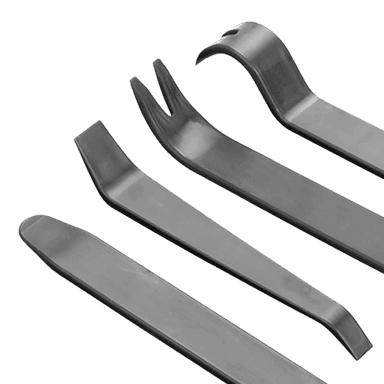
- Trim removal tool (plastic)
- Torque wrench (3/8" drive, 5–60 Nm range)
- Flashlight
- Gloves (mechanic)
- Safety glasses
- Battery terminal brush
- 12V memory saver (specialty)
🔩 Required Parts
HowToo sells all the parts you need for this repair:
- 12V AGM main battery (H8 / Group 49, ~90–100Ah, vented) - Qty: 1
- Battery vent tube/elbow (if brittle or damaged) - Qty: 1
- Battery terminal anti-corrosion protectant - Qty: 1
📋 Before You Begin
- Park on level ground, shift to Park, and remove the key from the vehicle.
- Open the liftgate and keep it open for the whole job.
- If you’re using a 12V memory saver (specialty), connect it per the tool instructions before disconnecting the battery (it helps keep radio/window settings).
- Have a safe spot ready for the old battery (upright, stable, away from kids/pets).
🔨 Step-by-Step Instructions
Follow these steps in order:
Step 1: Access the battery compartment
- Use a flashlight to locate the rear cargo floor panels.
- Use a trim removal tool (plastic) to lift/remove the cargo floor cover(s) and access the battery area (typically right-side under-floor).
Step 2: Disconnect the negative (–) terminal first
- Use a 10mm socket with a ratchet (3/8") to loosen the negative terminal clamp nut.
- Lift the negative cable off the battery post and tuck it aside so it cannot spring back.
- Tip: Wrap the cable end to prevent contact.
- Torque to 6 Nm (53 in-lbs) on reassembly.
Step 3: Disconnect the positive (+) terminal
- Use a 10mm socket with a ratchet (3/8") to loosen the positive terminal clamp nut.
- Lift the positive cable off the battery post and position it safely aside.
- Torque to 6 Nm (53 in-lbs) on reassembly.
Step 4: Disconnect the battery vent tube
- Use your hand (or a trim removal tool (plastic) gently) to pull the vent tube/elbow out of the battery’s vent port.
- Do not kink or crush the vent tube.
Step 5: Remove the battery hold-down
- Use a 13mm socket with a ratchet (3/8") and socket extension (3/8", 6") to remove the battery hold-down bolt(s) and clamp.
- Set the clamp and bolt(s) aside where they won’t get lost.
- Torque to 20 Nm (15 ft-lbs) on reassembly.
Step 6: Remove the old battery
- Put on gloves (mechanic) and safety glasses.
- Lift the battery straight up and out. Keep it upright.
- Place it on the ground in a stable, upright position.
Step 7: Clean and inspect the terminals and tray
- Use a battery terminal brush to lightly clean the inside of the cable clamps if there’s corrosion.
- Use a flashlight to check the tray area for moisture or debris; clean it out before installing the new battery.
Step 8: Install the new AGM battery
- Set the new battery into place in the same orientation as the old one (posts and vent port aligned).
- Reconnect the vent tube to the battery vent port (it should fit snugly).
Step 9: Reinstall the hold-down clamp
- Install the hold-down clamp and bolt(s) using a 13mm socket, ratchet (3/8"), and socket extension (3/8", 6").
- Finish with a torque wrench (3/8" drive, 5–60 Nm range).
- Torque to 20 Nm (15 ft-lbs).
Step 10: Reconnect terminals (positive first, negative last)
- Install the positive (+) cable onto the battery post and tighten using a 10mm socket and ratchet (3/8").
- Torque to 6 Nm (53 in-lbs).
- Install the negative (–) cable last and tighten using a 10mm socket and ratchet (3/8").
- Torque to 6 Nm (53 in-lbs).
- Apply battery terminal anti-corrosion protectant after everything is tight.
Step 11: Reinstall the cargo floor panels
- Reinstall covers/panels you removed, using a trim removal tool (plastic) as needed to align clips without breaking them.
✅ After Repair
- Start the engine and confirm there are no warning messages related to low voltage.
- Check that the liftgate, locks, lights, and infotainment power up normally.
- Initialize one-touch windows if needed: with the engine running, close each window fully and hold the switch up for ~5 seconds.
- If start/stop or charging behavior seems odd, a scan tool adaptation is recommended: the battery control module should be informed a new battery was installed (dealer-level tool).
- Recycle the old battery (most parts stores take it as a core).
💰 DIY vs Shop Cost
Shop Cost: $350–$650 (parts + labor)
DIY Cost: $200–$350 (parts only)
You Save: $150–$300 by doing it yourself!
Shop labor rates vary but typically run $100-$150/hour. This repair takes a shop approximately 0.5–1.0 hours.
🎯 Ready to get started?
HowToo makes it easy: same-day/2-day shipping on every part, plus all the tools and specialty tools you need! Check out the parts and tools sections below to add everything to your cart.