









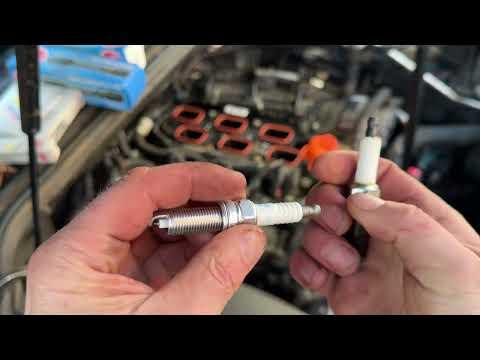




How to Replace Spark Plugs on a 2022 Jeep Grand Cherokee WK 3.6L V6
Step-by-step DIY spark plug change with tools, parts list, torque specs, safety tips, and cost savings guide for 2022
How to Replace Spark Plugs on a 2022 Jeep Grand Cherokee WK 3.6L V6
Step-by-step DIY spark plug change with tools, parts list, torque specs, safety tips, and cost savings guide for 2022


🔧 Grand Cherokee WK - Spark Plug Replacement
You’ll be replacing all six spark plugs on your Grand Cherokee WK’s 3.6L engine. This improves starting, fuel economy, and power, and prevents misfires as the plugs wear out.
Difficulty Level: Intermediate | Estimated Time: 3–4 hours (first time)
⚠️ Safety & Precautions
- ⚠️ Let the engine cool completely; hot engine parts and exhaust can burn you.
- ⚠️ Disconnect the negative battery terminal before starting; this protects you and the electronics.
- ⚠️ Do not pull on ignition coil wires; always pull on the plastic coil body.
- ⚠️ Keep dirt and tools out of the spark plug holes; debris inside cylinders can cause serious engine damage.
- ⚠️ Use only the correct spark plug type and gap; wrong plugs can damage the engine or cause misfires.
- ⚠️ Use a torque wrench; over-tightening spark plugs can strip the aluminum cylinder head.
🔧 Required Tools
You'll need the following tools for this repair:
- 🛠️ 10mm socket
- 🛠️ 13mm socket
- 🛠️ 21mm socket
- 🛠️ 3/8" drive ratchet
- 🛠️ 1/4" drive ratchet
- 🛠️ 3/8" drive torque wrench (5–60 ft-lbs range)
- 🛠️ 1/4" drive torque wrench (inch-lbs range)
- 🛠️ 5/8" spark plug socket (with rubber insert or magnet)
- 🛠️ 3" extension (3/8" drive)
- 🛠️ 6" extension (3/8" drive)
- 🛠️ Torx T20 screwdriver
- 🛠️ Flathead screwdriver (medium size)
- 🛠️ Needle-nose pliers
- 🛠️ Spark plug gap gauge (wire or coin style)
- 🛠️ Plastic trim tool
- 🛠️ Magnetic pickup tool
- 🛠️ Work light
- 🛠️ Nitrile gloves
- 🛠️ Safety glasses
- 🛠️ Shop rags
- 🛠️ Small paint marker or masking tape and pen
🔩 Required Parts
HowToo sells all the parts you need for this repair:
- 🔩 Correct OEM-spec spark plugs (3.6L V6) - Qty: 6
- 🔩 Upper intake manifold gasket set - Qty: 1 (includes all upper plenum gaskets)
- 🔩 Throttle body gasket - Qty: 1 (if not included with intake set)
- 🔩 Dielectric grease (for ignition coil boots) - Qty: 1 small tube
- 🔩 Anti-seize compound - Qty: 1 small tube (only if plug manufacturer recommends)
- 🔩 Brake cleaner or throttle body cleaner - Qty: 1 can (optional, for light cleaning)
- 🔩 Shop towels - Qty: 1 pack
📋 Before You Begin
- Park on level ground, shift to Park, and set the parking brake.
- Turn off the engine and remove the key; wait at least 15 minutes so the engine cools.
- Open the hood and support it securely.
- Disconnect the negative battery cable using a 10mm socket and move the cable so it cannot spring back.
- Lay out a clean area to place bolts and parts; keep left/right parts organized.
- Take pictures of hose and electrical connector locations before you remove anything. Photos save confusion later.
🔨 Step-by-Step Instructions
Follow these steps in order:
Step 1: Remove the engine cover
- Gently pull up on the plastic engine cover; it is held by rubber grommets.
- If it feels stuck, use a plastic trim tool near the corners to help pop it off.
- Set the cover aside somewhere safe.
Step 2: Disconnect the air intake tube
- Locate the large black tube from the air filter box to the throttle body (front center of engine).
- Use a flathead screwdriver to loosen the hose clamp at the throttle body.
- Loosen the clamp at the air box end the same way.
- If there is a small sensor plug on the tube, press the tab and unplug it by hand.
- Gently twist and pull the tube off both ends and remove it from the engine bay.
Step 3: Unplug sensors and hoses from the upper intake
- The upper intake manifold (also called the plenum) is the large plastic piece on top of the engine.
- Use a paint marker or masking tape and pen to mark any hoses you unplug: for example “1” on hose and matching spot.
- Carefully unplug:
- The throttle body connector (press tab, pull gently).
- Any visible MAP sensor connector on the intake.
- Any other electrical connectors on or near the manifold.
- Use a needle-nose pliers if hose clamps must be squeezed, then slide the clamp back and twist hose off by hand.
- Never yank hoses; twist gently to free them.
Step 4: Remove the throttle body (if needed for access)
- Locate the throttle body where the intake tube was connected.
- Use a 10mm socket and 1/4" ratchet to remove the four mounting bolts.
- Carefully pull the throttle body straight off and set it aside with the electrical side facing up.
- Inspect the gasket; plan to replace if flattened or cracked.
- Throttle body bolt torque on reassembly: 9 Nm (80 in-lbs)
Step 5: Remove the upper intake manifold
- Locate all the upper intake mounting bolts (usually along the top and sides).
- Use a 10mm socket with a 3" or 6" extension and 1/4" ratchet to remove each bolt.
- Keep bolts in order or laid out in the pattern they came from.
- Check again for any hidden connectors or hoses; remove them if still attached.
- Lift the intake manifold straight up and out. You may need to wiggle it gently.
- Cover the exposed lower intake ports with shop rags so nothing can fall inside. Do not skip this.
Step 6: Locate the ignition coils and spark plugs
- You will see three ignition coils on each cylinder head (left and right sides of engine).
- Each coil is a small black unit with a connector and a boot going down into the engine.
- Work on one coil and plug at a time to avoid mixing connectors.
Step 7: Remove the first ignition coil
- Press the tab on the coil’s electrical connector and unplug it by hand.
- Use a 10mm socket and 1/4" ratchet to remove the small coil mounting bolt.
- Gently twist the coil and pull it straight up to remove it.
- If it feels stuck, twist carefully, do not pry with metal tools.
- Ignition coil bolt torque on reassembly: 9 Nm (80 in-lbs)
Step 8: Remove the old spark plug
- Make sure there is no dirt around the plug hole; if there is, blow it away or wipe carefully with shop rags.
- Install the 5/8" spark plug socket onto a 3" or 6" extension and 3/8" ratchet.
- Insert the socket straight down into the spark plug well until it seats on the plug.
- Turn the ratchet counter-clockwise to loosen the plug. Once loose, spin it out by hand using the extension.
- Lift the plug out; the spark plug socket’s rubber insert or magnet should hold it.
Step 9: Check and prepare the new spark plug
- Use a spark plug gap gauge to check the plug gap matches the specification on the plug box or your parts listing.
- Most OEM-style plugs come pre-gapped, but always verify the gap is within spec.
- If the plug manufacturer specifically recommends anti-seize, apply a very thin film on the threads only. Many modern plugs say no anti-seize.
- Put a tiny dab of dielectric grease inside the coil boot end (not on the metal tip).
Step 10: Install the new spark plug
- Place the new plug in the 5/8" spark plug socket and extension.
- Carefully lower it straight into the spark plug hole.
- Thread it in by hand only (turn the extension with your fingers) until it stops. If it doesn’t turn easily, back out and restart.
- Attach the 3/8" ratchet and gently snug the plug.
- Attach the 3/8" torque wrench and tighten to:
- 15 Nm (11 ft-lbs) for the 3.6L aluminum head.
Step 11: Reinstall the ignition coil
- Insert the coil straight into the plug well, lining up the boot with the plug.
- Press down until it seats firmly.
- Install the coil bolt using a 10mm socket and snug it with the 1/4" ratchet.
- Use the 1/4" torque wrench to tighten the coil bolt to 9 Nm (80 in-lbs).
- Reconnect the electrical connector until it clicks.
Step 12: Repeat for all remaining spark plugs
- Repeat Steps 7–11 for each of the remaining five coils and plugs.
- Work methodically from front to back on each side.
- Do not leave any coil unplugged or loose.
Step 13: Replace the upper intake manifold gaskets
- Remove the old upper intake gaskets from the underside of the manifold and from the lower intake if present.
- Clean the sealing surfaces gently with shop rags; do not let debris fall into ports.
- Install the new gaskets from your upper intake manifold gasket set, making sure they sit fully in their grooves.
Step 14: Reinstall the upper intake manifold
- Remove the rags covering the lower intake ports carefully.
- Lower the upper intake manifold straight down onto the engine, aligning bolt holes and locating pins.
- Install all the 10mm bolts finger-tight first using a 10mm socket and 1/4" ratchet.
- Once all bolts are started, tighten them in a criss-cross pattern (center outwards) to even the pressure.
- Use a 1/4" torque wrench to tighten intake bolts to:
- 11 Nm (97 in-lbs) (typical upper intake spec for the 3.6L).
Step 15: Reinstall the throttle body and intake tube
- Install a new throttle body gasket if removed.
- Place the throttle body back on the intake and install the four 10mm bolts.
- Use a 10mm socket and 1/4" ratchet to snug them in a cross pattern.
- Torque the bolts to 9 Nm (80 in-lbs) with the 1/4" torque wrench.
- Reinstall the air intake tube, sliding it onto the airbox and throttle body.
- Tighten both hose clamps with a flathead screwdriver.
Step 16: Reconnect all sensors and hoses
- Plug in the throttle body connector until it clicks.
- Reconnect the MAP sensor and any other connectors you removed.
- Reconnect all vacuum hoses and breather hoses using your markings or photos as a guide.
- Check carefully that nothing is left disconnected.
Step 17: Reinstall the engine cover
- Align the engine cover with the mounting posts on the engine.
- Push down firmly at each corner until it snaps into place.
Step 18: Reconnect the battery and test
- Reconnect the negative battery cable using a 10mm socket.
- Tighten the clamp snugly; do not over-tighten.
- Start the engine. It may idle slightly rough for a few seconds as the computer relearns.
- Listen for any hissing (vacuum leak) or loud whistling around the intake. If heard, shut off and recheck gaskets and hoses.
✅ After Repair
- Let the engine idle for a few minutes and watch for warning lights.
- Check around the intake manifold and throttle body for any obvious leaks or loose parts.
- Take a short, gentle test drive: listen for misfires, hesitation, or unusual noises.
- If a check engine light comes on, you may need to read and clear codes with a scan tool after fixing any issue (like a disconnected sensor).
- After the test drive, recheck all clamps and connectors once more.
💰 DIY vs Shop Cost
Shop Cost: $350–$550 (parts + labor)
DIY Cost: $80–$160 (parts only, depending on plug brand and gasket set)
You Save: $190–$470 by doing it yourself!
Shop labor rates typically run $100–$150/hour. This repair takes a shop about 1.5–2.0 hours.
🎯 Ready to get started?
HowToo makes it easy: same-day/2-day shipping on every part, plus all the tools and specialty tools you need! Check out the parts and tools sections above to add everything to your cart.