









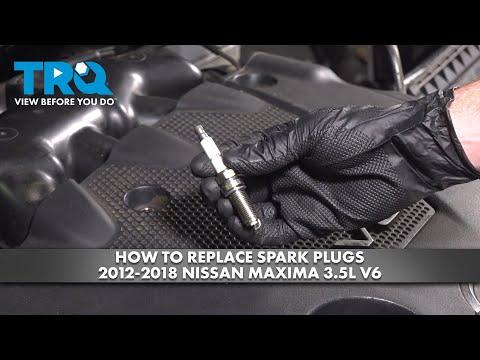







How to Replace Spark Plugs on a 2009-2023 Nissan Maxima (Front & Rear Bank DIY Guide) (Engine: V6 3.5L)
Step-by-step instructions with tools, parts, intake plenum removal tips, and torque specs to avoid vacuum leaks
How to Replace Spark Plugs on a 2009-2023 Nissan Maxima (Front & Rear Bank DIY Guide) (Engine: V6 3.5L)
Step-by-step instructions with tools, parts, intake plenum removal tips, and torque specs to avoid vacuum leaks for 2009, 2010, 2011, 2012, 2013, 2014, 2016, 2017, 2018, 2019, 2020, 2021, 2022, 2023


🔧 Maxima - Spark Plug Replacement
On your Maxima, the front 3 spark plugs are easy to access, but the rear 3 sit under the upper intake plenum (upper intake manifold). You’ll remove a few intake parts, swap all 6 plugs, then reassemble with new gaskets to prevent vacuum leaks.
Difficulty Level: Intermediate | Estimated Time: 2.5-4.0 hours
⚠️ Safety & Precautions
- ⚠️ Work on a fully cool engine to avoid burns and damaged threads in the aluminum cylinder heads.
- ⚠️ Disconnect the negative battery terminal before unplugging throttle body/intake sensors.
- ⚠️ Do not drop anything into the intake ports—stuff clean rags in openings when the plenum is off.
- ⚠️ Use only hand tools to start spark plugs—cross-threading is expensive.
🔧 Required Tools
You'll need the following tools for this repair:
- Safety glasses
- Nitrile gloves
- Floor jack (rated 3-ton minimum)
- Jack stands (rated 3-ton minimum)
- Wheel chocks
- 10mm socket
- 12mm socket
- 1/4" drive ratchet
- 3/8" drive ratchet
- 3/8" drive torque wrench (10-80 ft-lbs range)
- 6" 3/8" extension
- 12" 3/8" extension
- 3/8" universal joint
- 14mm thin-wall spark plug socket (3/8" drive)
- Flathead screwdriver
- Needle-nose pliers
- Trim clip remover
- Pick tool
- Compressed air blow gun
- Clean shop rags
- Paint marker
🔩 Required Parts
HowToo sells all the parts you need for this repair:
- Iridium spark plugs (OEM-spec) - Qty: 6
- Upper intake plenum gasket set - Qty: 1
- Throttle body gasket - Qty: 1
- Dielectric grease - Qty: 1
📋 Before You Begin
- Park on level ground, set the parking brake, and chock the rear wheels.
- Open the hood and let the engine cool completely.
- Use a 10mm socket to disconnect the negative battery terminal and isolate it so it can’t spring back.
- Use a paint marker to mark/vaguely label any similar vacuum hoses so they go back to the same spot.
🔨 Step-by-Step Instructions
Follow these steps in order:
Step 1: Remove the engine cover and intake duct
- Pull the engine cover upward to release it (it’s held by grommets).
- Loosen the air intake hose clamps using a flathead screwdriver.
- Unplug the intake sensor(s) by pressing the lock tab, then remove the intake ducting.
Step 2: Replace the front bank spark plugs (easier side)
- Unplug one ignition coil connector at a time (press the tab, pull straight off).
- Remove the coil bolt with a 10mm socket, then pull the coil straight up.
- Blow out the spark plug well using compressed air blow gun so dirt can’t fall into the cylinder.
- Remove the spark plug using a 14mm thin-wall spark plug socket with a 6" 3/8" extension and 3/8" drive ratchet.
- Install the new plug by hand using the spark plug socket and extension only (no ratchet at first). Hand-threading prevents cross-threading.
- Tighten the plug with a 3/8" drive torque wrench: Torque to 25 Nm (18 ft-lbs).
- Apply a small amount of dielectric grease inside the coil boot, reinstall the coil, then tighten the coil bolt: Torque to 9 Nm (80 in-lbs).
- Repeat for the other 2 front plugs (do one cylinder at a time to avoid mix-ups).
Step 3: Remove components to access the rear bank plugs
- Disconnect any vacuum hoses from the upper intake area using needle-nose pliers (move spring clamps back first).
- Unplug the throttle body connector and any upper intake connectors (press tab, pull straight).
- Remove the throttle body fasteners with a 10mm socket and set the throttle body aside carefully.
- Remove the upper intake plenum bolts/nuts using a 12mm socket.
- Lift the upper intake plenum off. Immediately stuff clean shop rags into the exposed intake openings.
- Use a pick tool to remove old gaskets without gouging surfaces.
Step 4: Replace the rear bank spark plugs
- Unplug and remove each rear ignition coil using a 10mm socket (same as the front bank).
- Blow out each spark plug well with the compressed air blow gun.
- Remove each rear spark plug using the 14mm thin-wall spark plug socket, 12" 3/8" extension, and 3/8" universal joint as needed.
- Install new plugs by hand first, then torque each plug with a 3/8" drive torque wrench: Torque to 25 Nm (18 ft-lbs).
- Reinstall coils and torque coil bolts: Torque to 9 Nm (80 in-lbs).
Step 5: Reinstall the upper intake plenum and throttle body
- Install new upper intake plenum gaskets (make sure they sit fully in their grooves).
- Set the upper intake plenum in place and hand-start all bolts/nuts.
- Tighten upper intake plenum bolts/nuts evenly using a 12mm socket: Torque to 25 Nm (18 ft-lbs).
- Install a new throttle body gasket, then reinstall the throttle body using a 10mm socket: Torque to 10 Nm (89 in-lbs).
- Reconnect all hoses and electrical connectors until they click.
Step 6: Reinstall intake ducting and reconnect the battery
- Reinstall the intake duct and tighten clamps using a flathead screwdriver.
- Reinstall the engine cover by pressing it into the grommets.
- Reconnect the negative battery terminal using a 10mm socket.
✅ After Repair
- Start the engine and let it idle for 2–3 minutes. It may idle rough briefly while the throttle/ECM relearns.
- Check for a hissing sound (vacuum leak) around the upper intake and throttle body area.
- If you get a check engine light or high/unstable idle, re-check all intake hoses/connectors and gasket seating.
- If idle stays abnormal after a short drive, you may need an idle relearn procedure (scan tool capable of Nissan idle learn is best).
💰 DIY vs Shop Cost
Shop Cost: $450-$850 (parts + labor)
DIY Cost: $120-$260 (parts only)
You Save: $330-$590 by doing it yourself!
Shop labor rates vary but typically run $100-$150/hour. This repair takes a shop approximately 2.5-4.0 hours.
🎯 Ready to get started?
HowToo makes it easy: same-day/2-day shipping on every part, plus all the tools and specialty tools you need! Check out the parts and tools sections below to add everything to your cart.
Guide for Spark Plug replace for these Nissan vehicles
| Year Make Model | Sub Model | Engine | Body Style |
|---|---|---|---|
| 2023 Nissan Maxima | - | V6 3.5L | - |
| 2022 Nissan Maxima | - | V6 3.5L | - |
| 2021 Nissan Maxima | - | V6 3.5L | - |
| 2020 Nissan Maxima | - | V6 3.5L | - |
| 2019 Nissan Maxima | - | V6 3.5L | - |
| 2018 Nissan Maxima | - | V6 3.5L | - |
| 2017 Nissan Maxima | - | V6 3.5L | - |
| 2016 Nissan Maxima | - | V6 3.5L | - |
| 2014 Nissan Maxima | - | V6 3.5L | - |
| 2013 Nissan Maxima | - | V6 3.5L | - |
| 2012 Nissan Maxima | - | V6 3.5L | - |
| 2011 Nissan Maxima | - | V6 3.5L | - |
| 2010 Nissan Maxima | - | V6 3.5L | - |
| 2009 Nissan Maxima | - | V6 3.5L | - |