









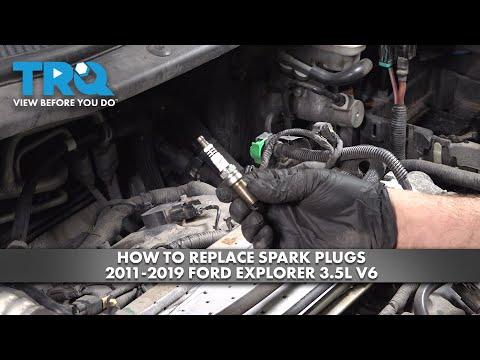





How to Replace Spark Plugs on a 2011-2022 Ford Explorer 3.5L EcoBoost
Step-by-step DIY spark plug change with tools, parts list, torque specs, and safety tips to save on repair costs
How to Replace Spark Plugs on a 2011-2022 Ford Explorer 3.5L EcoBoost
Step-by-step DIY spark plug change with tools, parts list, torque specs, and safety tips to save on repair costs for 2011, 2012, 2013, 2014, 2015, 2016, 2017, 2018, 2019, 2020, 2021, 2022


🔧 Explorer - Spark Plug Replacement
You’ll be replacing all six spark plugs on your Explorer to restore smooth running, power, and fuel economy. On this engine, the front three plugs are easy, and the rear three require removing the upper intake manifold.
Difficulty Level: Intermediate (ok for careful beginner) | Estimated Time: 3–4 hours
⚠️ Safety & Precautions
- 🛑 Work on a completely cold engine to avoid burns and damaging aluminum threads.
- 🛑 Disconnect the negative battery cable before unplugging ignition coils to avoid accidental short circuits.
- 🛑 Keep dirt out of the spark plug holes and intake ports; debris inside the engine can cause serious damage.
- 🛑 Do not over-tighten spark plugs; this engine has an aluminum cylinder head and can strip easily.
- 🛑 When the intake manifold is off, never drop anything into the intake ports; cover them with clean rags.
- 🛑 If you feel unsure at any point, stop and take photos before disassembling further.
🔧 Required Tools
You'll need the following tools for this repair:
- 🧰 3/8" drive ratchet
- 🧰 1/4" drive ratchet
- 🧰 3/8" drive torque wrench (inch-lb and ft-lb capable)
- 🧰 10mm socket
- 🧰 8mm socket
- 🧰 7mm socket
- 🧰 1/4" drive extension (3–6")
- 🧰 3/8" drive extension (6–10")
- 🧰 5/8" spark plug socket (with rubber insert or magnet)
- 🧰 Flathead screwdriver (medium)
- 🧰 Trim clip removal tool
- 🧰 Needle-nose pliers
- 🧰 Small pick tool
- 🧰 Torque screwdriver or small inch-lb torque wrench
- 🧰 Shop vacuum
- 🧰 Flashlight or work light
- 🧰 Fender cover
- 🧰 Mechanic gloves
- 🧰 Safety glasses
A spark plug socket is a special deep socket that grips the plug.
🔩 Required Parts
HowToo sells all the parts you need for this repair:
- 🔩 Spark plugs (correct spec for 3.5L EcoBoost) - Qty: 6
- 🔩 Upper intake manifold gasket set - Qty: 1
- 🔩 Throttle body gasket - Qty: 1
- 🔩 Dielectric grease (for ignition coil boots) - Qty: 1 small tube
- 🔩 Anti-seize compound (nickel-based, optional – follow plug maker instructions) - Qty: 1 small tube
- 🔩 Shop towels or clean rags - Qty: several
- 🔩 Intake-safe cleaner (MAF/intake cleaner) - Qty: 1 can
Most newer Motorcraft plugs come pre-gapped; still verify gap.
📋 Before You Begin
- Park the Explorer on level ground, shift to Park, and set the parking brake.
- Turn ignition off, remove the key (or key fob), and wait at least 5 minutes so modules go to sleep.
- Open the hood and install a fender cover to protect paint.
- Disconnect the negative battery terminal using a 10mm socket.
- Blow or vacuum loose debris around the top of the engine to keep dirt out of plug wells.
🔨 Step-by-Step Instructions
Follow these steps in order:
Step 1: Remove engine cover and intake tubing
- Lift the plastic engine cover straight up; it is held by rubber grommets. Use your hands or gently pry with a flathead screwdriver if needed.
- Loosen the intake hose clamps at the air filter box and throttle body using an 8mm socket.
- Unplug any electrical connectors and vacuum hoses attached to the intake tube by pressing the release tabs with your fingers or a small pick tool.
- Remove the intake tube and set it aside.
Step 2: Access and replace the front bank spark plugs (easier side)
- Locate the three ignition coils at the front of the engine (toward the radiator). Each coil sits directly on top of a spark plug.
- Unplug each coil connector by pushing the tab and pulling gently. Use a small pick tool if the tab is stuck.
- Remove each coil hold-down bolt using a 8mm socket and 1/4" ratchet.
- Pull the coil straight up and out; twist gently if it’s stuck.
- Before removing each spark plug, use a shop vacuum to clean around the plug well.
- Insert the 5/8" spark plug socket with a 3/8" extension and ratchet, then carefully loosen and remove the spark plug.
- Inspect the old plug for oil, heavy deposits, or damage; this can hint at engine issues.
Step 3: Prepare and install new front spark plugs
- Check the gap on each new spark plug with a gap gauge; the 3.5L EcoBoost typically uses about 0.030" (0.76 mm). Adjust gently if needed.
- If the plug manufacturer allows, apply a very thin smear of anti-seize to the plug threads, keeping it off the electrode.
- Place a new plug into the 5/8" spark plug socket and extension, then carefully lower it into the plug hole.
- Thread the plug in by hand only several turns to avoid cross-threading. Use your fingers on the extension, no ratchet yet.
- Attach the 3/8" ratchet and tighten snugly, then use a torque wrench to tighten to 15 Nm (133 in-lb).
- Apply a tiny dab of dielectric grease inside each coil boot.
- Reinstall each coil, pushing it firmly onto the plug, then install the coil bolt with an 8mm socket and torque to 7 Nm (62 in-lb).
- Reconnect each coil electrical connector until it clicks.
Step 4: Prepare to remove the upper intake manifold (for rear bank)
- Identify the plastic upper intake manifold at the top center of the engine.
- Unplug all visible electrical connectors attached to the manifold and throttle body using your fingers or a small pick tool for release tabs.
- Disconnect vacuum hoses and PCV hoses by squeezing clips with needle-nose pliers and pulling gently.
- Mark or take photos of hose/connector locations to help during reassembly.
Step 5: Remove throttle body and intake manifold
- Remove the throttle body bolts with an 8mm socket and 1/4" ratchet, then carefully pull the throttle body away from the manifold. Set aside without straining the coolant lines.
- Remove all visible intake manifold bolts using a 10mm socket and 3/8" ratchet. There are several around the perimeter—keep them organized.
- Gently lift the intake manifold up and toward the front of the vehicle. Watch for any hidden hoses or connectors; disconnect as needed.
- Once free, set the manifold aside on a clean surface.
- Immediately cover all open intake ports on the engine with clean rags to prevent anything from falling in.
Step 6: Replace rear bank spark plugs
- Locate the three ignition coils at the rear of the engine (toward the firewall).
- Unplug each coil connector (tab press) and remove the coil bolts using an 8mm socket and 1/4" ratchet.
- Pull each coil straight up; twist gently if stuck.
- Vacuum around each plug well using a shop vacuum before removing plugs.
- Use the 5/8" spark plug socket, extension, and 3/8" ratchet to remove each rear spark plug.
- Prepare each new plug as before: check gap to about 0.030" (0.76 mm), add light anti-seize only if allowed.
- Install each new rear spark plug by hand-threading first, then torque with a torque wrench to 15 Nm (133 in-lb).
- Apply a small amount of dielectric grease in each rear coil boot and reinstall coils, torquing bolts to 7 Nm (62 in-lb) with an 8mm socket.
- Reconnect all rear coil connectors until they click.
Step 7: Reinstall intake manifold and throttle body
- Remove the rags covering the intake ports. Double-check that nothing has fallen into the ports.
- Clean the intake manifold gasket surfaces on the engine and manifold with a clean rag.
- Install new upper intake manifold gaskets into the manifold grooves.
- Carefully set the intake manifold back into place, making sure it sits flat and aligns with the bolt holes.
- Install the manifold bolts by hand first, then tighten in a crisscross pattern using a 10mm socket and 3/8" ratchet. Finally, torque to 10 Nm (89 in-lb) if your torque specs allow; if not available, lightly snug, not heavy.
- Install the new throttle body gasket and reinstall the throttle body with an 8mm socket, torquing the bolts evenly to about 10 Nm (89 in-lb).
- Reconnect all hoses and electrical connectors to the manifold and throttle body exactly as before. Use your photos for reference.
Step 8: Reinstall intake tube and engine cover
- Reinstall the intake tube between the air box and throttle body.
- Reconnect any sensors and hoses on the intake tube until they click into place.
- Tighten hose clamps with an 8mm socket until snug, not crushing the plastic.
- Press the engine cover back into place, lining up the rubber grommets and pushing down firmly.
Step 9: Reconnect battery and initial start
- Reconnect the negative battery cable using a 10mm socket and tighten snugly.
- Turn the ignition to ON for a few seconds, then start the engine.
- The idle may be slightly rough for a short time while the computer relearns. This is normal.
- Check for any warning lights and listen for hissing (vacuum leaks) or misfires.
✅ After Repair
- Let the engine idle for a few minutes, then gently rev to around 2,000 rpm and listen for smooth operation.
- Take a short, easy test drive, checking for normal power, smooth acceleration, and no check-engine light.
- After the test drive, recheck under the hood for any loose hoses or connectors you might have missed.
- If a check-engine light appears, you may have a coil connector loose or an intake/vacuum hose not fully seated.
💰 DIY vs Shop Cost
Shop Cost: $350–$650 (parts + labor)
DIY Cost: $80–$180 (parts only)
You Save: $270–$470 by doing it yourself!
Shop labor rates vary but typically run $100–$150/hour. This repair takes a shop approximately 2–3 hours.
🎯 Ready to get started?
HowToo makes it easy: same-day/2-day shipping on every part, plus all the tools and specialty tools you need! Check out the parts and tools sections above to add everything to your cart.
Guide for Spark Plug replace for these Ford vehicles
| Year Make Model | Sub Model | Engine | Body Style |
|---|---|---|---|
| 2022 Ford Explorer | - | - | - |
| 2021 Ford Explorer | - | - | - |
| 2020 Ford Explorer | - | - | - |
| 2019 Ford Explorer | - | - | - |
| 2018 Ford Explorer | - | - | - |
| 2017 Ford Explorer | - | - | - |
| 2016 Ford Explorer | - | - | - |
| 2015 Ford Explorer | - | - | - |
| 2014 Ford Explorer | - | - | - |
| 2013 Ford Explorer | - | - | - |
| 2012 Ford Explorer | - | - | - |
| 2011 Ford Explorer | - | - | - |