














How to Replace Spark Plugs on a 2011-2017 Ford F-150 5.0L – Step-by-Step (Engine: V8 5.0L)
Detailed DIY spark plug change guide with tools, torque specs, safety tips, and pro installation advice for your 2016 F-150 5.0L
How to Replace Spark Plugs on a 2011-2017 Ford F-150 5.0L – Step-by-Step (Engine: V8 5.0L)
Detailed DIY spark plug change guide with tools, torque specs, safety tips, and pro installation advice for your 2016 F-150 5.0L


F-150 - Spark Plug Replacement 🔧
Nice truck. I’ll walk you through this like it’s your first time, step by step.
Quick check first: Are you planning to replace just the spark plugs, or spark plugs and ignition coils together?
I’ll assume just plugs for now (you can still add coils later if needed).
Overview 🧠
- ✅ Your 5.0L uses 8 spark plugs (1 per cylinder).
- ✅ They are under the ignition coils on top/sides of the engine.
- ✅ Job difficulty: Beginner–Intermediate. Take your time and you’ll be fine.
- ✅ Plan about 2–3 hours your first time.
Parts & Specs 📦
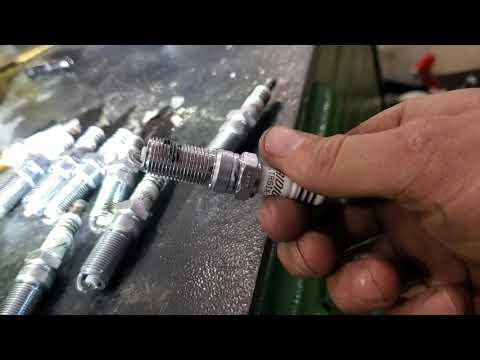
- 🧩 Spark plugs (8x)
- Use OEM-style iridium or platinum plugs for the 5.0L.
- Heat range and design must match factory spec (your parts supplier will match by vehicle).
- 🧩 Anti-seize?
- Ford’s plugs usually come with a special coating and do not require anti-seize.
- If you do use it, use a very tiny amount and reduce torque by ~20%. I recommend no anti-seize and follow Ford torque.
- 🧩 Dielectric grease (optional but recommended)
- Non-conductive grease used inside the coil boot to help seal out moisture and prevent sticking.
Torque & Gap Specs 📏
- 🧰 Spark plug torque (5.0L Coyote):
- 11–15 lb-ft (15–20 N·m) on clean, dry threads.
- Do not overtighten – the heads are aluminum.
- 🧰 Spark plug gap:
- Typical spec for 2016 5.0L: around 0.050 in (1.27 mm).
- Always check the gap on each new plug with a gap tool and adjust gently if needed.
Tools You’ll Need 🛠️
- 🧰 3/8" drive ratchet (common hand wrench with a square drive).
- 🧰 3/8" torque wrench (lets you tighten to a specific torque value).
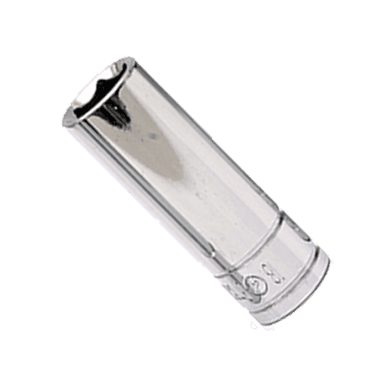
- 🧰 Spark plug socket:
- 5/8" spark plug socket with rubber insert or magnet.
- 🧰 Socket extensions:
- One short (3") and one medium (6") extension.
- 🧰 Swivel / universal joint (a joint that bends to reach angled plugs).
- 🧰 8 mm socket (for ignition coil bolts).
- 🧰 Flathead screwdriver or trim tool (for clips and intake duct clamps).
- 🧰 Needle-nose pliers (helpful for stubborn connectors).
- 🧰 Spark plug gap tool (coin-style or wire-style gauge).
- 🧰 Shop light and gloves.
Safety First ⚠️
- 🛑 Work on a cold engine. Hot aluminum threads strip easily and you can burn yourself.
- 🛑 Disconnect the negative battery cable (10 mm) to avoid accidental shorts or check-engine lights while unplugging coils.
- 🛑 Keep tools and hardware out of the engine bay so nothing falls into open holes.
Step 1 – Prepare the Truck 🧽
- 🧰 Park on a flat surface, set the parking brake, and let the engine cool completely.
- 🧰 Open the hood and use the prop rod.
- 🧰 Disconnect the negative battery terminal:
- Use a 10 mm wrench or socket.
- Move the cable aside so it can’t spring back.
Step 2 – Remove Engine Cover & Intake Duct 🌬️
- 🧰 If your Lariat has a plastic engine cover:
- It usually pulls up off rubber grommets. Lift firmly but gently at the corners.
- 🧰 Loosen the air intake duct if it blocks access:
- Use a flathead screwdriver or 8 mm socket to loosen the hose clamps at the airbox and throttle body.
- Unplug any sensors on the duct (like the MAF sensor) by pressing the tab and pulling straight off.
- Lift the duct out and set aside.
Step 3 – Locate Ignition Coils 🔌
- 🧰 Your 5.0L has 8 ignition coils, one on each cylinder, sitting on top of the valve covers.
- 🧰 Each coil is a small rectangular unit with a connector and a rubber boot going down into the engine.
Step 4 – Remove Ignition Coils (One Cylinder at a Time) 🧩
Do one plug at a time so you never mix anything up.
- 🧰 Pick one coil to start with (front passenger side is common).
- 🧰 Unplug the coil electrical connector:
- Press the plastic tab and pull the connector straight off.
- If stuck, gently use a small flathead to lift the tab while pulling.
- 🧰 Remove the coil hold-down bolt:
- Use an 8 mm socket and ratchet.
- 🧰 Pull the coil straight up:
- You may need to twist it slightly to break the seal of the rubber boot.
- Set the coil aside where it stays clean.
Step 5 – Remove Old Spark Plug 🧵
- 🧰 Insert your spark plug socket with extension down into the spark plug well.
- 🧰 Turn counterclockwise to loosen:
- If it feels very tight, do not force it. Try a small “loosen-tighten-loosen” motion to break carbon.
- Keep the socket straight to avoid damaging threads.
- 🧰 Once loose, spin it out by hand using the extension.
- 🧰 Carefully pull the plug out with the socket.
- 🧰 Inspect the old plug:
- Oily, white, or heavily worn tips can hint at engine issues, but for now just note it.
Step 6 – Check & Set New Plug Gap 📐
- 🧰 Take a new plug out of the box carefully (don’t drop it).
- 🧰 Use your gap tool:
- Check that the gap is about 0.050 in.
- If it’s off, gently bend the ground strap (the small curved arm) to adjust.
- Do not pry on the center electrode; it’s fragile.
- 🧰 If using dielectric grease:
- Do not put it on the threads.
- We’ll use a tiny bit inside the coil boot later.
Step 7 – Install New Spark Plug ✅
- 🧰 Put the new plug into the spark plug socket (rubber insert or magnet holds it).
- 🧰 Carefully lower it into the hole, keeping it straight.
- 🧰 Hand-thread first:
- Turn the extension by hand clockwise several turns.
- If it doesn’t spin easily, back out and start again. This prevents cross-threading.
- 🧰 Once hand-tight, attach the ratchet and snug it gently.
- 🧰 Use the torque wrench:
- Set to 11–15 lb-ft.
- Tighten until the wrench clicks once. Stop there.
Step 8 – Reinstall Ignition Coil 🔁
- 🧰 If you have dielectric grease:
- Put a small pea-sized dab inside the tip of the coil boot.
- 🧰 Push the coil back down onto the plug:
- You should feel it seat onto the plug.
- 🧰 Reinstall the 8 mm coil bolt:
- Snug it by hand; it just needs to be tight enough to hold the coil (around 7–8 lb-ft, not very tight).
- 🧰 Plug the electrical connector back in until it clicks.
Step 9 – Repeat for All 8 Cylinders 🔄
- 🧰 Move to the next coil and repeat Steps 4–8 one at a time.
- 🧰 Some rear cylinders may be tighter:
- Use your swivel joint and different extension lengths to reach them.
- Take your time; awkward angles are normal on the back cylinders.
Step 10 – Reassemble & Reconnect Battery 🔋
- 🧰 Reinstall the intake duct:
- Slide it back onto the airbox and throttle body.
- Tighten hose clamps snugly.
- Reconnect any sensors you unplugged.
- 🧰 Reinstall the engine cover by pressing it back onto its mounts.
- 🧰 Reconnect the negative battery terminal and tighten the 10 mm nut.
Step 11 – First Start & Check ✅
- 🧰 Start the engine:
- It may crank slightly longer the first time, then settle into a smooth idle.
- 🧰 Check:
- No misfires (shaking or rough idle).
- No check engine light.
- No loose connectors or tools left in the bay.
- 🧰 Take a short test drive and confirm smooth acceleration.
Extra Tips 💡
- 🧰 Keep the old plugs in order (front to back) in case a future mechanic wants to see them.
- 🧰 If you get a check engine light after the job, it’s often a coil connector not fully clicked in or a coil not seated.
HowToo makes it easy: below this answer you’ll see the correct spark plugs, dielectric grease, spark plug socket, and a torque wrench that fit this job. You can add them to your cart right from the parts section, with fast shipping.
If you tell me which side (driver or passenger) looks tighter or confusing to you, I can give you specific tricks for those hard-to-reach cylinders.