









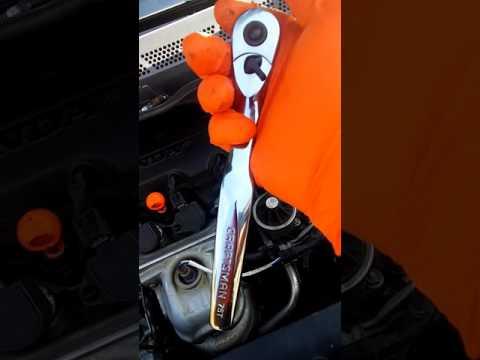







How to Replace Spark Plugs on a 2007 Honda Civic (Step-by-Step Guide)
Tools, parts, plug gap check, and torque specs for ignition coils and spark plugs
How to Replace Spark Plugs on a 2007 Honda Civic (Step-by-Step Guide)
Tools, parts, plug gap check, and torque specs for ignition coils and spark plugs


🔧 Civic - Spark Plug Replacement
Replacing the spark plugs on your Civic restores smooth starting, strong acceleration, and good fuel economy. The plugs sit under the ignition coils on top of the engine, so this is a straightforward job if you take your time and torque them correctly.
Difficulty Level: Beginner | Estimated Time: 0.8-1.5 hours
⚠️ Safety & Precautions
- ⚠️ Work on a fully cool engine to avoid burns and thread damage.
- ⚠️ Do not over-tighten spark plugs—aluminum cylinder head threads strip easily.
- ⚠️ Keep dirt out of the spark plug holes; debris can fall into the engine.
- ⚠️ Battery disconnect is not required, but disconnecting the negative terminal helps prevent accidental shorting.
🔧 Required Tools
You'll need the following tools for this repair:
- Safety glasses
- Nitrile gloves
- 10mm socket
- 3/8" ratchet
- 3/8" extension set (3" and 6")
- 5/8" spark plug socket (rubber insert)
- Torque wrench (3/8" drive, 10–30 ft-lbs range)
- Flat trim tool
- Compressed air blow gun
- Dielectric grease applicator (small brush or cotton swab)
- Feeler gauge set (0.039–0.043")
🔩 Required Parts
HowToo sells all the parts you need for this repair:
- Iridium spark plugs (correct fit for your Civic) - Qty: 4
- Dielectric grease - Qty: 1
📋 Before You Begin
- Park on level ground, set the parking brake, and let the engine cool completely.
- If you choose to disconnect the battery: use a 10mm socket to remove the negative terminal and tuck it aside.
- Gather tools and keep the new plugs in their boxes until you’re ready to install.
🔨 Step-by-Step Instructions
Follow these steps in order:
Step 1: Remove the top cover (if equipped)
- Use a 10mm socket and 3/8" ratchet to remove the engine cover fasteners (some Civics have a small plastic/trim cover; some don’t).
- Use a flat trim tool to gently lift any clips without breaking them.
Step 2: Unplug and remove ignition coil #1
- Pick one cylinder at a time so nothing gets mixed up.
- Press the connector tab and unplug the coil electrical connector by hand (use the flat trim tool only if it’s stubborn).
- Use a 10mm socket and 3/8" ratchet to remove the coil hold-down bolt.
- Pull the coil straight up and out. Twist slightly if it feels stuck.
Step 3: Clean the spark plug well
- Use a compressed air blow gun to blow out dirt around the spark plug hole before removing the plug.
- This prevents debris from falling into the cylinder.
Step 4: Remove the old spark plug
- Install a 5/8" spark plug socket (rubber insert) on a 3/8" extension and 3/8" ratchet.
- Turn counterclockwise to loosen and remove the spark plug.
- If it feels extremely tight, stop and apply steady force—don’t jerk the ratchet.
Step 5: Check the new plug gap (quick check)
- Use a feeler gauge set (0.039–0.043") to confirm the gap is roughly in spec.
- Do not bend the tiny center electrode on iridium plugs. If the gap is way off, exchange the plug.
Step 6: Install the new spark plug (by hand first)
- Place the new plug into the 5/8" spark plug socket.
- Use only the 3/8" extension (no ratchet yet) to thread the plug in by hand clockwise.
- If it doesn’t thread smoothly, back it out and try again (this avoids cross-threading).
- Attach the torque wrench and tighten: Torque to 18 N·m (13 ft-lbs).
- Tip: A torque wrench is a tool that “clicks” at the correct tightness.
- Do not use anti-seize on these plugs; the plug threads are already coated.
Step 7: Reinstall the ignition coil
- Put a small dab of dielectric grease inside the coil boot using the dielectric grease applicator.
- Reinstall the coil straight down onto the plug.
- Install the coil bolt with a 10mm socket, then tighten with a torque wrench: Torque to 12 N·m (9 ft-lbs).
- Reconnect the coil electrical connector by hand until it clicks.
- Dielectric grease helps prevent moisture and boot sticking.
Step 8: Repeat for the remaining 3 cylinders
- Repeat Steps 2–7 for each ignition coil/spark plug, one at a time.
Step 9: Reinstall cover and reconnect battery (if disconnected)
- Reinstall the engine cover (if equipped) using a 10mm socket.
- If you disconnected the battery, reconnect the negative terminal using a 10mm socket and snug it firmly.
✅ After Repair
- Start the engine and let it idle for 30–60 seconds; it should run smooth with no shaking.
- If the check engine light comes on or it runs rough, re-check that every coil connector is fully clicked in.
- Take a short test drive and confirm normal power and no flashing check engine light.
💰 DIY vs Shop Cost
Shop Cost: $200-$400 (parts + labor)
DIY Cost: $40-$90 (parts only)
You Save: $160-$310 by doing it yourself!
Shop labor rates vary but typically run $100-$150/hour. This repair takes a shop approximately 0.8-1.2 hours.
🎯 Ready to get started?
HowToo makes it easy: same-day/2-day shipping on every part, plus all the tools and specialty tools you need! Check out the parts and tools sections below to add everything to your cart.