









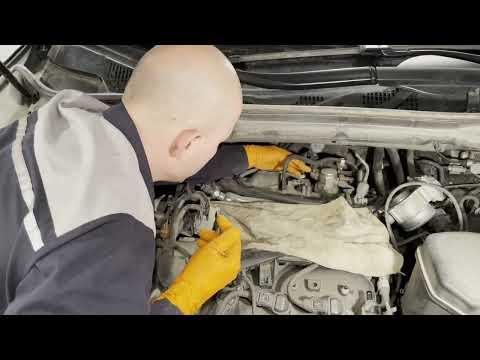





How to Replace Spark Plugs on a 2007-2022 Lexus RX350 3.5L V6 (Front & Rear Bank) (Engine: V6 3.5L)
Step-by-step DIY guide with required tools, parts, intake removal tips, and torque specs
How to Replace Spark Plugs on a 2007-2022 Lexus RX350 3.5L V6 (Front & Rear Bank) (Engine: V6 3.5L)
Step-by-step DIY guide with required tools, parts, intake removal tips, and torque specs for 2007, 2008, 2009, 2010, 2011, 2012, 2013, 2014, 2015, 2016, 2017, 2018, 2019, 2020, 2021, 2022


🔧 RX350 - Spark Plug Replacement
Your RX350 uses six long-life spark plugs (one per cylinder). Replacing them restores smooth idle, power, and fuel economy, and helps prevent misfires as mileage builds.
Difficulty Level: Advanced | Estimated Time: 2.5-4.5 hours
Assumption: 3.5L V6 requires upper intake removal for rear plugs.
⚠️ Safety & Precautions
- ⚠️ Work on a fully cool engine to avoid burns and prevent thread damage in the aluminum heads.
- ⚠️ Disconnect the negative battery cable to prevent accidental short circuits while unplugging ignition coils.
- ⚠️ Keep dirt out of the engine: never leave intake ports open; cover them with clean rags immediately.
- ⚠️ Do not over-tighten spark plugs; stripped threads are an expensive repair.
- ⚠️ Use only the correct plug type (iridium, correct heat range and gap); do not “re-gap” fine-wire iridium plugs.
🔧 Required Tools
You'll need the following tools for this repair:
- Safety glasses
- Nitrile gloves
- 10mm socket
- 12mm socket
- 14mm socket
- 3/8" ratchet
- 3/8" torque wrench 5-80 Nm
- 1/4" torque wrench 2-20 Nm
- 3/8" extension set 3" to 10"
- 3/8" swivel adapter
- 14mm thin-wall spark plug socket
- Flat trim clip removal tool
- Needle-nose pliers
- Flathead screwdriver
- Magnetic pickup tool
- Compressed air blow gun
- Shop light
- Clean shop rags
- Painter’s tape and marker
🔩 Required Parts
HowToo sells all the parts you need for this repair:
- Iridium spark plugs - Qty: 6
- Upper intake manifold gasket set - Qty: 1
- Throttle body gasket - Qty: 1
- Dielectric grease - Qty: 1
📋 Before You Begin
- Park on level ground, shift to Park, and set the parking brake.
- Let the engine cool completely (at least 1-2 hours).
- Use painter’s tape and marker to label hoses/connectors as you remove them.
- Disconnect the battery: use a 10mm socket to remove the negative terminal and tuck it aside so it can’t spring back.
🔨 Step-by-Step Instructions
Follow these steps in order:
Step 1: Remove the engine cover and intake ducting
- Pull up to remove the engine cover (it’s held by grommets).
- Loosen intake hose clamps with a flathead screwdriver.
- Unclip/unbolt any intake snorkel pieces using a 10mm socket and remove the air ducting.
Step 2: Replace the front-bank spark plugs (easy side)
- Unplug each ignition coil connector by pressing the tab and pulling straight back.
- Remove each ignition coil hold-down bolt using a 10mm socket.
- Twist and pull the coil upward to remove it.
- Blow debris out of the spark plug well using a compressed air blow gun so dirt can’t fall into the cylinder.
- Remove the spark plug using a 14mm thin-wall spark plug socket, 3/8" ratchet, and 3/8" extension set 3" to 10".
- Install the new plug by hand first using the spark plug socket and extension (no ratchet yet) so it doesn’t cross-thread. Hand-threading prevents expensive damage.
- Tighten with a 3/8" torque wrench 5-80 Nm: Torque to 18 Nm (13 ft-lbs).
- Apply a tiny smear of dielectric grease inside the coil boot (it helps prevent moisture issues).
- Reinstall the coil and tighten the coil bolt: Torque to 10 Nm (89 in-lbs).
- Reconnect the coil electrical connector until it clicks.
Step 3: Gain access to the rear-bank spark plugs (intake removal)
- Disconnect electrical connectors around the throttle body and intake area (label them with painter’s tape and marker).
- Remove vacuum/PCV hoses using needle-nose pliers to slide clamps back, then twist hoses gently to free them.
- Remove the throttle body fasteners using a 10mm socket. Set the throttle body aside carefully (do not bend or strain coolant hoses if equipped).
- Remove the upper intake manifold fasteners using a 12mm socket and 3/8" ratchet.
- Lift the upper intake manifold straight up and off. If it sticks, tap gently by hand—do not pry hard on sealing surfaces.
- Immediately stuff clean shop rags into the exposed intake ports so nothing can fall in. One dropped bolt can ruin your day.
Step 4: Replace the rear-bank spark plugs
- Unplug the rear ignition coil connectors and remove coil bolts using a 10mm socket.
- Remove coils, then blow out each plug well using the compressed air blow gun.
- Remove spark plugs using the 14mm thin-wall spark plug socket, 3/8" extension set 3" to 10", and 3/8" swivel adapter as needed for angle.
- Install new plugs by hand first, then torque: Torque to 18 Nm (13 ft-lbs).
- Add a small amount of dielectric grease inside each coil boot, reinstall coils, and torque coil bolts: Torque to 10 Nm (89 in-lbs).
- Reconnect all coil connectors until they click.
Step 5: Reinstall the intake manifold and throttle body
- Remove the rags from the intake ports and count them to confirm none are left behind.
- Replace the intake gaskets with the new upper intake manifold gasket set.
- Set the upper intake manifold in place and start all fasteners by hand.
- Tighten intake fasteners evenly using a 12mm socket and then torque with a 3/8" torque wrench 5-80 Nm: Torque to 21 Nm (15 ft-lbs).
- Install the new throttle body gasket, reinstall the throttle body, and torque using a 10mm socket and 1/4" torque wrench 2-20 Nm: Torque to 10 Nm (89 in-lbs).
- Reconnect all hoses and electrical connectors you labeled. Double-check every clamp with needle-nose pliers as needed.
Step 6: Reinstall intake ducting and reconnect the battery
- Reinstall the air ducting and tighten clamps using a flathead screwdriver.
- Reinstall the engine cover by pushing it into the grommets.
- Reconnect the negative battery terminal using a 10mm socket.
- If you dropped hardware, use a magnetic pickup tool to retrieve it before starting.
✅ After Repair
- Start the engine and let it idle for 2-3 minutes. A slightly rough idle for a few seconds can be normal after battery disconnect.
- Listen for vacuum leaks (hissing). If you hear one, recheck intake hoses and that the intake manifold is seated.
- Road test for 10-15 minutes. Verify no check engine light and no hesitation under acceleration.
- Recheck for any loose tools or rags in the engine bay with a shop light.
💰 DIY vs Shop Cost
Shop Cost: ₹12,000-₹25,000 (parts + labor)
DIY Cost: ₹3,500-₹9,500 (parts only)
You Save: ₹8,500-₹15,500 by doing it yourself!
Shop labor rates vary but typically run ₹800-₹2,000/hour. This repair takes a shop approximately 2.5-4.0 hours.
🎯 Ready to get started?
HowToo makes it easy: same-day/2-day shipping on every part, plus all the tools and specialty tools you need! Check out the parts and tools sections below to add everything to your cart.
Guide for Spark Plug replace for these Lexus vehicles
| Year Make Model | Sub Model | Engine | Body Style |
|---|---|---|---|
| 2022 Lexus RX350 | - | V6 3.5L | - |
| 2021 Lexus RX350 | - | V6 3.5L | - |
| 2020 Lexus RX350 | - | V6 3.5L | - |
| 2019 Lexus RX350 | - | V6 3.5L | - |
| 2018 Lexus RX350 | - | V6 3.5L | - |
| 2017 Lexus RX350 | - | V6 3.5L | - |
| 2016 Lexus RX350 | - | V6 3.5L | - |
| 2015 Lexus RX350 | - | V6 3.5L | - |
| 2014 Lexus RX350 | - | V6 3.5L | - |
| 2013 Lexus RX350 | - | V6 3.5L | - |
| 2012 Lexus RX350 | - | V6 3.5L | - |
| 2011 Lexus RX350 | - | V6 3.5L | - |
| 2010 Lexus RX350 | - | V6 3.5L | - |
| 2009 Lexus RX350 | - | V6 3.5L | - |
| 2008 Lexus RX350 | - | V6 3.5L | - |
| 2007 Lexus RX350 | - | V6 3.5L | - |