









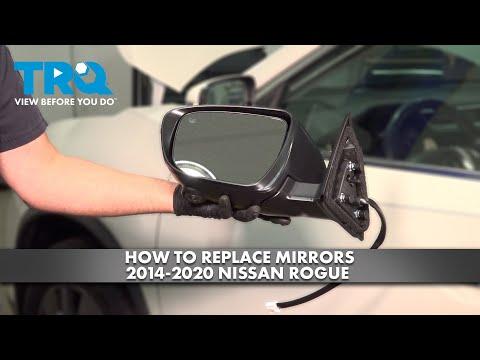





How to Replace Side View Mirrors on a 2014 Nissan Rogue (Step-by-Step DIY)
Beginner-friendly guide with tools, parts list, torque specs, safety tips, and full mirror replacement instructions
How to Replace Side View Mirrors on a 2014 Nissan Rogue (Step-by-Step DIY)
Beginner-friendly guide with tools, parts list, torque specs, safety tips, and full mirror replacement instructions


🔧 Rogue - Side View Mirror Replacement
You’ll be removing the interior door trim at the mirror area, unplugging the mirror wiring, and then swapping the mirror assembly on your Rogue. This guide covers power mirrors with or without heat and turn signal; the steps are the same, only the wiring plug may differ.
Difficulty Level: Beginner | Estimated Time: 1–1.5 hours per side
⚠️ Safety & Precautions
- ⚠️ Always turn the ignition OFF and remove the key before working on electrical parts.
- ⚠️ Disconnect the negative battery terminal if your mirror has turn signals, heating, or blind-spot indicators to avoid short circuits.
- ⚠️ Support the mirror with one hand when removing the last nut so it doesn’t fall and chip your paint.
- ⚠️ Use plastic trim tools, not metal screwdrivers, on interior panels to avoid cracks and scratches.
🔧 Required Tools
You'll need the following tools for this repair:
- 🛠️ 10mm socket
- 🛠️ 1/4" drive ratchet
- 🛠️ 1/4" drive extension (3"-6")
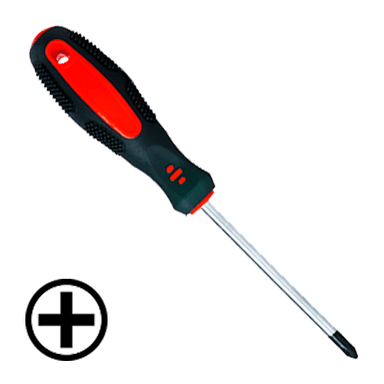
- 🛠️ Phillips #2 screwdriver
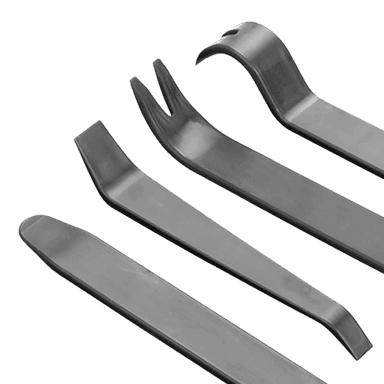
- 🛠️ Plastic trim removal tool set
- 🛠️ Flat plastic pry tool
- 🛠️ Needle-nose pliers
- 🛠️ Small pick tool
- 🛠️ Torque wrench (inch-lb or low-range ft-lb)
- 🛠️ Electrical tape
- 🛠️ Work light or flashlight
- 🛠️ Fender cover or clean towel
- 🛠️ Mechanic gloves
- 🛠️ Safety glasses
🔩 Required Parts
HowToo sells all the parts you need for this repair:
- 🔩 Left (driver-side) power side mirror assembly (paint-to-match or black) - Qty: 1
- 🔩 Right (passenger-side) power side mirror assembly (paint-to-match or black) - Qty: 1
- 🔩 Side mirror mounting nuts (M6, flanged) replacement set - Qty: 1 set (optional but recommended)
- 🔩 Door trim panel clips set - Qty: 1 set (in case some break)
- 🔩 Butyl sealing strip or foam tape - Qty: 1 roll (if original mirror gasket is damaged)
📋 Before You Begin
- Park your Rogue on level ground, shift to Park, and set the parking brake.
- Roll the affected window fully down to give better access to the mirror area.
- Open the door fully and place a towel over the upper door/painted area beneath the mirror.
- Turn ignition OFF. For mirrors with turn signals/heat, disconnect the negative battery terminal using a 10mm socket.
- A trim removal tool is a plastic lever used to pop panels and clips without damage.
🔨 Step-by-Step Instructions
Follow these steps in order:
Step 1: Prepare the door area
- Open the front door for the side you’re working on and lower the window.
- Place a fender cover or clean towel on the top of the door and along the mirror base area to protect the paint.
- If disconnecting the battery, use a 10mm socket and ratchet to loosen the negative terminal nut, then remove the cable and tuck it aside.
Step 2: Remove the small interior mirror trim cover
- The mirror base is covered inside by a small triangular plastic panel near the top front corner of the door.
- Use a plastic trim removal tool to gently pry at the edge of this triangle cover.
- Work around until the clips pop loose, then pull the panel away by hand.
- If there is a small foam pad or insulation, gently move it aside but keep it for reinstallation.
- Pry slowly; clips break if forced.
Step 3: Locate the mirror wiring connector
- Look behind the removed triangle cover for the mirror wiring harness coming from the mirror studs into the door.
- On some Rogues, the connector is right behind this cover; on others, it may sit slightly lower behind the door trim.
- If you can clearly see a plug right there, note its locking tab location for unplugging in the next step.
Step 4: Unplug the mirror wiring
- Use a work light to see the connector clearly.
- Press the locking tab on the connector with your fingers or a small pick tool if needed.
- Gently pull the connector apart by the plastic housing, not the wires.
- If the connector is clipped to the metal, use a plastic trim tool or needle-nose pliers to pop the clip out of its hole.
- Do not twist or pull hard on wires.
Step 5: Remove the mirror mounting nuts
- Behind the triangle area you’ll see 3 mirror mounting studs with nuts (usually 10mm).
- Support the mirror outside with one hand, or ask someone to hold it.
- Use a 10mm socket, 1/4" ratchet, and extension to remove the upper nuts first.
- Loosen the last lower nut while still holding the mirror, then remove it by hand so the mirror doesn’t drop.
- Torque for reinstallation: 7–9 Nm (62–80 in-lbs)
Step 6: Remove the old mirror from the door
- With all nuts removed and wiring unplugged, carefully pull the mirror straight away from the door.
- Feed the wiring harness and connector through the hole in the door as you remove the mirror.
- Set the old mirror aside on a soft surface.
- Inspect the rubber gasket or foam seal on the door side and mirror base; remove any loose pieces with your fingers.
Step 7: Prepare the mounting surface
- Wipe the door’s mirror mounting area with a clean cloth to remove dirt and dust.
- If the original foam or rubber seal is damaged and your new mirror does not include a gasket, apply butyl sealing strip or foam tape around the mirror opening to help seal out water.
- Keep seal thin so mirror sits flat.
Step 8: Install the new mirror
- Feed the new mirror’s wiring harness and connector through the opening in the door.
- Position the new mirror base against the door, lining up the studs with the holes.
- From inside, install the mounting nuts by hand onto the studs to hold the mirror in place.
- Use a 10mm socket and ratchet to snug the nuts evenly, top to bottom.
- Finish tightening with a torque wrench and 10mm socket to 7–9 Nm (62–80 in-lbs). Do not overtighten.
Step 9: Reconnect the mirror wiring
- Plug the mirror connector into the door-side connector until it clicks.
- If the connector has a body clip, press it back into its hole in the metal.
- If the wires are loose, use a small piece of electrical tape to keep the harness from rattling against the metal.
Step 10: Reinstall the interior mirror trim cover
- Reposition any foam or insulation over the opening as it was before.
- Align the triangular interior panel’s clips with their slots.
- Press firmly with your hand around the edges until all clips snap into place.
- Run your fingers around the panel to check it sits flush with the door trim.
Step 11: Reconnect the battery and test the mirror
- If you disconnected the battery, reinstall the negative cable on the terminal.
- Use a 10mm socket and ratchet to tighten the terminal nut snugly. Do not overtighten.
- Turn the ignition ON (engine can be off).
- Use the mirror switch to move the mirror glass in all directions and confirm power adjustment works.
- If your mirror has heat, turn on rear defrost and after a minute feel if the mirror warms slightly.
- If your mirror has turn signals, activate the turn signal and check the mirror indicator.
Step 12: Repeat for the opposite side (if needed)
- Repeat the same steps on the other front door if replacing both mirrors.
- Replacing in pairs keeps function and look matched.
✅ After Repair
- Check that both mirrors adjust smoothly using the interior switch.
- Verify any extra features: heating, turn signals, puddle lights, or blind-spot indicators if equipped.
- Close the doors and visually confirm the mirrors are seated evenly against the door with no gaps.
- Take a short, low-speed drive and check for wind noise or vibration around the mirror area.
- If you removed battery power, your radio presets and clock may need resetting.
💰 DIY vs Shop Cost
Shop Cost: $350–$650 per side (parts + labor)
DIY Cost: $80–$250 per side (parts only, depending on options and paint)
You Save: $270–$400 per side by doing it yourself!
Shop labor rates typically run $100–$150/hour. This repair takes a shop approximately 0.8–1.0 hours per side.
🎯 Ready to get started?
HowToo makes it easy: same-day/2-day shipping on every part, plus all the tools and specialty tools you need! Check out the parts and tools sections above to add everything to your cart.