















How to Replace Shock Absorbers & Struts on a 2017 Toyota Corolla
Step-by-step DIY guide with tools, parts list, safety tips, and torque guidance for front strut and rear shock replacement
How to Replace Shock Absorbers & Struts on a 2017 Toyota Corolla
Step-by-step DIY guide with tools, parts list, safety tips, and torque guidance for front strut and rear shock replacement


🔧 Corolla - Shock Absorber & Strut Replacement
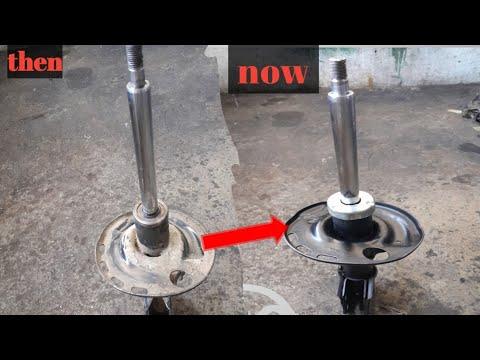
You’ll be replacing the front strut assemblies and rear shock absorbers on your Corolla to restore ride comfort and handling. The front “shocks” are built into struts; the rear are stand-alone shock absorbers.
Difficulty Level: Intermediate (OK for careful beginner) | Estimated Time: 4–6 hours for all four
⚠️ Safety & Precautions
- ⚠️ Always support the car with jack stands; never work under a car held only by a jack.
- ⚠️ Work on a flat, solid surface and chock the wheels that stay on the ground.
- ⚠️ Front struts contain coil springs under high tension. Only use a proper spring compressor if you are reusing springs. Beginners should use complete loaded strut assemblies.
- ⚠️ Wear safety glasses and mechanic gloves; rust and debris can fall when removing suspension parts.
- ⚠️ Do not loosen the front strut center nut until the strut is out of the car and the spring is safely compressed (if reusing springs).
- ⚠️ After suspension work, a professional wheel alignment is strongly recommended.
- ⚠️ Battery disconnect is not required for this job.
🔧 Required Tools
You'll need the following tools for this repair:
- 🛠️ Floor jack (rated 3-ton minimum)
- 🛠️ Jack stands (rated 3-ton minimum, Qty: 2–4)
- 🛠️ Wheel chocks
- 🛠️ Lug wrench 21mm
- 🛠️ Socket set metric (10mm–22mm)
- 🛠️ Combination wrench set metric (10mm–22mm)
- 🛠️ Breaker bar 1/2"
- 🛠️ Torque wrench 1/2"
- 🛠️ Torque wrench 3/8"
- 🛠️ Ratchet 3/8"
- 🛠️ Ratchet 1/2"
- 🛠️ Extensions 3/8" and 1/2"
- 🛠️ Allen key set metric
- 🛠️ Flathead screwdriver medium
- 🛠️ Trim clip removal tool
- 🛠️ Needle nose pliers
- 🛠️ Hammer small
- 🛠️ Pry bar small
- 🛠️ Spring compressor (specialty)
- 🛠️ Penetrating oil spray
- 🛠️ Paint marker or white marker
- 🛠️ Wire brush small
- 🛠️ Safety glasses
- 🛠️ Mechanic gloves
- 🛠️ Shop light or headlamp
🔩 Required Parts
HowToo sells all the parts you need for this repair:
- 🔩 Front complete loaded strut assemblies (left and right) - Qty: 2 (recommended for beginners)
- 🔩 Rear shock absorbers (left and right) - Qty: 2
- 🔩 New front strut upper mounting nuts - Qty: 6
- 🔩 New front strut-to-steering knuckle bolts and nuts - Qty: 4 bolts, 4 nuts
- 🔩 New rear shock upper mounting nuts/bolts - Qty: 2–4 as required
- 🔩 New rear shock lower mounting bolts/nuts - Qty: 2
- 🔩 Anti-seize compound - Qty: 1 tube
- 🔩 Penetrating oil - Qty: 1 can
- 🔩 Replacement plastic clips for wheel well liners - Qty: 1 kit
📋 Before You Begin
- Park the Corolla on a level surface, set the parking brake, and place it in Park.
- Loosen (but do not remove) the wheel lug nuts 1/2 turn with the 21mm lug wrench before lifting the car.
- Decide if you’re replacing front, rear, or all four; the steps below cover both ends.
- Spray penetrating oil on all visible suspension fasteners (front strut-to-knuckle bolts, rear shock bolts) and let it soak for at least 10–15 minutes.
- Keep your phone handy to take pictures before disassembly; this helps you remember cable and bracket routing.
🔨 Step-by-Step Instructions
Follow these steps in order:
Step 1: Safely lift and support the Corolla
- Use the floor jack to lift the front of the car at the front center jacking point (behind the front bumper, on the subframe), or one side at a time at the pinch weld jacking points.
- Place jack stands under the front pinch welds and slowly lower the car onto them with the floor jack.
- Repeat for the rear if you’re doing rear shocks: lift the rear center jacking point and place jack stands under the rear pinch welds.
- Double-check stability by gently rocking the car by hand.
- Remove all four wheels using the 21mm lug wrench.
- When reinstalling wheels later, Torque to manufacturer specification in a star pattern.
Step 2: Remove front strut – disconnect brackets and links
- Turn the steering wheel to expose the back of the strut (engine off, key on if needed).
- Locate the brake hose bracket and ABS sensor wire brackets attached to the strut.
- Use a 12mm socket and ratchet to remove the brake hose bracket bolt from the strut.
- Use a 10mm socket or trim clip removal tool to release the ABS wire clips from the strut.
- Locate the sway bar end link where it bolts to the strut. Use a 17mm socket and wrench to remove the nut. If the stud spins, hold the stud with the appropriate Allen key while turning the nut with the 17mm wrench.
Step 3: Separate the front strut from the steering knuckle
- Locate the two large bolts that clamp the bottom of the strut to the steering knuckle.
- Use a 19mm socket and breaker bar on the nut side, and a 19mm wrench on the bolt head side to loosen these two fasteners.
- Remove the nuts, then tap the bolts out with a hammer while supporting the knuckle so you don’t strain the brake hose.
- Mark the position of the strut relative to the knuckle with a paint marker to help with reassembly alignment.
- Once bolts are out, the knuckle will be free from the strut; support the knuckle so it does not pull on the axle or brake hose.
- When reinstalling, use the new bolts/nuts and Torque to manufacturer specification.
Step 4: Remove the front strut from the car
- Open the hood.
- Locate the three upper strut mount nuts at the top of the strut tower on each side (do not touch the center nut yet).
- Support the strut from below with one hand or a helper.
- Use a 14mm socket and ratchet to remove the three upper mount nuts holding the strut to the body.
- Carefully lower the strut assembly out of the wheel well and set it on the ground.
Step 5: Swap to new front strut assemblies
- If using complete loaded strut assemblies: you can skip spring compression. Simply compare new and old struts to confirm they match (spring shape, height, brackets).
- If reusing springs (not recommended for beginners):
- Mount the old strut in a spring compressor and compress the spring evenly on both sides until it is loose in the seats.
- Use a socket and Allen key (size as needed) to remove the center strut shaft nut.
- Move the spring, upper mount, and isolators onto the new strut, then tighten the new center nut and slowly release the spring compressor.
- For safety, a shop can swap springs for a small fee.
Step 6: Install the new front strut assemblies
- Guide the new strut up into the strut tower from the wheel well.
- Install the three new upper mount nuts by hand using a 14mm socket, but do not fully tighten yet.
- Align the lower strut with the steering knuckle, using your paint marker reference marks to get close to original alignment.
- Insert the new lower bolts through the knuckle and strut, then install the new nuts.
- Use a 19mm socket, wrench, and torque wrench to tighten the lower bolts. Torque to manufacturer specification.
- Go back to the upper mount nuts and tighten them evenly with a 14mm socket and torque wrench. Torque to manufacturer specification.
- Reattach the sway bar end link to the strut using a 17mm socket and wrench. Torque to manufacturer specification.
- Reattach the brake hose bracket with a 12mm socket and ABS wire clips with the trim clip removal tool or 10mm socket as needed.
Step 7: Remove rear shock – access and loosen
- Move to the rear suspension. The Corolla uses separate rear shocks and springs.
- From under the car, locate the lower shock bolt where the shock attaches to the rear control arm or axle beam.
- Use a 17mm or 19mm socket (size varies) with a breaker bar to loosen the lower bolt, while holding the nut with a wrench.
- Do not fully remove the bolt yet; leave it partially threaded for support.
- Access the upper shock mount from inside the trunk: remove trunk floor panels and side trim if needed, using the trim clip removal tool and 10mm socket to remove any fasteners.
- Locate the upper shock mounting nut(s) on each side.
Step 8: Remove the old rear shocks
- Support the lower control arm or axle near the shock with the floor jack slightly, so it does not drop when the shock is removed.
- Use a 14mm or 17mm socket and ratchet on the upper mount nut(s) in the trunk to remove them.
- Now fully remove the lower bolt and nut with the socket and wrench.
- Slide the shock out from the suspension.
Step 9: Install the new rear shocks
- Compare old and new shocks to make sure length and mounting points match.
- Lightly coat the new shock mounting sleeves with anti-seize compound using your finger or a small brush.
- Position the new shock in place and insert the lower mounting bolt by hand.
- Lift the shock into the upper mount and start the new upper nut(s) by hand using a socket and ratchet.
- With the suspension supported at near-normal ride height by the floor jack, tighten the upper nut(s) with a torque wrench. Torque to manufacturer specification.
- Now tighten the lower mounting bolt and nut with the correct size socket, wrench, and torque wrench. Torque to manufacturer specification.
Step 10: Reassemble interior trim and wheels
- Reinstall any trunk trim panels, clips, and floor pieces using the trim clip removal tool and 10mm socket where needed.
- Reinstall all four wheels by hand-threading the lug nuts first.
- Lower the car off the jack stands using the floor jack.
- With the car on the ground, tighten the lug nuts in a star pattern using the 21mm lug wrench and torque wrench. Torque to manufacturer specification.
✅ After Repair
- 🚗 Take a short, gentle test drive on a smooth road. Listen for clunks, rattles, or unusual noises over bumps.
- 🔍 After the drive, recheck all lug nuts with the torque wrench and visually inspect the new shocks/struts for any movement or loose brackets.
- 📏 Schedule a professional four-wheel alignment; this is important after front strut replacement to prevent uneven tire wear and poor handling.
- 🔁 Over the next few days, pay attention to how the car feels; it should be more controlled and less “floaty” over bumps.
💰 DIY vs Shop Cost
Shop Cost: $800–$1,300 (parts + labor) for all four corners
DIY Cost: $250–$500 (parts only, using quality aftermarket or OEM-equivalent)
You Save: $550–$800 by doing it yourself!
Shop labor rates vary but typically run $100–$150/hour. This repair takes a shop approximately 3–4 hours.
🎯 Ready to get started?
HowToo makes it easy: same-day/2-day shipping on every part, plus all the tools and specialty tools you need! Check out the parts and tools sections above to add everything to your cart.